




What is pronator teres syndrome?
Pronator teres syndrome (PTS) is a nerve entrapment condition where the pronator teres muscle in the forearm compresses the median nerve. This compression leads to symptoms that resemble carpal tunnel syndrome but are distinct due to their specific location and effects on the forearm and hand.
Other contributing factors include swollen or inflamed tissue or scar tissue within the forearm muscles. Individuals engaged in repetitive and strenuous forearm and wrist movements, such as tennis, squash, racquetball, and manual labor like carpentry, are at increased risk. Additional risk factors include poor physical conditioning, inadequate warm-up before activities, and certain medical conditions like diabetes mellitus and hypothyroidism.
The symptoms include forearm pain, especially with gripping activities, and tingling, numbness, or burning sensations in the thumb and first three fingers. Weakness in the middle finger or hand, difficulty with delicate motor tasks, and forearm fatigue are common. Symptoms may also include aching pain in the forearm, exacerbated by repetitive forearm pronation and supination.
Treatment options include non-surgical and surgical approaches. Non-surgical treatment focuses on rest, avoiding aggravating activities, using nonsteroidal anti-inflammatory drugs (NSAIDs), physical therapy exercises, cold therapy, and heat therapy.
If conservative treatments do not provide relief, surgery may be necessary to alleviate the pressure on the median nerve. Preventive measures include proper warm-up and stretching before activities, maintaining good physical conditioning with an emphasis on forearm, index finger, and wrist strength and flexibility, and using appropriate techniques and ergonomics to reduce strain.
With appropriate treatment, it is usually manageable, and many individuals recover fully without needing surgery. If surgery is required, it often results in significant symptom relief and improved function.
How does it differ from carpal tunnel syndrome?
Pronator teres syndrome (PTS) occurs in the forearm by the pronator teres muscle near the elbow, while carpal tunnel syndrome (CTS) occurs in the wrist within the carpal tunnel. Both conditions have similar symptoms in the form of tingling and numbness, but PTS leads to forearm pain, thumb weakness, and fine motor difficulty, whereas CTS symptoms include hand weakness, dropping objects, and symptoms often worse at night. Repetitive forearm movements and conditions like diabetes can cause PTS, while repetitive wrist movements, injuries, arthritis, pregnancy, and diabetes can lead to CTS.
Treatment for both PTS and CTS includes NSAIDs, physical therapy, and possibly surgery. However, rest and avoiding aggravating activities are particularly beneficial for PTS, whereas CTS often requires splints and corticosteroid injections, which are not typically used for PTS. Preventive measures also differ: PTS prevention focuses on warm-up, stretching, good conditioning, and proper techniques, while CTS prevention includes ergonomic adjustments, frequent breaks, wrist exercises, and maintaining hand and wrist health.
How to diagnose a pronator teres syndrome?
Diagnosing pronator teres syndrome involves several steps, including a thorough medical history, a physical exam and examination, and specific diagnostic tests:
- Review the patient's symptoms, onset, worsening activities, repetitive movements, and underlying medical conditions.
- Palpate the forearm muscles for tenderness or swelling, check muscle strength, compare both forearms, examine hand and finger function, and observe for muscle atrophy or changes in skin sensitivity.
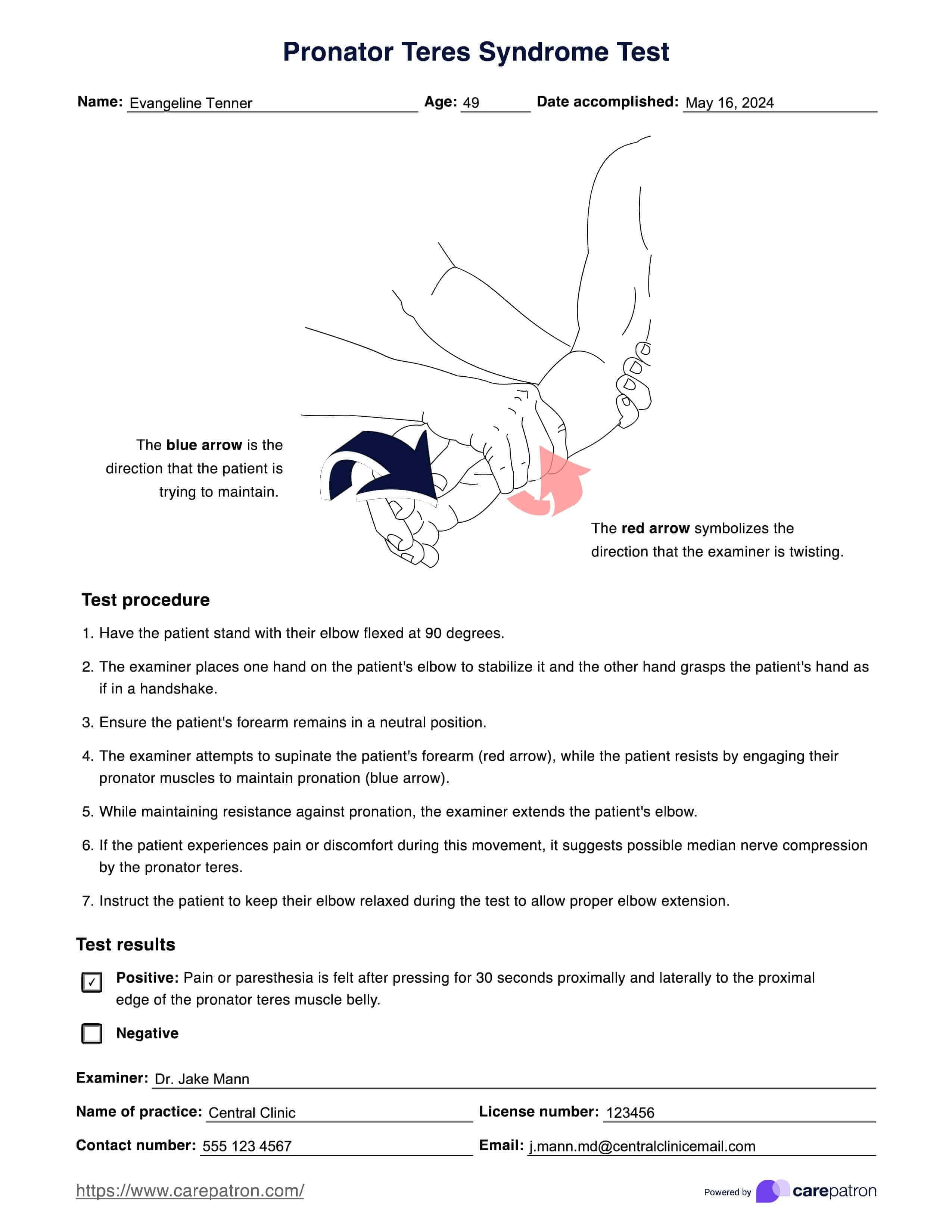
- Perform the PTS test.
PTS can mimic other conditions affecting the hand and forearm. The physical examinations and specific diagnostic tests below are employed for an accurate diagnosis:
- Pronator compression test: Pressure on pronator teres, with resisted pronation. Symptoms suggest pronator teres syndrome.
- Tinel's sign: Tap over the median nerve at the pronator teres, eliciting tingling in the thumb and first three fingers, which indicates a positive test.
- Resisted pronation with elbow flexion: Flex elbow to 90 degrees, pronate against resistance. Pain suggests pronator teres syndrome.
- Nerve conduction and electromyography (EMG): These tests measure the electrical activity of muscles and the speed of nerve signals to detect abnormalities in the median nerve function.









