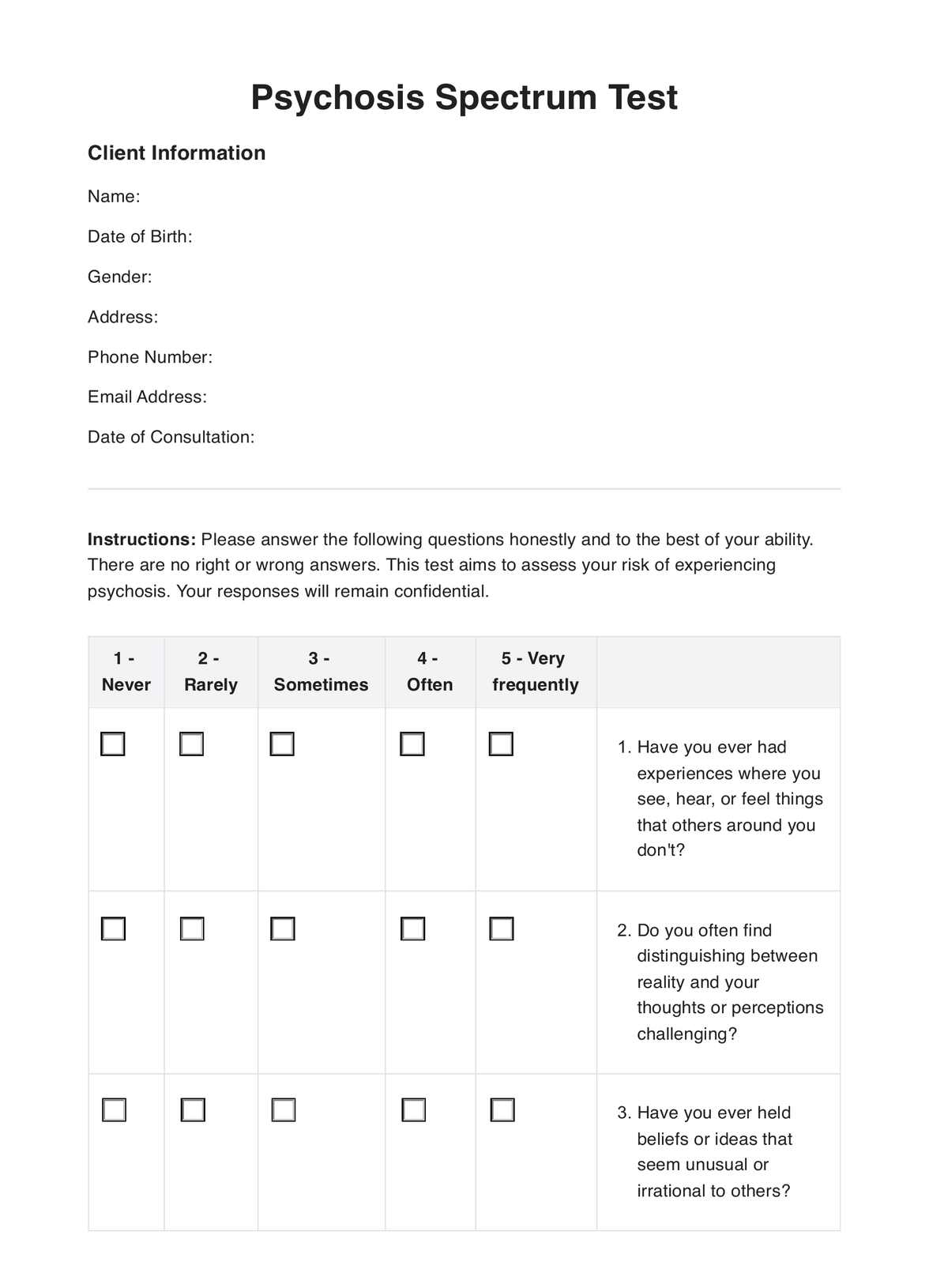




What is a Psychosis Spectrum Test?
The Psychosis Spectrum Test refers to a psychological assessment tool designed to identify symptoms and signs that may fall within the psychosis spectrum. The psychosis spectrum encompasses a range of mental health conditions characterized by alterations in one's perception of reality and can include disorders like schizophrenia, schizoaffective disorder, and bipolar disorder with psychotic features.
Key aspects of such tests include:
- Screening for psychotic symptoms: The test often screens for both positive symptoms (like hallucinations, delusions, and incoherent speech) and negative symptoms (like social withdrawal, flat affect, and reduced emotional expression).
- Assessing risk of psychotic disorders: For individuals at ultra-high risk or in the prodromal phase of psychotic disorders, these tests can help in early identification and intervention.
- Diagnostic criteria: These tests often align with the criteria set forth in the Diagnostic and Statistical Manual of Mental Disorders (DSM) by the American Psychiatric Association, ensuring they cover the key diagnostic elements of various psychotic disorders.
- Evaluation of functional impact: They may assess how potential psychotic symptoms impact daily living, social relationships, and overall functioning.
- Comprehensive approach: The test might include questions about mood episodes, substance use disorder, and other factors that can influence mental health, such as ambiguous environmental cues and stressors.
- Professional interpretation: Results from a psychosis spectrum test usually require further evaluation by a qualified mental health professional to ensure a proper diagnosis and to discuss treatment options.
- Guiding treatment and support: Depending on the outcome, the test can guide healthcare providers in recommending talk therapy, early intervention strategies, and other treatment options to help individuals lead a more fulfilling life despite their challenges.
It's important to note that such tests are tools for screening and not definitive diagnostic instruments. A full evaluation by a mental health professional is essential for an accurate diagnosis and to determine the best course of treatment.
Symptoms of psychosis
Before we begin, it is important to recognize the most common symptoms of a psychosis episode. Psychosis can present differently in everyone. However, psychosis typically presents as one of the following:
- Delusions
- Hallucinations
- Disorganized thought
- Disorganised behaviour
- Negative symptoms