
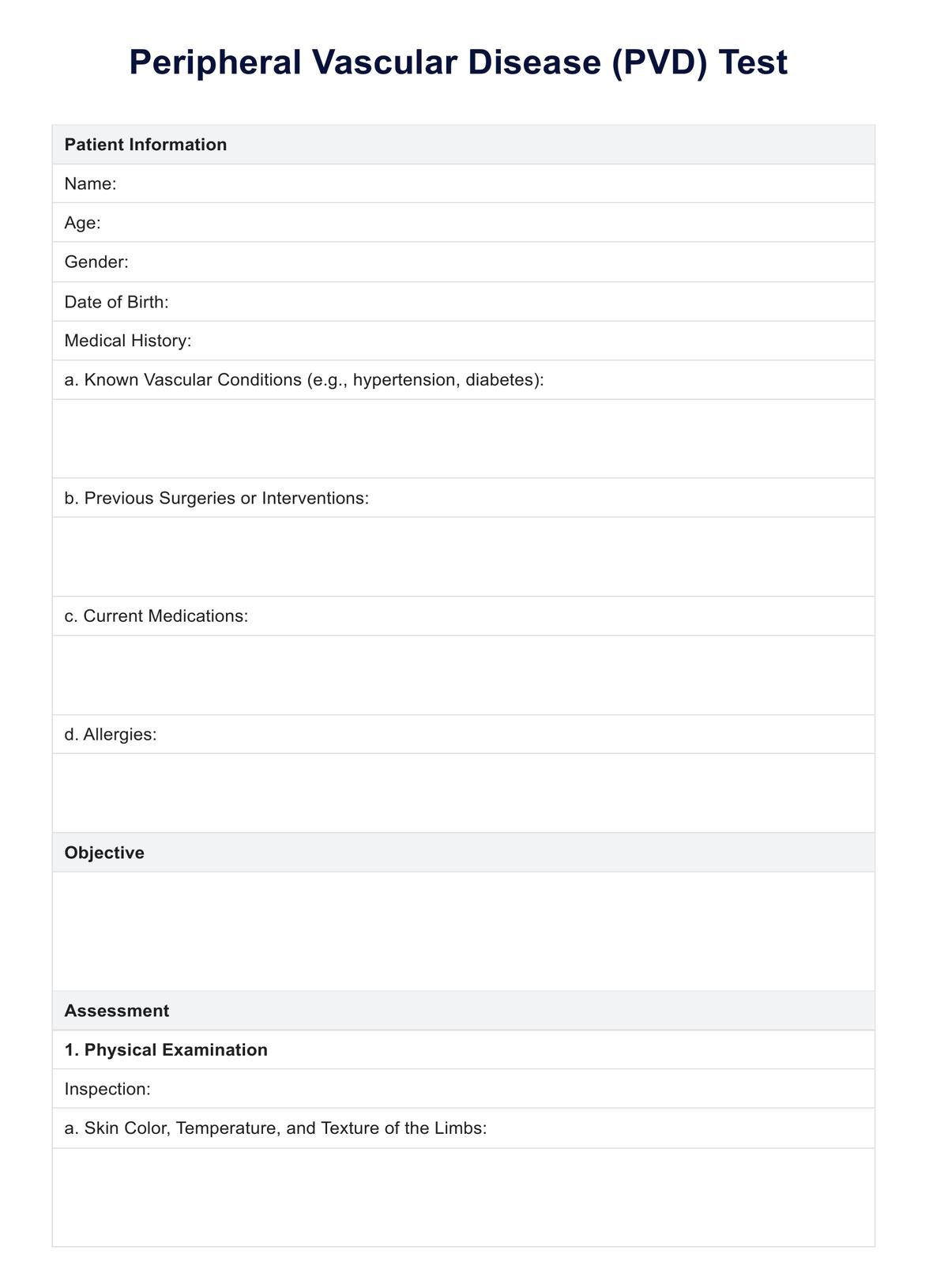




What is a PVD Test?
A PVD test, or peripheral vascular disease test, is a diagnostic procedure used to evaluate blood flow and blood pressure in the blood vessels, particularly in the limbs, to diagnose conditions such as peripheral artery disease (PAD).
This test helps identify risk factors and symptoms of poor blood flow, such as leg pain or intermittent claudication. It involves various noninvasive methods like ankle-brachial index (ABI) measurement, Doppler ultrasound flow studies, pulse volume recording (PVR), magnetic resonance angiography (MRA), and physical examination.
During the PVD test, blood pressure measurements are taken at different points in the limbs using a blood pressure cuff and Doppler ultrasound to assess blood flow. An ABI test compares blood pressure readings in the ankle and arm to detect reduced blood flow. Additionally, sound waves are used to evaluate blood vessel abnormalities and the presence of narrowed arteries or blood clots.
Medical and family history, as well as other risk factors such as high blood pressure, high cholesterol, diabetes, and smoking, are considered during the evaluation. Lifestyle changes like regular exercise, quitting smoking, and managing cholesterol levels are often recommended to prevent peripheral vascular disease and improve blood circulation.
If severe PVD is detected, further treatment options such as balloon angioplasty, bypass surgery, or vascular surgery may be necessary to restore blood flow and prevent complications like heart attacks or limb ischemia.









