
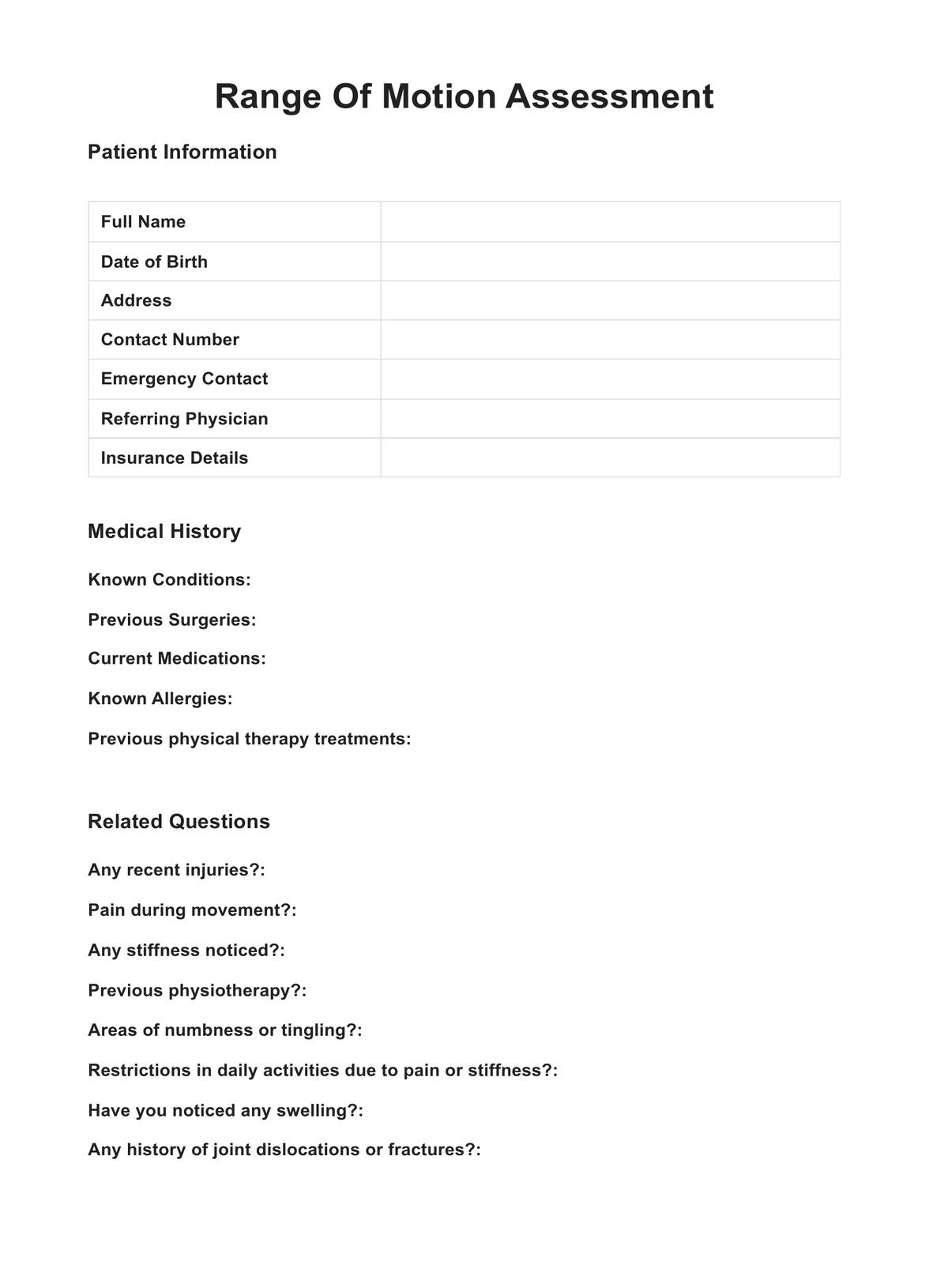




What is a Range of Motion Assessment?
Have you ever experienced stiffness or discomfort in your joints that hindered your movement? Perhaps you've struggled to bend your knees fully or reach for something above your head without feeling restricted. These everyday challenges highlight the importance of understanding our body's Range of Motion (ROM).
When you visit a physical therapist, they might perform a Range of Motion Assessment to evaluate how well your joints move. This assessment is crucial for determining if any limitations or abnormalities in your joint mobility could impact your daily activities or athletic performance.
During a ROM assessment, the physical therapist will carefully observe and measure the movement of each body part. They may use various techniques to assess both active ROM, where you move your joints independently, and passive ROM, where the therapist moves your joints.
For instance, they might ask you to bend your knees as far as possible or lift your leg to the side (hip abduction). They'll also gently manipulate your joints to check their flexibility and assess passive range.
Using tools like a goniometer or a tape measure, they'll precisely measure joint angles to determine your ROM values. These measurements help them identify deviations from normal values and pinpoint areas of concern.
As they measure ROM, the therapist will note any limited range of motion, painful symptoms, or difficulties you experience. They may also apply external force or provide partial assistance to help you achieve maximum range in specific movements.
ROM measurement isn't just a one-time test. The measurement procedure can be repeated to monitor progress and assess the effectiveness of treatment interventions.
By understanding your body's ROM, physical therapists can tailor exercise physiology programs to improve flexibility, strength, and overall joint function. Techniques like static stretching or cyclic passive stretch repetitions can help lengthen muscles and improve tissue resistance, enhancing mobility and reducing the risk of injury.









