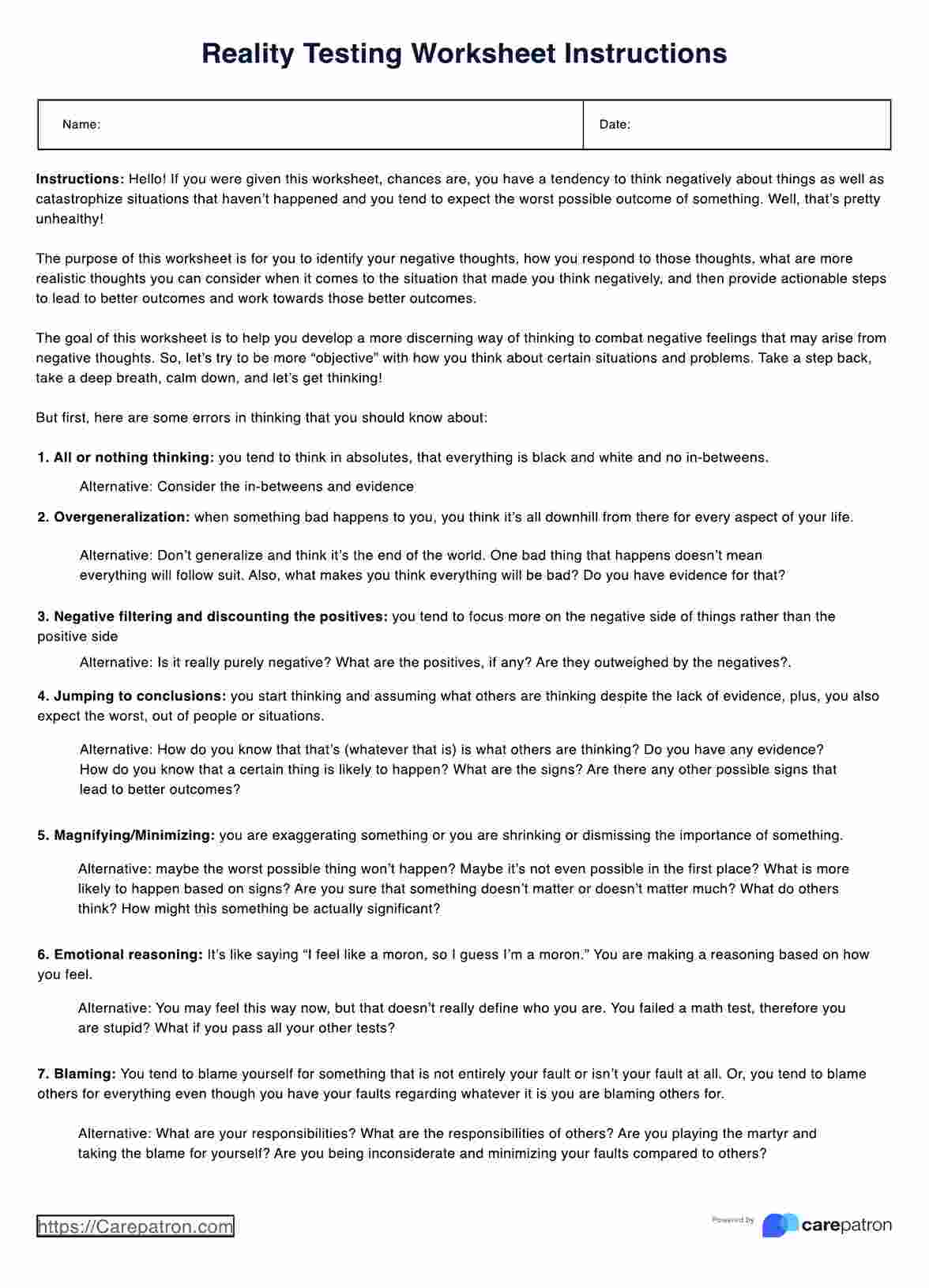
How to use this Reality Testing Worksheet
Reality Testing Worksheets come in different forms, but one of the most common forms is the one where clients do the following:
- They indicate a situation or thought that they have
- They classify the kind of negative thinking they have on that situation or thought (the types of negative thinking are usually defined via the instructions)
- They take a step back and indicate more realistic thoughts regarding the situation/thought they originally had
- And last, they determine actionable steps that will result in more favorable outcomes rather than what they have been fearing
This is the form of the Reality Testing Worksheet that we will discuss, and it is an imitation of the Reality Testing Worksheet made by the Waterloo Student Success Office. While their version is for students, we made a few tweaks to the version here so that it also accommodates adults.
Step 1: Issue this worksheet to your client and have them read the instructions.
When you have a client exhibiting signs that they tend to overthink and catastrophize situations, and they do so in unhealthy ways, then you should issue this worksheet to them as soon as possible.
The client will be the one engaging with this worksheet the most, so besides issuing this to them, it’s also best to inform them about why you are asking them to fill out this worksheet. Read them the instructions, which ask them to think objectively about things, to think first before reacting, and to consider other perspectives before making a judgment on the matter.
There are also examples to read out so they have an idea of what to indicate in the worksheet and a general list of errors in thinking that they might be doing.
Step 2: The client will indicate situations or thoughts that they view in a negative or exaggerated light.
Completing this worksheet is not difficult. The instructions are straightforward and given there are examples and even definitions of certain terms, the client shouldn’t encounter any difficulty. All they need to do is to:
- Indicate the situation or thought that they view in a negative or exaggerated light
- Indicate what they do in response to those views
- Indicate the error in thinking that best matches the way they view the problem
- Indicate a more realistic view of the problem
- And then indicate actionable steps so that they reach more favorable outcomes or get clarifications (the steps will vary depending on the problem)
Step 3: Use their answers as discussion points for later sessions.
You can have your client keep the copy for a while, given that it has multiple boxes where they can jot down their negative views on situations/thoughts.
You can use what they wrote as discussion points for your subsequent sessions. You can also build on their actionable steps to help them work through their negative thinking and develop the key skills to manage such thoughts healthily.