




What is Acceptance and Commitment Therapy?
is a profound therapeutic approach with great potential in aiding individuals, particularly those with anxiety, to foster psychological flexibility and lead a more fulfilling life. Healthcare practitioners benefit significantly from understanding the core principles of ACT, particularly its emphasis on recognizing negative feelings and thoughts, as it can serve as a potent tool in their arsenal to help clients overcome anxiety-related challenges.
At its essence, ACT is built upon the foundation of mindfulness and acceptance, coupled with behavioral change strategies. Rather than attempting to eliminate or suppress negative feelings and thoughts, ACT encourages individuals to acknowledge and embrace them as natural components of the human experience. This principle, deeply resonant with mindfulness practices, enables clients to establish a healthier relationship with their emotional landscape, thereby curbing the intensification of their distress.
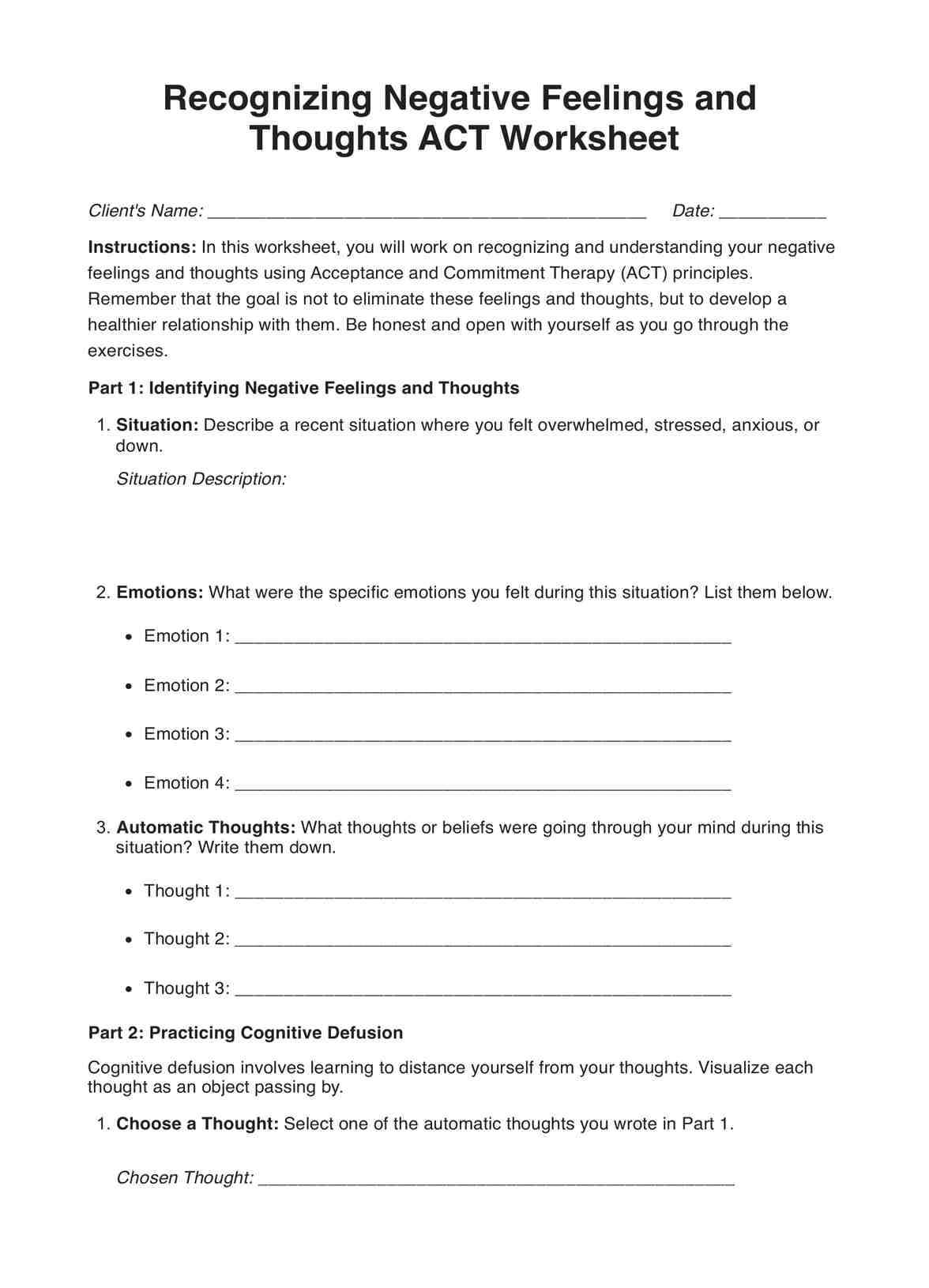
In the context of anxiety, ACT offers a transformative approach. By recognizing negative feelings and thoughts associated with stress, clients become adept at defusing themselves from these distressing mental states. ACT doesn't seek to invalidate or challenge these emotions, but rather, it guides clients to perceive them as fleeting cognitive events rather than immutable truths. This shift allows individuals to cultivate resilience, navigate stressors, and progressively loosen the grip of anxiety on their lives.
Practitioners can use ACT to guide clients through a structured process of identifying automatic thoughts and emotions tied to anxiety-provoking situations. Using techniques like cognitive defusion, clients visualize these thoughts as transient objects, diminishing their power over their emotional well-being. This process fosters a mental distance, empowering clients to respond to anxiety-driven thoughts with greater clarity and objectivity.
Furthermore, ACT assists clients in connecting with their core values and committing to action that aligns with them despite anxiety. This commitment-based approach fosters courage and empowers clients to take steps toward their goals, regardless of negative emotions. The willingness to experience anxiety as part of the journey, rather than an impediment, becomes a cornerstone of the therapeutic process.
Acceptance and Commitment Therapy is a formidable approach for healthcare practitioners to employ in aiding clients facing anxiety. By recognizing negative feelings and thoughts as fleeting experiences and cultivating psychological flexibility, clients can emerge from anxiety and lead more meaningful lives. Practitioners who integrate ACT principles into their therapeutic toolkit can empower their clients to navigate the complex landscape of anxiety with resilience, self-compassion, and unwavering commitment to personal growth and well-being.









