
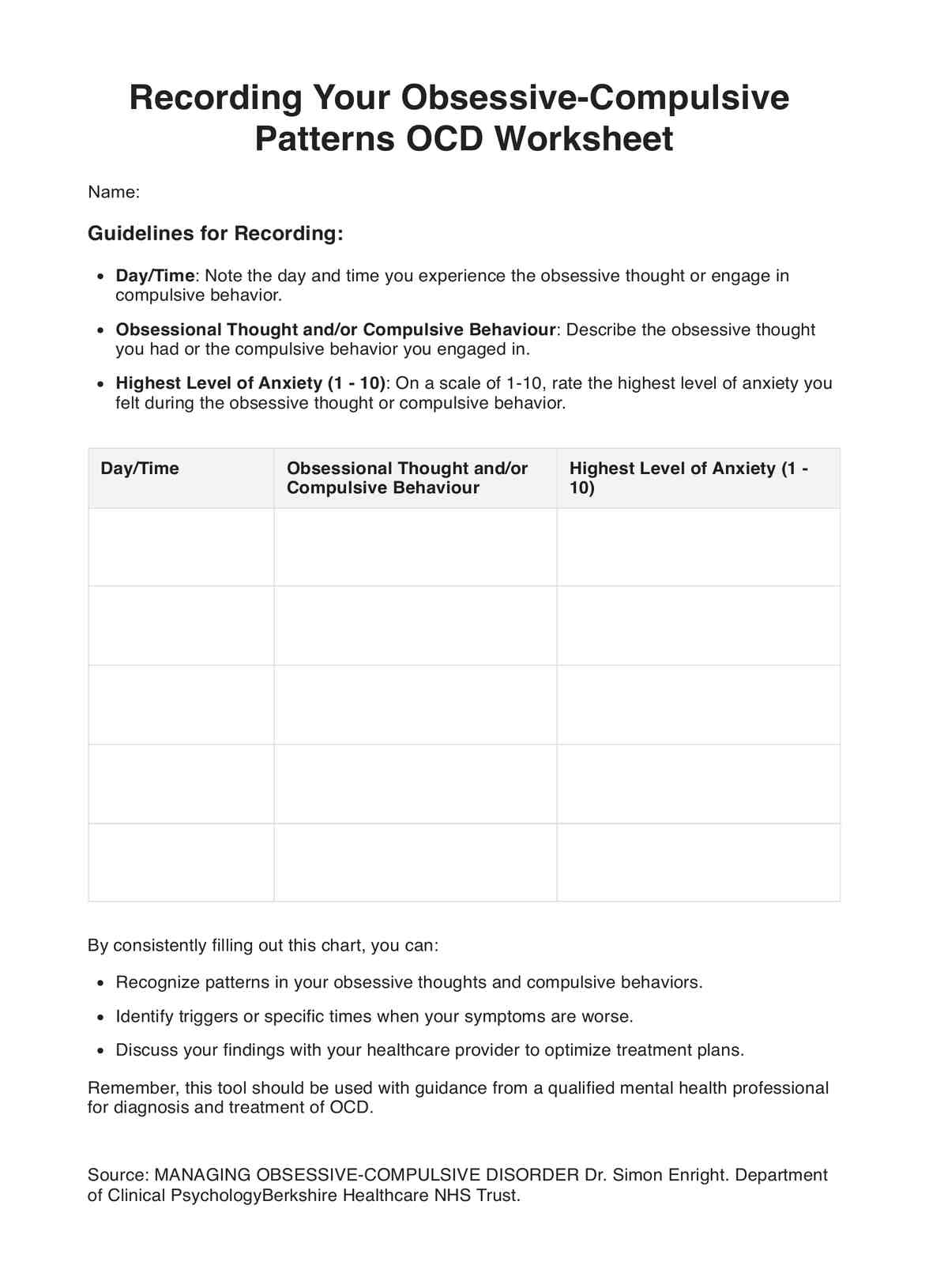




What is Obsessive-Compulsive Disorder?
Obsessive-Compulsive Disorder (OCD) is a mental health condition that can significantly impact an individual's quality of life. It is marked by persistent, unwanted thoughts or obsessions, often leading to repetitive behaviors or compulsions. The obsessions create anxiety, and the compulsions are performed to alleviate this distress.
These obsessions might manifest as intrusive thoughts about cleanliness, order, or harm, while compulsions may involve:
- Actions like constant hand-washing.
- Arranging objects in a particular way.
- Compulsively checking things.
Despite recognizing these thoughts and behaviors as excessive or irrational, individuals with OCD often find ignoring or suppressing them challenging.
The resulting cycle of obsessions and compulsions can be so intense that it interferes with daily activities, causing substantial distress. Resisting the obsessions can further escalate their distress and anxiety levels, making the urge to perform the compulsive rituals almost irresistible.
One of the most effective treatment methods for OCD is Cognitive Behavioral Therapy (CBT). This form of psychotherapy aims to alter harmful thought patterns, enabling individuals to respond better to challenging situations. For OCD patients, CBT typically involves exposure and response prevention, which encourages individuals to confront their fears and refrain from performing their usual compulsive rituals.
By understanding and acknowledging the nature of OCD, individuals can take the first step toward managing their symptoms and improving their quality of life. For more comprehensive information about and its treatments, we invite you to explore our Electronic Health Records page.









