




What is a Renal Function Test?
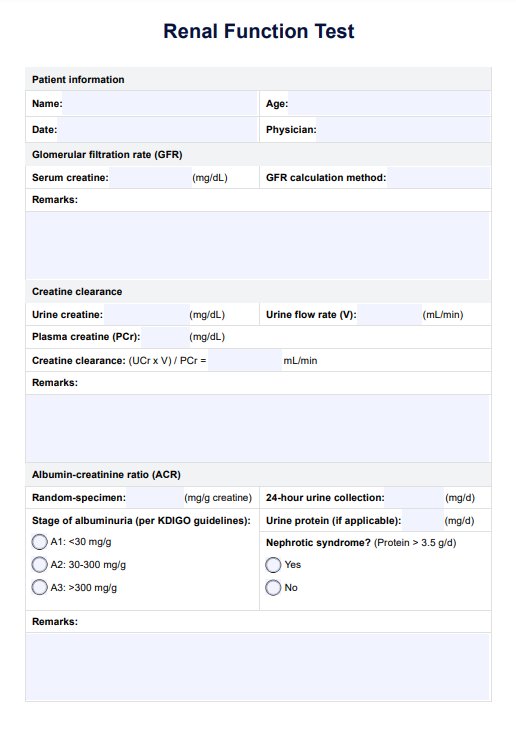
A Renal Function Test (RFT) is a group of blood and urine tests designed to assess kidney function and identify any potential kidney disease. The RFT test report format typically includes measurements of albumin-creatinine ratio, cystatin C, glomerular filtration rate (GFR), and more, which help healthcare practitioners evaluate how well the kidneys filter waste products from the blood. These tests are crucial for diagnosing chronic kidney disease (CKD), chronic renal disease, and acute kidney injury.
By measuring kidney functions, healthcare providers can detect decreased blood flow to the kidneys, which may indicate underlying issues such as urinary tract infections or hypertension. The RFT is particularly significant for patients with chronic renal impairment or those at risk of end-stage renal disease, as it allows for early intervention and management. Regular monitoring through renal function tests is essential for individuals with known kidney issues, providing valuable insights into their health status and guiding treatment plans. Overall, RFT plays a critical role in assessing renal function and ensuring timely care for various kidney-related conditions.









