How Does it Work?
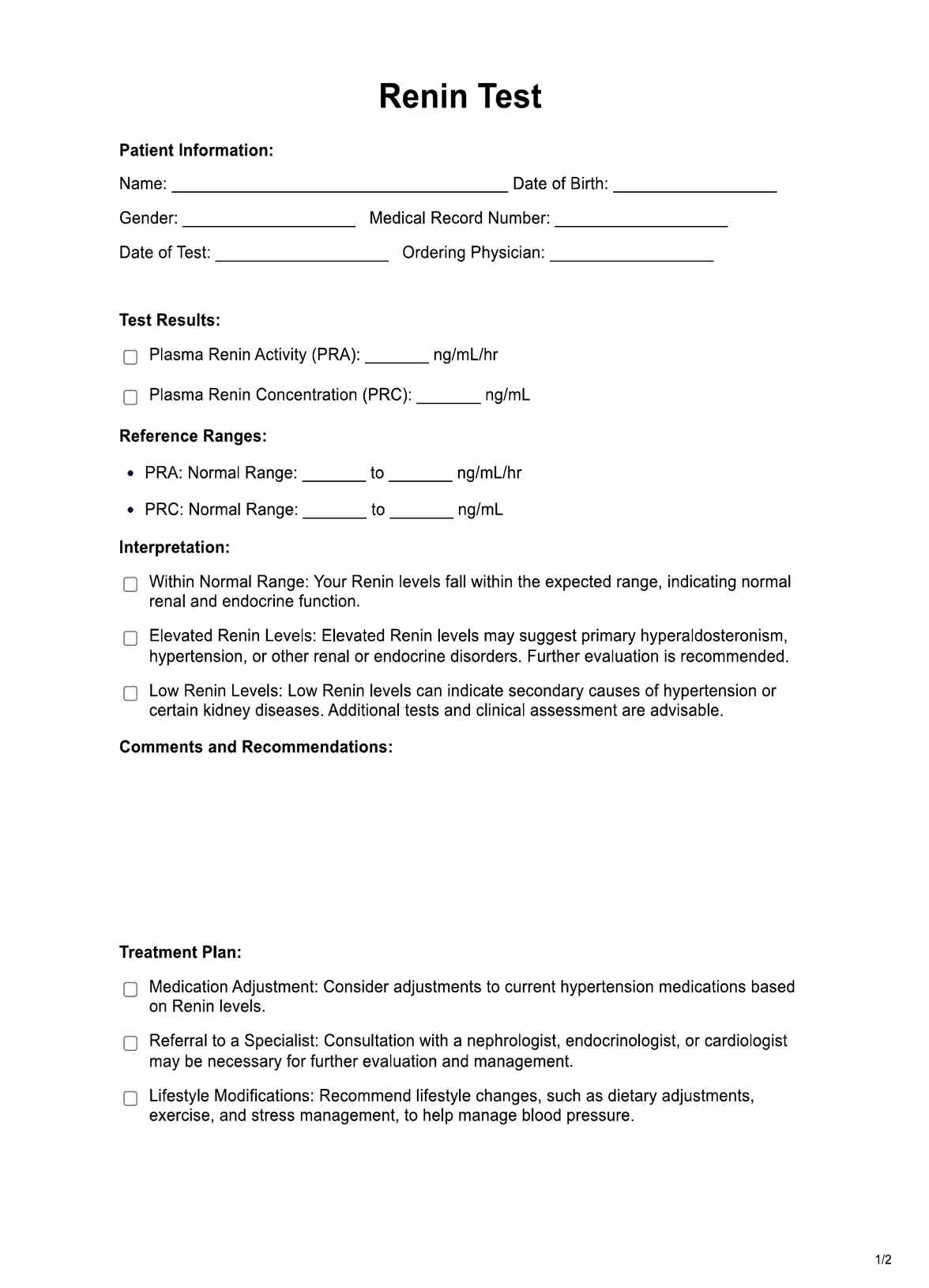
A Renin Test is a fundamental diagnostic tool in healthcare, particularly for assessing blood pressure and kidney health. Using and filling out the Renin Test Results and Interpretation Form involves several key steps to ensure accurate results and appropriate patient care.
1. Patient Information
The first step in using the form is to gather essential patient information. This includes the patient's name, date of birth, gender, medical record number, and test date. This information is crucial for maintaining accurate medical records and ensuring the results are associated with the correct patient.
2. Test Results
The next step involves recording the actual Renin test results. This includes measuring the Plasma Renin Activity (PRA) and Plasma Renin Concentration (PRC) from the blood sample collected. These numerical values provide insights into the patient's Renin levels.
3. Reference Ranges
It's vital to compare the obtained results to the established reference ranges for Renin levels. These reference ranges are specific to the laboratory or institution performing the test and help determine whether the patient's Renin levels are within a normal range.
4. Interpretation
The form includes interpretation options based on the test results. Healthcare practitioners must select the appropriate interpretation based on whether the patient's Renin levels are within the normal range, elevated, or low.
5. Comments and Recommendations
In this section, healthcare practitioners can provide additional context, comments, and recommendations based on the test results. This might include suggestions for further evaluation, medication adjustments, lifestyle modifications, or specialist referrals.
6. Treatment Plan
The form outlines potential treatment plans, including adjusting medications, referring the patient to a specialist, and recommending lifestyle modifications. The healthcare practitioner can select the most relevant options based on the patient's situation.
7. Follow-Up
To ensure continuity of care, a follow-up appointment date should be scheduled. This enables the healthcare practitioner to re-evaluate Renin levels and assess the effectiveness of any treatment or lifestyle changes.
The completed form is a valuable tool for healthcare practitioners to document and communicate test results and recommendations clearly to the patient. It is printable, making it a tangible record that can be shared with patients for their reference and future healthcare needs.