




What is resilience?
Resilience is an aspect of life that almost everyone encounters. Resilience is often identified by one's ability to bounce back from unfortunate or challenging events. According to the American Psychological Association (2025), this includes an individual's mental, emotional, and behavioral capability to accommodate challenges flexibly. Often, individuals classified as resilient people are likely to have gone through major life stresses and can come out on the other side.
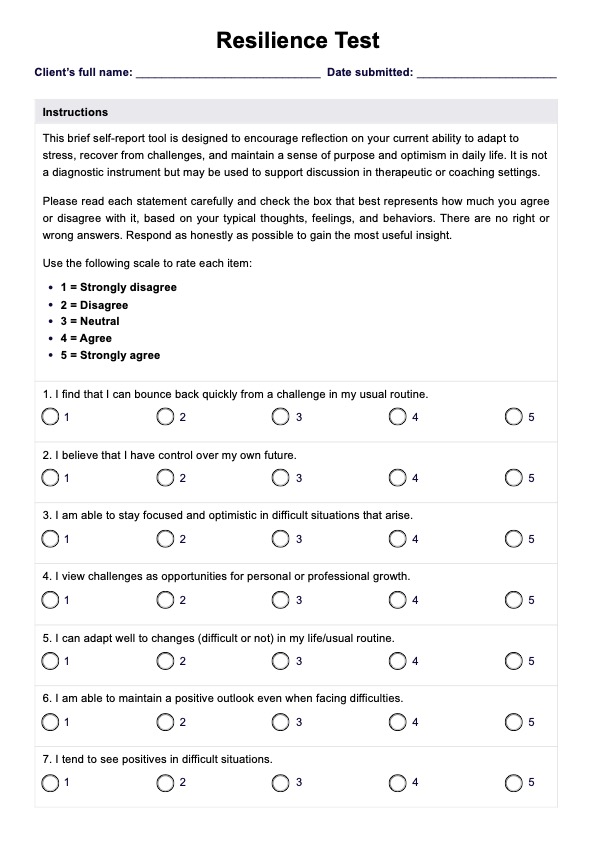
A good way to understand an individual's resilience is through completing a resilience scale. Well-known resilience measures like the Connor Davidson Resilience Scale and the Brief Resilience Scale are often used in practice for assessing resilience. Once completed, individuals may better understand what areas they may want to work on by seeking support or utilizing resilience training after measuring resilience.
The great thing about resilience is that it's not simply a fixed trait. Our experiences can shape it, and the people around us often shape it. Experiences can either decrease or enhance resilience. It will be different for everyone. For example, if an individual lives independently without any social support, their resilience may scale upwards in being able to care for themselves adequately.
Resilience can be worked on. If an individual wants to enhance their resilience score, there are ways to identify difficult situations and challenges where they may want their ability to cope to be stronger than in other areas.
In this guide, we'll explore the importance of resilience and how a resilience scale can help individuals understand their current level of resilience and identify areas for improvement.









