
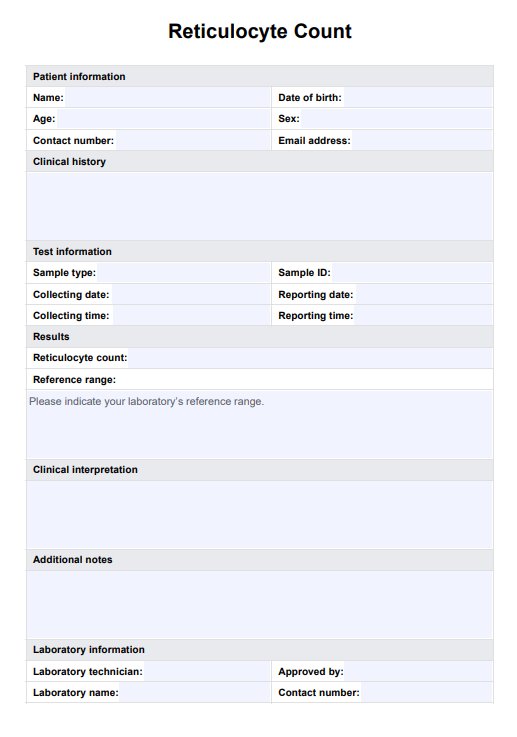




What is a reticulocyte count?
A reticulocyte count is a blood test that measures the number of reticulocytes, or immature red blood cells, present in the blood. This count is crucial for evaluating the bone marrow's function, particularly its ability to produce enough red blood cells.
Reticulocytes are essentially young red blood cells that have recently been released from the bone marrow into the bloodstream. They usually mature into fully developed red blood cells within one to two days.
The test for reticulocyte count is often used to diagnose and monitor conditions affecting red blood cell production, such as iron deficiency anemia and bone marrow failure. Understanding what a reticulocyte count is and how it works is crucial for healthcare professionals and patients dealing with conditions involving decreased production of red blood cells.
Reticulocyte counts help assess bone marrow activity and are crucial in diagnosing and monitoring anemia. In healthy individuals, reticulocytes make up about 0.5% to 2.5% of red blood cells, indicating normal red cell production (Rai et al., 2019). A high count suggests the bone marrow is actively responding to blood loss or red cell destruction, while a low reticulocyte count, especially in anemic patients, signals an inadequate marrow response.









