




What is a Rheumatoid Factor Chart?
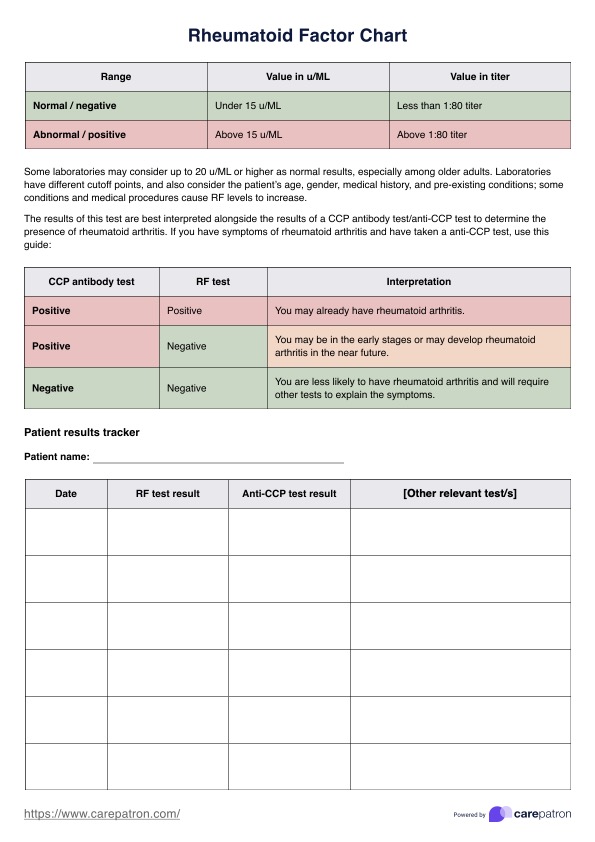
A Rheumatoid Factor (RF) Chart is a visual tool designed to help healthcare providers explain RF test results to patients and track these levels over time. RF refers to autoantibodies produced by the immune system. These are called rheumatoid factors, and they include IgM RF, IgG, and IgA. These antibodies are often measured in a rheumatoid factor test, which is primarily used to diagnose rheumatoid arthritis but can also indicate other autoimmune diseases and certain chronic infections.
In rheumatoid arthritis (RA), the immune system mistakenly attacks the body's own tissues, causing inflammation in the joints and, over time, joint damage. Since RA is complex, practitioners rely on various rheumatoid arthritis lab tests in conjunction with the RF test, including the anti-cyclic citrullinated peptide (anti-CCP) antibody test. The presence of rheumatoid factor (RF) in higher levels may suggest RA, though elevated RF can also appear in other autoimmune diseases such as Sjogren's syndrome and connective tissue diseases.
The RF chart also provides a reference for different RF levels, helping to identify cases that may require further investigation. For instance, while RF can indicate rheumatoid arthritis, it may also appear in chronic infections or certain cancers. Using this chart also allows providers to consider other test results in their interpretation, making it easier to diagnose rheumatoid arthritis or rule out other potential causes; after all, RF test results on their own are usually insufficient for an RA diagnosis.









