



Risk for Aspiration Nursing Care PlanAI Template IconToolbar IconShare Icon

Risk for Aspiration Nursing Care Plan

Effectively manage aspiration risks with our Risk for Aspiration Nursing Care Plan Template, designed for comprehensive patient care.

Telita Montales avatar

By Telita Montales on Aug 2, 2025.

Fact Checked by Nate Lacson.

Use Template

What is a Risk for Aspiration Nursing Care Plan Template?

Aspiration occurs when foreign materials, such as food, liquids, or saliva, are inhaled into the lungs. It can potentially lead to serious complications like pneumonia or respiratory distress. Common risk factors for aspiration include neurological disorders, reduced consciousness, or conditions affecting the throat and esophagus.

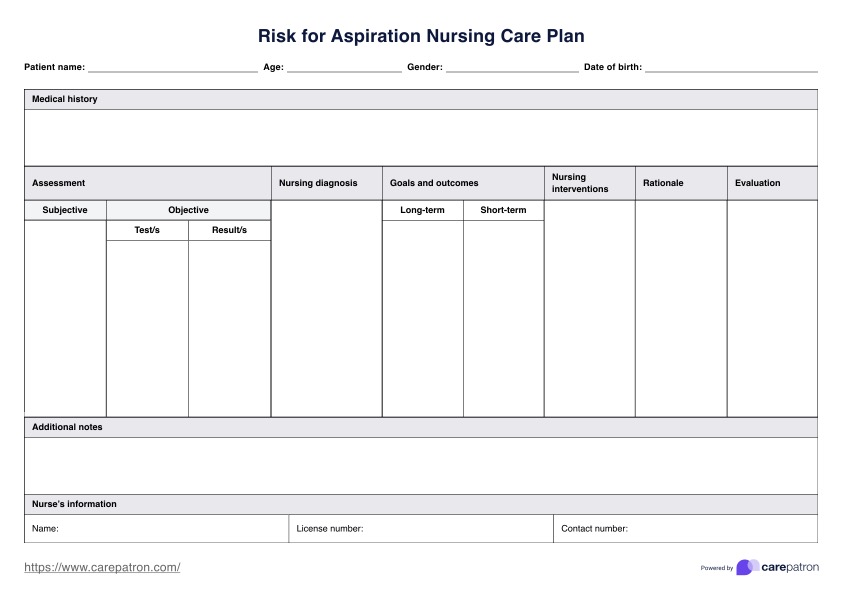
A Risk for Aspiration Nursing Care Plan Template is a tool healthcare professionals use to prevent and manage the risk of aspiration in vulnerable patients. This care plan is particularly crucial for patients with impaired swallowing (dysphagia) or reduced gag reflex. It assists in assessing the risk factors for aspiration, planning appropriate nursing interventions, and evaluating their effectiveness.

Moreover, the template emphasizes ongoing monitoring and reassessment to ensure patient safety and adjust care strategies as needed. It guides nurses and other healthcare providers to deliver consistent, evidence-based care to minimize the risk of aspiration and its associated complications. It ensures a proactive approach to patient care, focusing on prevention, early intervention, and continuous monitoring to maintain patient safety and improve health outcomes.

Risk for Aspiration Nursing Care Plan Template

Download PDF Template

How does it work?

The Risk for Aspiration Nursing Care Plan Template operates through a series of steps, ensuring a comprehensive approach to managing patients at risk of aspiration:

Step 1: Download the template

Get a copy of the free care plan using the link on this page or within the Carepatron platform’s templates library.

Step 2: Assess the patient

Conduct a detailed assessment of the patient’s swallowing ability, including observing for coughing or choking during eating or drinking and evaluating the gag reflex.

Step 3: Write down the nursing diagnosis

Write down the nursing diagnosis related to the risk for aspiration. This diagnosis is based on the assessment data, such as difficulty swallowing or impaired oral intake, and guides the development of a targeted care plan.

Step 4: Plan goals and nursing interventions

Develop a care plan with goals aimed at reducing the risk of aspiration. This may include interventions like altering food consistency, implementing feeding protocols, and educating the patient and caregivers. Write down interventions such as positioning the patient upright during and after meals, providing modified diets, and offering swallowing therapy if needed. You can also include a rationale for each.

Step 5: Evaluate outcomes

Regularly evaluate the effectiveness of the interventions. Monitor for signs of aspiration, such as coughing, fever, or changes in respiratory status, and adjust the care plan accordingly.

Where can you use this template?

A Nursing Care Plan Template is used in various clinical settings, particularly for patients at an increased risk of aspiration due to various medical conditions. It is commonly utilized in:

Hospital settings

Nurses use the template to closely monitor patients with acute illnesses or post-surgery, where patients have difficulty swallowing. It helps them create and follow a detailed care plan to prevent aspiration and protect the patient’s airway.

Long-term care facilities

Nurses in long-term care facilities rely on this template for residents with degenerative diseases that affect swallowing, like Parkinson’s disease. It guides them in formulating preventive measures and tailoring daily care for managing aspiration risk.

Rehabilitation centers

In rehabilitation centers, nurses use this care plan to manage patients recovering from strokes or neurological events that affect swallowing. The template helps monitor progress and ensure safety while patients work on improving their swallowing function.

Home care

Home health nurses apply the template when caring for patients with chronic illnesses or disabilities at home and ensuring safe oral intake.

Commonly asked questions

The process involves assessing the patient’s risk factors, setting goals, planning interventions, and regularly evaluating outcomes.

Risk for Aspiration Nursing Care Plan Templates are used in various healthcare settings for patients at risk of aspiration due to conditions like dysphagia, impaired consciousness, or neurological disorders.

Risk for Aspiration Nursing Care Plan Templates guide healthcare providers in implementing and monitoring interventions to prevent aspiration.

EHR and practice management software

Get started for free

*No credit card required

Free

$0/usd

Unlimited clients

Telehealth

1GB of storage

Client portal text

Automated billing and online payments







