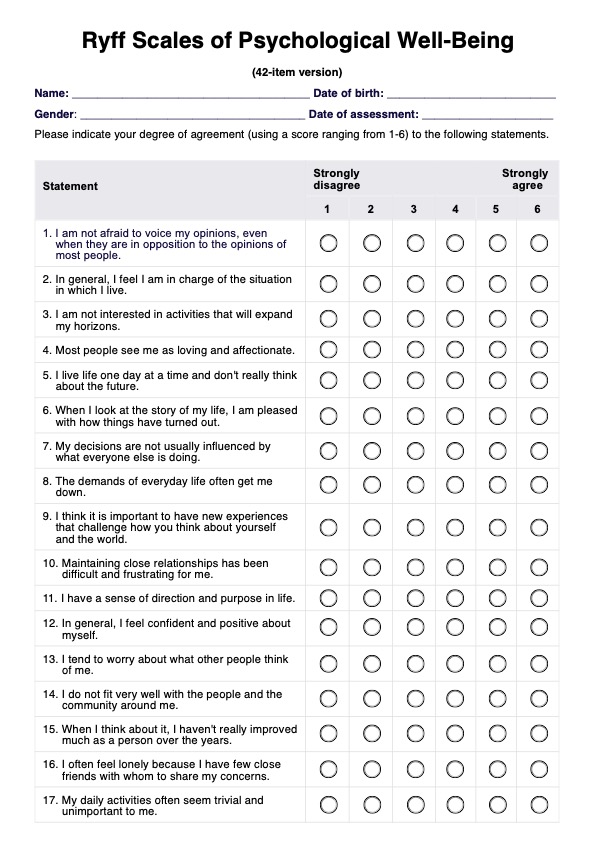
Interpretation
The scores for each dimension provide insight into an individual’s psychological well-being, reflecting how they perceive and interact with themselves and the world around them. High scores indicate strengths in key areas of well-being, while low scores highlight potential areas for growth or concern. Below is a detailed interpretation for each dimension (Ryff & Keyes, 1995):
Autonomy
High scorers are self-determined and independent. They resist social pressures, regulate their behavior internally, and evaluate themselves based on personal standards.
Low scorers are overly concerned with others’ expectations and evaluations. They depend on others’ judgments for decision-making and conform to social pressures.
Environmental mastery
High scorers feel they are masters and competent in managing their environment. They effectively use opportunities, control external activities, and create contexts suited to their values and needs.
Low scorers struggle with daily management, cannot improve their surroundings, and lack awareness of available opportunities or control over their external world.
Personal growth
High scorers feel they are growing and expanding as individuals. They embrace new experiences, realize their potential, and observe self-improvement over time.
Low scorers feel stagnant and uninterested in life. They lack a sense of improvement, personal development, or the ability to adopt new attitudes and behaviors.
Positive relations
High scorers have warm, trusting, and empathetic relationships. They value intimacy, understand reciprocity in relationships, and care for others’ welfare.
Low scorers struggle to form close connections, feel isolated, and find it difficult to be open and empathetic. They may avoid compromising to sustain relationships.
Purpose in life
High scorers have meaningful goals, a sense of direction, and beliefs that provide purpose. They see value in their past and present life while working towards defined objectives.
Low scorers lack direction, goals, or a sense of meaning in life. They may feel aimless, see little purpose in their experiences, and lack guiding beliefs.
Self-acceptance
High scorers possess a positive attitude toward themselves. They accept their strengths and weaknesses, feel optimistic about their past, and are generally satisfied with themselves.
Low scorers feel dissatisfied with themselves, troubled by certain traits, and regretful about their past. They often wish to be different than they are.