
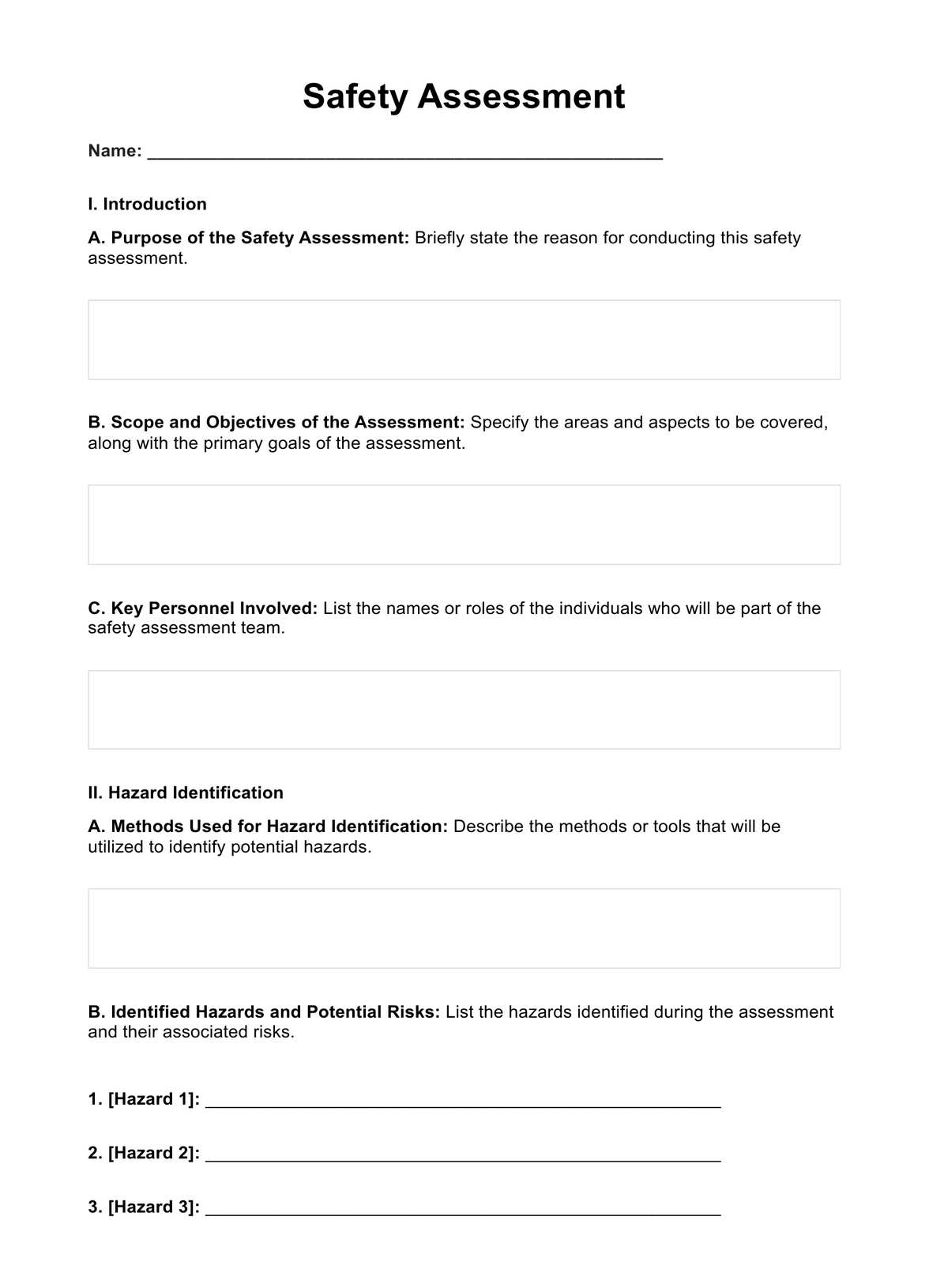




What is a Safety Assessment?
are tools organizations use to protect people, property, and the environment. These systematic processes involve identifying potential hazards, evaluating risks, and implementing measures to control and mitigate those risks. By conducting safety assessments regularly, organizations can proactively address safety concerns, prevent accidents, and foster a culture of safety consciousness.
During a safety assessment, hazards are carefully identified through various methods such as workplace inspections, data analysis, and employee input. Understanding the potential risks of these hazards allows organizations to prioritize their safety efforts and allocate resources effectively. Implementing controls, whether through engineering modifications, administrative procedures, or personal protective equipment, helps reduce the likelihood of accidents and injuries.
One of the key benefits of safety assessments is their role in continuous improvement. As safety conditions and organizational dynamics change, regular assessments ensure that safety measures remain up-to-date and relevant. Additionally, safety assessments empower employees by involving them in the process, encouraging their active participation in creating a safer work environment.
By prioritizing safety and incorporating safety assessments into their standard practices, organizations can reap the rewards of improved safety performance and reduced incidents.









