
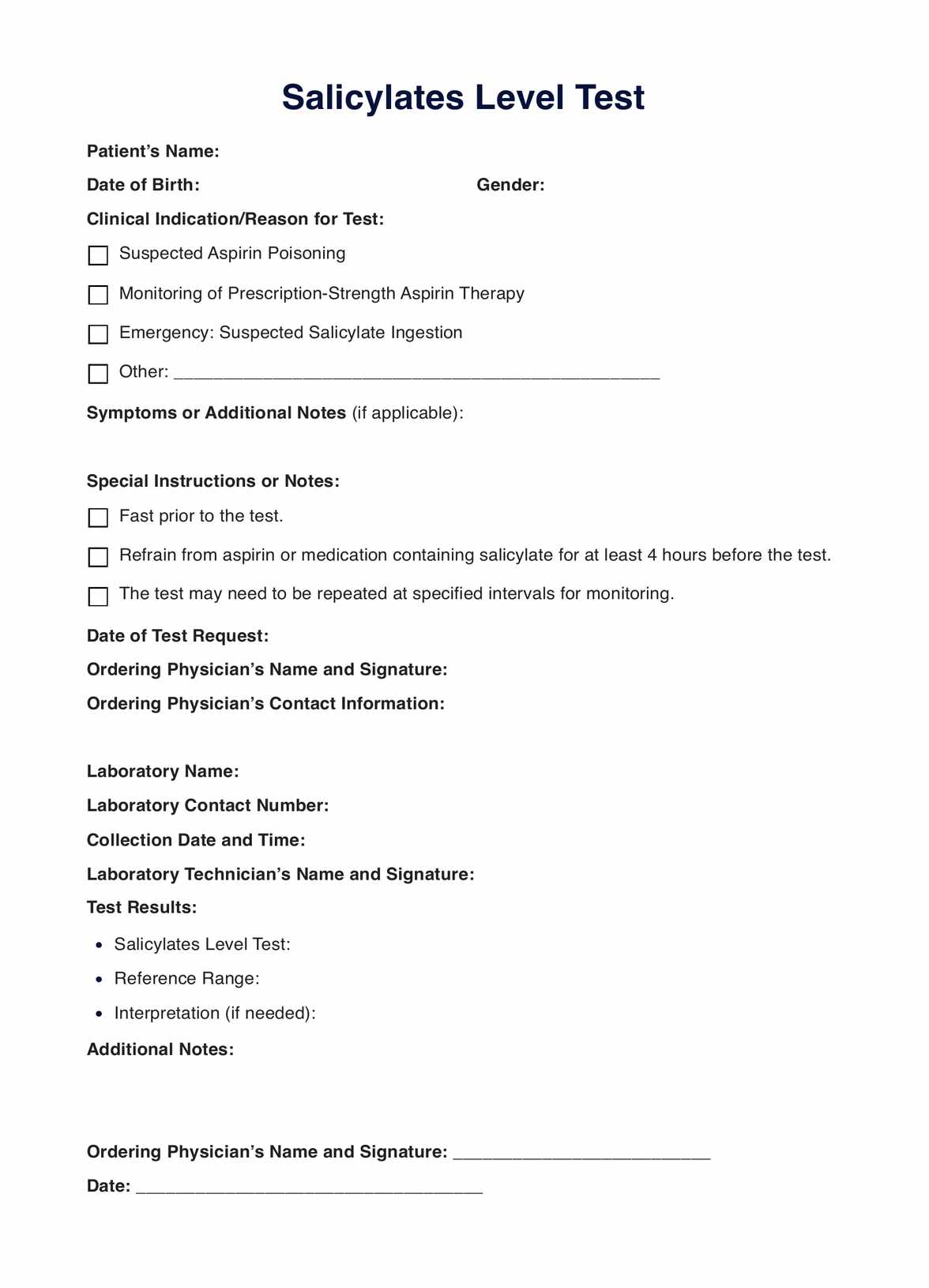




What is a Salicylate level Test?
A salicylate level test is a medical assessment healthcare practitioners use to quantify the salicylate concentration in an individual’s bloodstream. Salicylates are a class of drugs found in medications, including prescription and over-the-counter drugs. Aspirin, among others, is the most prevalent variant of salicylate.
Aside from knowing the amount of salicylate in one’s blood, the salicylate level test is primarily used by healthcare practitioners as a diagnostic tool to identify acute or gradual aspirin poisoning, which has symptoms like nausea, vomiting, hyperventilation, profuse sweating, fatigue, accelerated heart rate, confusion, etc.
The severity and presence of symptoms will vary depending on the individual's aspiring poisoning. Aside from that, the test can also be used to monitor salicylate levels in individuals who are taking prescription-strength aspirin for their inflammatory ailments like arthritis.
Like other medical tests, the salicylate level test also requires a blood sample from a patient who has refrained from ingesting substances containing salicylate for at least four hours before the test. The test results obtained from processing can signify whether a patient needs immediate medical intervention or treatment, especially if they have elevated salicylate levels in their bloodstream.









