How does it work?
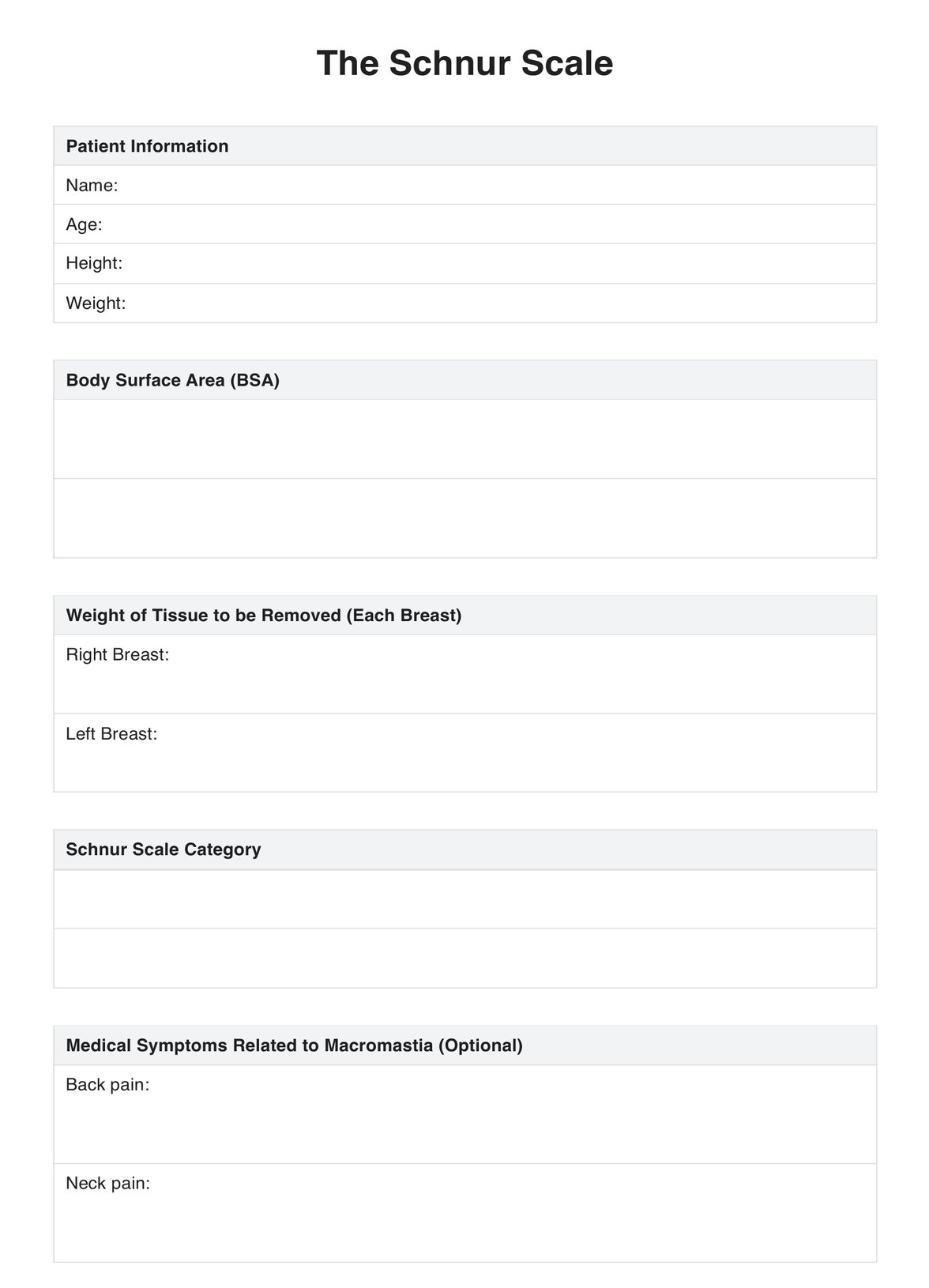
The functionality of the Schnur Scale is rooted in its systematic approach to determining the medical necessity for breast reduction surgeries. The process involves four key steps:
Step 1: Calculating the Patient's Body Surface Area (BSA)
The first step measures the human body's total surface area and is generally calculated using the patient's height and weight. The BSA provides a more accurate representation of metabolic mass than body weight alone, making it an essential factor in medical assessments.
Step 2: Determining the Volume of Tissue Removal
Next, the surgeon needs to determine the quantity of breast tissue that should be removed to achieve the desired outcome and alleviate any physical discomfort experienced by the patient. This decision is based on various factors, including the patient's overall health, body proportions, and personal preferences.
Step 3: Consulting the Schnur Scale
Once the BSA and proposed tissue removal volume have been established, the surgeon refers to the Schnur Scale. This tool offers a range of tissue weights for each BSA category that should be removed to consider the operation medically necessary. It serves as an objective guideline to assist surgeons in making informed decisions about the medical necessity of breast reduction surgeries.
Step 4: Submitting for Preauthorization
If the proposed volume of tissue to be removed aligns with the recommendations of the Schnur Scale, the surgeon can proceed to submit a preauthorization request to the insurance company. This step is crucial to ensure the patient's insurance plan covers the procedure.
We have a printable version of the Schnur Scale for reference to facilitate this process. This resource allows patients and healthcare providers to access the information and guidelines the scale provides readily. By understanding and correctly implementing the Schnur Scale, surgeons can make evidence-based decisions regarding breast reduction surgeries, ultimately leading to improved patient outcomes.