




What is a Schober Test?
The Schober Test is a vital tool in physical examinations that measures the range of motion in the lumbar spine. Originating from the work of Dr. Paul Schober, a German physician in the 1930s, this test has become an invaluable resource in diagnosing conditions that affect spinal mobility, such as ankylosing spondylitis.
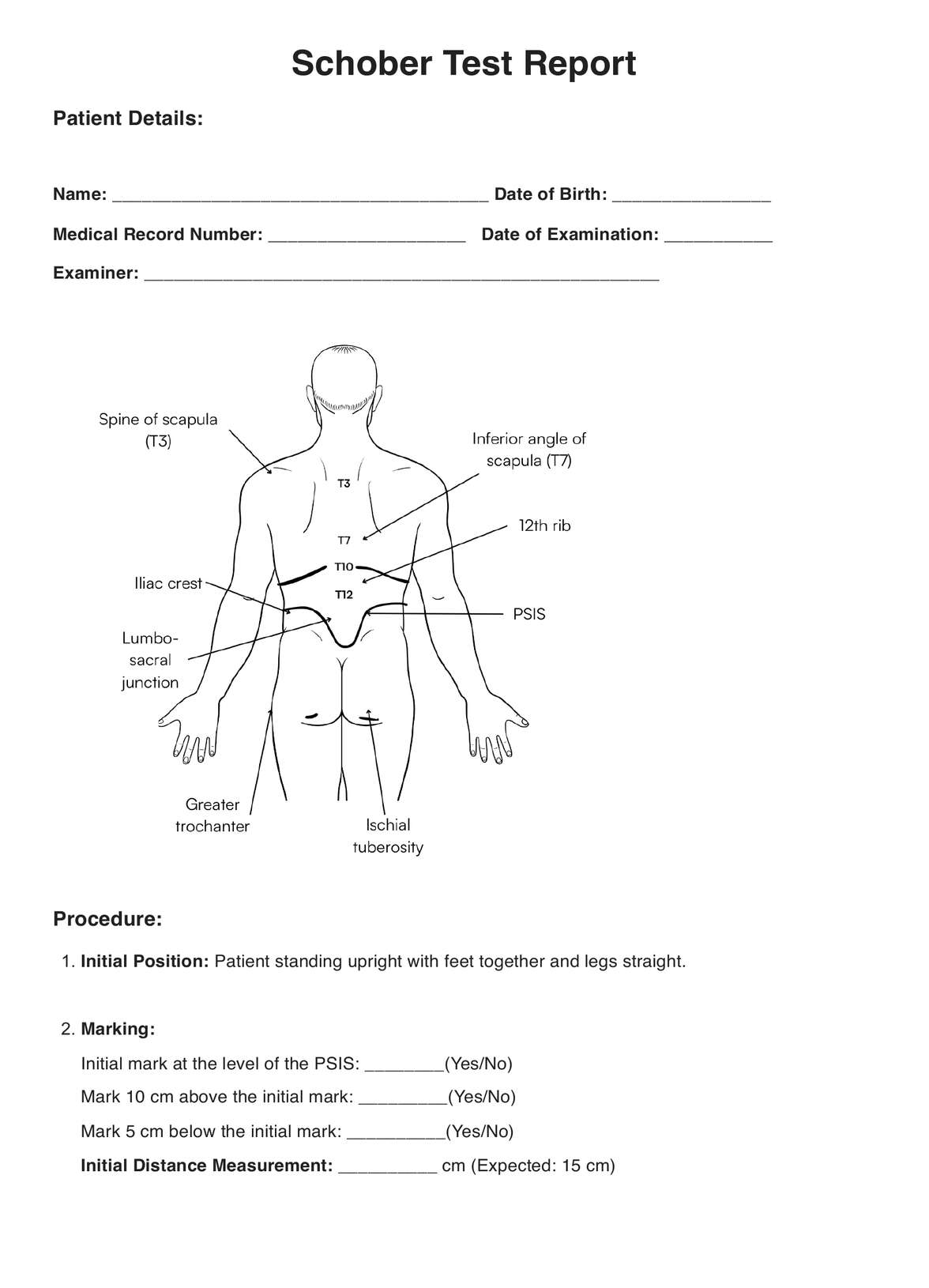
The process of the Schober Test is straightforward yet effective. It begins with marking two points on a patient's back, one at the level of the posterior superior iliac spine and another 10cm above it. The patient is then asked to bend forward to the fullest extent possible. If the distance between the two points increases upon bending, it indicates normal spinal flexibility.
In addition to the original Schober Test, a modified version also exists. This variant incorporates an extra mark 5cm below the posterior superior iliac spine, providing a more comprehensive evaluation of lumbar spine mobility.
The simplicity and effectiveness of the Schober Test make it a vital part of any healthcare provider's clinical toolkit. Professionals can assess a critical aspect of spinal health with a skin marker and tape measure. The test's results can be effortlessly integrated into documentation processes.









