




What is self-advocacy?
Have you ever wondered how empowering it could be for your patients to speak up for themselves? Self-advocacy is a vital skill that enables individuals to assert their needs and rights, paving the way for better healthcare outcomes and personal growth. How can we, as healthcare professionals, help our patients develop these crucial self-advocacy skills?
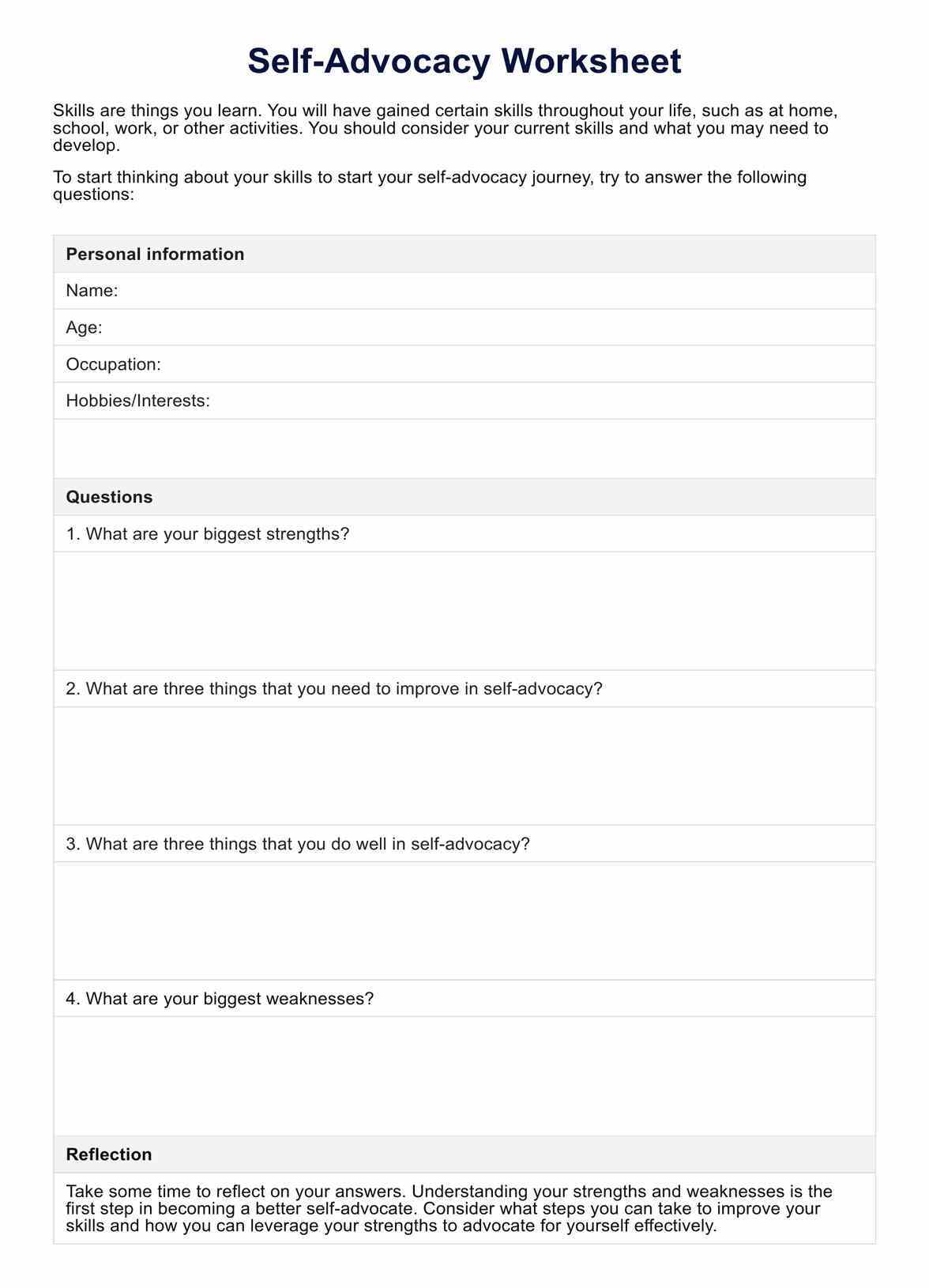
This guide explores the importance of self-advocacy, the skills involved, and how worksheets can effectively teach self-advocacy. Dive in to discover how enhancing advocacy skills, communication skills, and self-awareness can lead to significant improvements in your patients' lives.
Three key elements of self-advocacy
Understanding the core components of self-advocacy is essential for fostering these skills in patients. Here are three key elements that form the foundation of effective self-advocacy:
- Self-awareness: Knowing one's strengths, weaknesses, needs, and desires is the first step in self-advocacy. This self-awareness helps individuals to identify what they need to advocate for and to communicate these needs clearly and effectively.
- Communication skills: Effective communication is at the heart of self-advocacy. Patients must develop verbal and non-verbal communication skills to express their needs assertively and confidently.
- Critical thinking and problem-solving: It is crucial to analyze situations, identify potential barriers, and devise practical solutions. These skills are essential for navigating complex healthcare environments and advocating for one's own needs.
Why is self-advocacy important?
Self-advocacy is crucial because it empowers individuals to take control of their healthcare and personal well-being. By developing self-advocacy skills, patients can improve their communication skills, leading to more effective interactions with healthcare providers. This, in turn, enhances their ability to make informed decisions about their care.
Additionally, self-advocacy promotes personal growth and social skills, fostering greater independence and confidence. Through virtual learning and structured worksheets, healthcare professionals can teach self-advocacy skills, helping patients navigate their healthcare journeys with greater autonomy and self-assurance.









