




What is a Sensory Assessment Checklist?
A Sensory Assessment Checklist is a tool for understanding how individuals process and respond to sensory input from their environment. Sensory processing involves multiple systems that help interpret stimuli such as touch, sound, and movement. These systems influence daily interactions, from fine motor tasks like writing to social behaviors like making friends.
Some individuals, particularly children, may experience challenges in sensory processing, leading to sensory processing disorder. This condition can cause difficulties in regulating responses to stimuli, often resulting in sensory seeking behaviors or aversions to specific sensations. While some children thrive in constant motion or enjoy messy play, others may struggle with certain clothing textures, different textures in food, or uneven surfaces when walking.
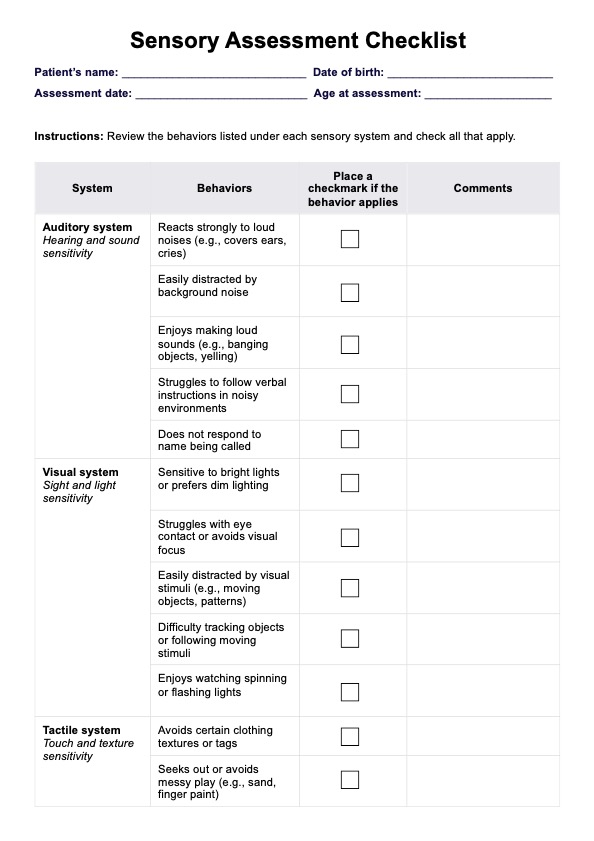
Since sensory processing issues vary widely, identifying them can be complex. To assist caregivers and practitioners, the sensory checklist categorizes sensory responses based on different systems, such as the proprioceptive system, vestibular dysfunction, and tactile dysfunction. By evaluating a child's sensory needs, an occupational therapist can determine whether interventions like a sensory diet or sensory breaks may be beneficial.
The checklist typically examines sensory responses across various systems:
- Auditory system (sound sensitivity)
- Gustatory system (taste and food preferences)
- Interoceptive system (internal body signals like body temperature)
- Olfactory system (smell sensitivities)
- Proprioceptive system (awareness of body position and body movements)
- Tactile system (clothing preferences, touch sensitivity)
- Vestibular system (inner ear balance, movement coordination)
- Visual system (sensitivity to light and visual stimuli)
The Sensory Assessment Checklist allows healthcare providers to identify a child's sensory preferences and challenges and tailor intervention strategies. This tool helps create a supportive environment by addressing sensory triggers and encouraging appropriate physical activities.
Practitioners can collaborate with a child's teacher and caregivers to implement strategies that promote comfort and engagement, such as modifying appropriate clothing choices or incorporating sensory activities into daily routines.









