
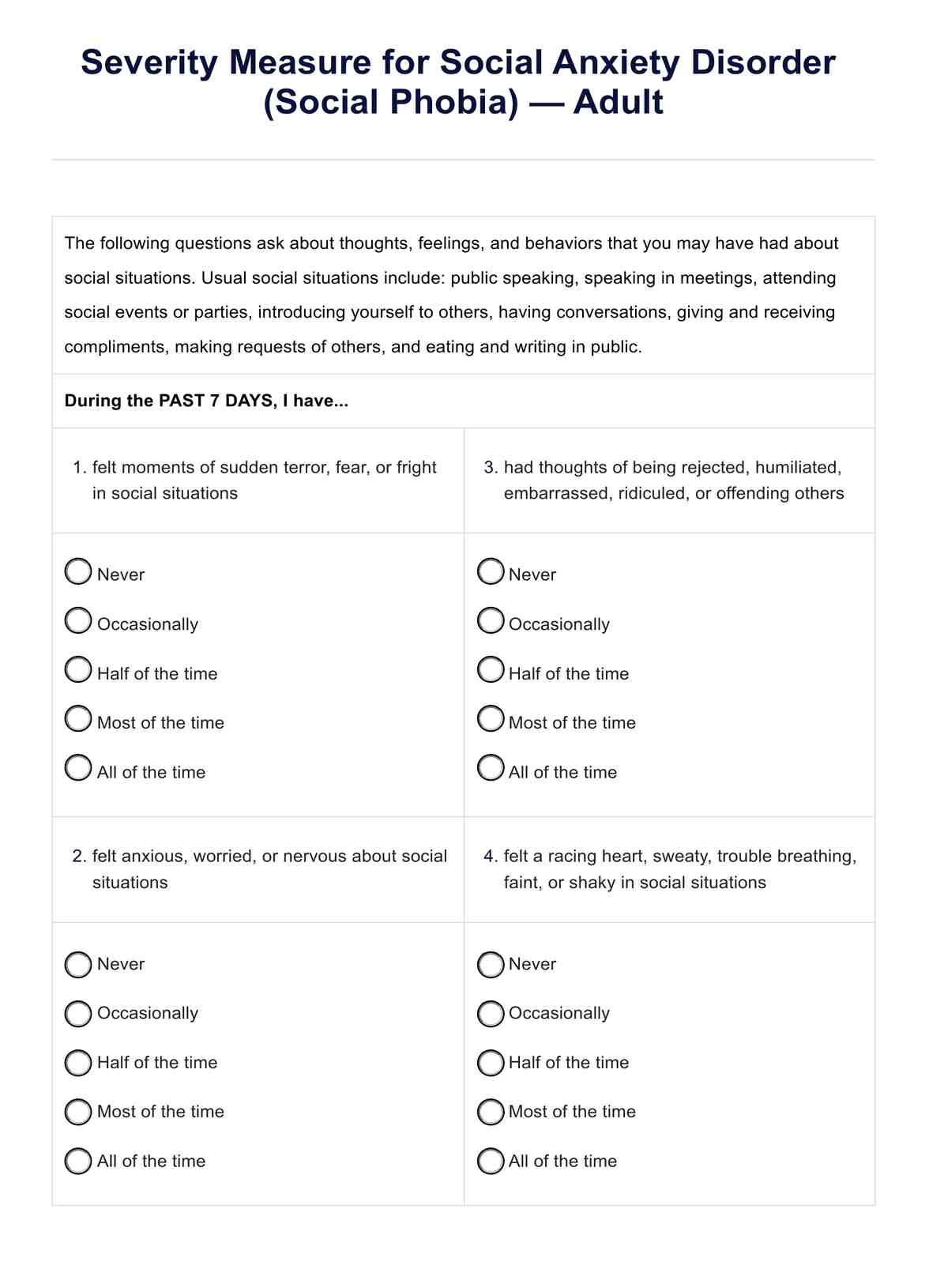




What is social anxiety disorder?
Social Anxiety Disorder, also known as social phobia, is a mental disorder characterized by an intense fear of social situations where one may be judged or scrutinized by others. This condition goes beyond common shyness; it can significantly impair an individual's ability to function in daily life, affecting their social interactions, work, and school performance. Individuals with social anxiety disorder often experience fear of negative evaluation, leading to avoidance of social situations, distress in social interactions, and various emotional symptoms that can impact their overall quality of life.
The causes of social anxiety disorder are multifaceted, including genetic, environmental, and psychological factors. Symptoms typically involve excessive worry about social situations, fear of embarrassment or humiliation, avoidance of social gatherings, and physical signs of anxiety such as sweating, trembling, or difficulty speaking. These persistent symptoms can vary in severity, affecting individuals' ability to engage in everyday social interactions.
Professionals diagnose social anxiety disorder through a comprehensive evaluation that includes clinical interviews, psychological assessments, and sometimes, the use of specific diagnostic tools like the Anxiety Disorders Interview Schedule. The Diagnostic and Statistical Manual of Mental Disorders (DSM) criteria also guide the diagnosis, focusing on the individual's fear or anxiety about social situations, avoidance behavior, and the impact on their daily functioning.









