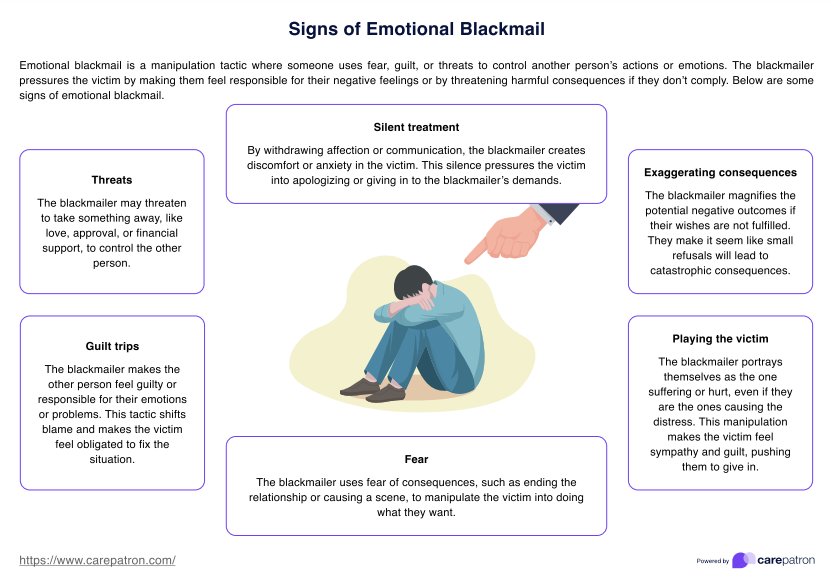
Characteristics of emotional blackmailers
An emotional blackmailer may resort to various forms of manipulative behavior, and that is why teaching your clients to recognize emotional blackmail, whether in family or romantic relationships, can save them from a potential or already abusive relationship. Here are some characteristics or warning signs to look out for.
Makes threats
Emotional blackmail can be direct or indirect threats to gain control over others. These threats can be explicit, such as saying they will end a relationship or leave if their demands are not met, or subtle, like suggesting harm might come if they don’t comply. For example, a partner might say, “If you don’t do this for me, I’ll have to reconsider our future together.”
Guilt-trips individuals
They frequently employ guilt trips to manipulate others into doing what they want. By reminding the person of past mistakes or emphasizing how their actions might hurt them, the blackmailer creates a sense of obligation. For instance, a family member might say, “I sacrificed so much for you; it would be selfish not to help me now.”
Uses silent treatment
Silent treatment is another tactic emotional blackmailers use to exert control. By refusing to communicate, they can make the other person feel anxious about what they did wrong. For example, a friend might stop talking after a disagreement, leaving a person worried about your relationship.
Instills fear
Emotional blackmailers can create a sense of constant fear in their victims. They might threaten to expose secrets or ruin reputations if their demands are not met, making the victim feel trapped. For example, an intimate partner might say, “If you leave me, I’ll tell everyone about your past mistakes.”
Plays the victim
They often play the victim to gain sympathy and manipulate others. By portraying themselves as the ones suffering, they shift the focus away from their controlling behavior and make the other person feel guilty for wanting to address the issue. For example, a colleague might say, “You’re making me feel bad for wanting support when I’m the one going through a tough time.”
Exaggerates consequences
Emotional blackmailers often exaggerate consequences to manipulate others into compliance. They might present ultimatums or worst-case scenarios to make their demands seem more urgent, creating unnecessary anxiety. For example, a family member might say, “If you don’t lend me money now, I’ll lose my house, and it will all be your fault.”