
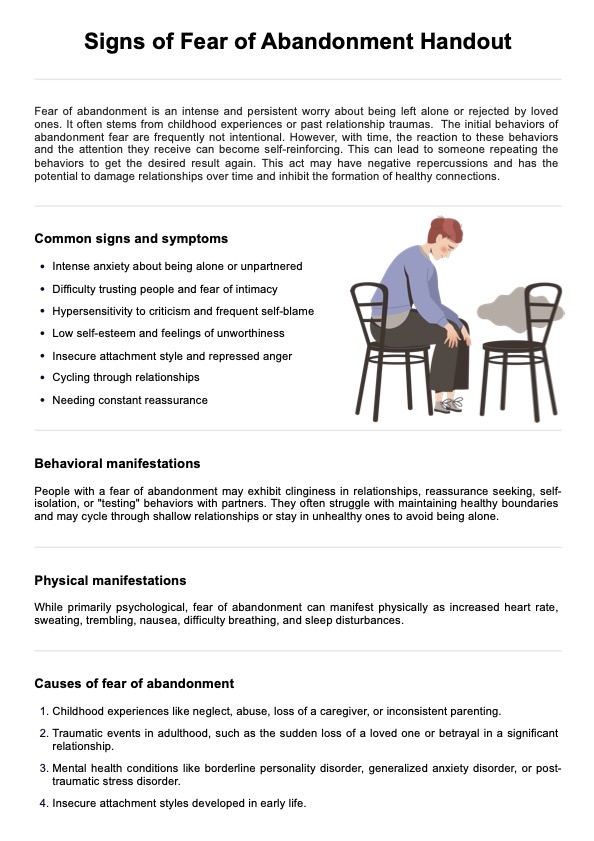



Signs of Fear of Abandonment HandoutAI Template IconToolbar IconShare Icon

Signs of Fear of Abandonment Handout

Explore the signs of fear of abandonment in unhealthy relationships. Learn strategies to overcome abandonment anxiety and build healthier relationships.

Audrey Liz Perez avatar

By Audrey Liz Perez on Aug 2, 2025.

Fact Checked by Karina Jimenea.

Use Template

What is fear of abandonment?

Fear of abandonment is a pervasive anxiety about being left alone or rejected by others, often stemming from childhood trauma or insecure attachment styles. This intense fear can significantly impact mental health and the ability to form healthy relationships. People with abandonment issues may exhibit behaviors like constant reassurance-seeking, emotional dependency, or sabotaging relationships.

Fear of abandonment is commonly associated with mental health conditions such as borderline personality disorder, separation anxiety disorder, dependent personality disorder, and avoidant personality disorder. It can lead to unhealthy relationship patterns, emotional distress, and difficulty maintaining intimate connections.

Overcoming fear of abandonment frequently necessitates collaboration with a mental health professional to treat underlying trauma, boost self-esteem, and foster a stable and secure attachment style. Therapy can help people understand their abandonment anxieties, set healthy boundaries, and create more solid interpersonal connections. People can move toward stronger emotional connections and a more balanced approach to romantic and social interactions by resolving these concerns.

Signs of Fear of Abandonment Handout Template

Download PDF Template

Signs of fear of abandonment

Recognizing the signs of fear of abandonment is crucial for mental health professionals to provide effective support and treatment and address their physical and emotional needs. These indicators often manifest in various aspects of an individual's behavior, emotional responses, and relationship patterns.

1. Intense anxiety about being alone or unpartnered

Individuals with abandonment fears may experience extreme distress at the prospect of being alone, often leading to clingy behavior or an inability to maintain healthy boundaries in relationships.

2. Difficulty trusting people and fear of intimacy

This sign manifests as a reluctance to open up emotionally or form deep connections, stemming from a fear of eventual rejection or abandonment.

3. Hypersensitivity to criticism and frequent self-blame

People with abandonment issues often interpret minor criticisms as major rejections, leading to excessive self-blame and emotional distress.

4. Low self-esteem and feelings of unworthiness

Abandonment fears can significantly impact self-esteem, causing individuals to feel undeserving of love or stable relationships.

5. Insecure attachment style and repressed anger

Those with a fear of abandonment may exhibit anxious or avoidant attachment styles, often accompanied by unexpressed anger toward past abandonment figures.

6. Cycling through relationships

This behavior involves quickly moving from one romantic relationship to another, avoiding the emotional distance and intimacy while fearing being alone.

7. Needing constant reassurance

Individuals may frequently seek validation and reassurance from partners, friends, or family members, reflecting their deep-seated insecurity and fear of rejection, especially those who have abandonment trauma or post traumatic stress disorder from childhood.

Recognizing these signs is crucial for developing appropriate treatment plans, including talk therapy, cognitive-behavioral techniques, and strategies to build healthy social relationships and improve self-esteem, especially for a client with a mental health condition.

How to use our Signs of Fear of Abandonment Handout

Our Signs of Fear of Abandonment Handout is a valuable tool for mental health professionals to identify and address abandonment issues in clients. Here's how a mental health professional more effectively utilize this resource:

Step 1: Download and review the handout

Open the handout by clicking "Use template," on this page, which opens it on the Carepatron app's template editor. This editor lets you customize the template. You can also get a ready-to-use PDF by clicking "Download."

Step 2: Use it during client sessions

Incorporate the handout into your initial client assessments or ongoing therapy sessions.

Use it as a guide to observe the child's development and identify potential abandonment issues, anxious attachment styles, related mental health conditions like borderline personality disorder or separation anxiety disorder, and patterns in the client's interpersonal relationships that affected healthy human development.

Step 3: Educate and discuss with clients

Share the handout with clients to help them understand their own behaviors and emotions. Use it as a starting point for discussions about abandonment fears, attachment styles, and how these issues may be impacting their romantic relationships and overall mental health.

Doing this can lead to a deeper understanding and conversations about childhood trauma, emotional connection, and strategies to build healthy relationships and overcome abandonment issues.

How to help patients overcome fear of abandonment

Helping patients overcome the fear of separation anxiety and abandonment requires a comprehensive approach that addresses underlying trauma, attachment styles, and emotional needs.

Mental health professionals can employ various strategies to support patients in developing healthier relationships and a more secure sense of self. Here are some of them:

  • Educate patients about attachment theory and how insecure attachment styles contribute to abandonment anxiety.
  • Encourage exploration of childhood experiences and relationships with a primary caregiver to understand the roots of abandonment fears.
  • Teach emotional regulation skills to manage emotionally reactive responses in relationships.
  • Guide patients through the grieving process for past emotional abandonment or traumatic events.
  • Foster self-compassion and self-care practices to build a stronger sense of self-worth.
  • Practice boundary-setting exercises to help patients develop healthier relationships and avoid attracting unavailable partners.
  • Use inner child work to heal deep-seated abandonment wounds from early childhood.
  • Develop strategies for building and maintaining secure relationships, including effective communication skills.
  • Address any co-occurring personality disorders or mental health conditions that may exacerbate abandonment fears.
  • Explore and challenge behavior patterns that sabotage relationships or lead to unhealthy attachments.
  • Provide tools for managing anxiety and fear of rejection in future relationships.
  • Encourage the development of a support network and healthy bonds outside of romantic partnerships.

Remind your clients that overcoming the fear of abandonment takes time and effort.

Benefits of using a signs of abandonment issues handout

Using a Signs of Fear of Abandonment Handout can make your work easier and more effective. Here are three reasons why it’s worth keeping on hand:

Easy to use

This handout is designed with clarity and simplicity in mind, so you don’t have to dig through dense information to understand the basics.

Whether you're treating abandonment issues or helping someone identify their patterns, the content is laid out in a clear, digestible format. Even someone new to the topic can follow along without feeling overwhelmed.

Saves time

Instead of explaining the same signs over and over in every session or conversation, you can simply hand this out and refer back to it when needed. It covers signs like clinginess in intimate relationships, intense feelings of panic when someone pulls away, and fear of rejection.

Having it ready means you can spend more time focusing on teaching coping mechanisms and exploring deeper healing work.

Available in digital and printable formats

Whether you prefer something to pull up on your tablet or a printed copy to give clients, this handout has you covered. You can keep a few copies on your desk or send the PDF directly via email.

It’s especially helpful when working with clients managing an underlying mental health condition that may contribute to fear of abandonment, offering a visual reference they can revisit anytime.

Commonly asked questions

Fear of abandonment often stems from childhood trauma, such as neglect, abuse, or loss of a caregiver. It can also develop from traumatic experiences in adult relationships, like infidelity, intimate partner violence, or unexpected breakups.

Fear of abandonment can lead to clingy behavior, constant need for reassurance, difficulty trusting partners, and sometimes sabotaging relationships. It may cause individuals to avoid intimacy or become overly dependent on their partners.

Yes, fear of abandonment can be overcome with proper support and treatment. Therapy, particularly cognitive-behavioral therapy (CBT) or psychodynamic therapy, can help individuals understand the root of their fears fear abandonment and develop healthier attachment styles. Building self-esteem, practicing self-compassion, and learning to form secure relationships are key healing components.

EHR and practice management software

Get started for free

*No credit card required

Free

$0/usd

Unlimited clients

Telehealth

1GB of storage

Client portal text

Automated billing and online payments







