
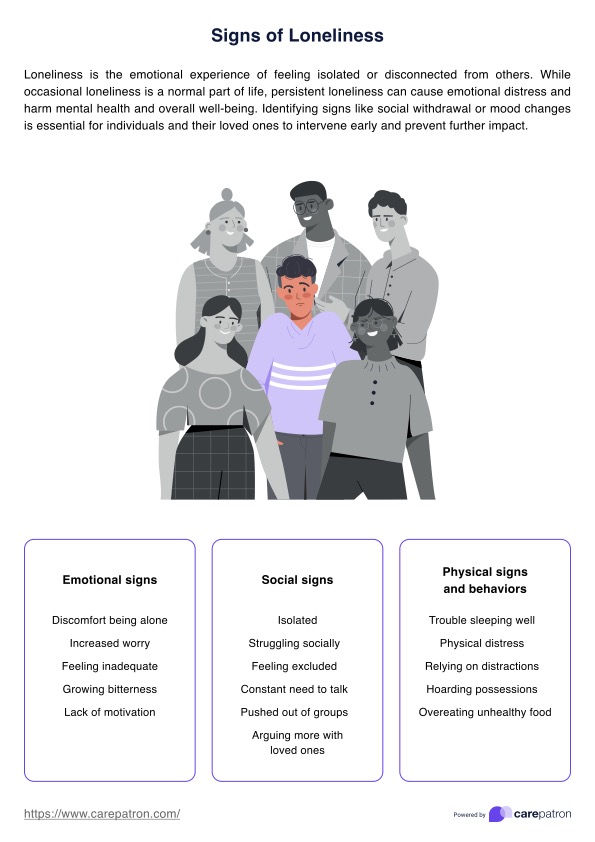




What is loneliness?
Loneliness is the emotional discomfort that arises from feeling isolated or perceiving a gap between desired and actual social connections. While social psychology focuses on the distress caused by unmet needs for companionship, humanistic perspectives view loneliness as a natural part of life that can foster self-awareness and personal growth (American Psychological Association, 2019).
What causes people to feel lonely?
People often feel lonely due to social isolation, such as living alone or lacking close relationships. Significant life changes, like moving, losing a loved one, or job transitions, can also trigger loneliness. Additionally, mental health challenges, low self-esteem, or heavy reliance on social media can make it harder to form meaningful connections, deepening feelings of loneliness.
As a mental health professional, loneliness is something you've probably encountered often in your practice, no matter what age group you work with. It's important to address because you know better how it can seriously affect mental and physical health. Identifying it early can help your patients build healthy coping skills and facilitate meaningful connections.









