




What is toxic positivity?
Positivity has recently become a common response, often seen as the go-to solution or suggestion when someone seeks advice on handling negative emotions. Embracing a positive mindset is encouraged, not only in real life but also across social media, where motivational and inspirational quotes urge people to adopt positive vibes and attitudes to dispel negative thoughts.
However, healthy positivity recognizes both negative and positive emotion without dismissing difficult feelings. When optimism becomes excessive, it can lead to toxic positivity, which may be unhelpful for some individuals.
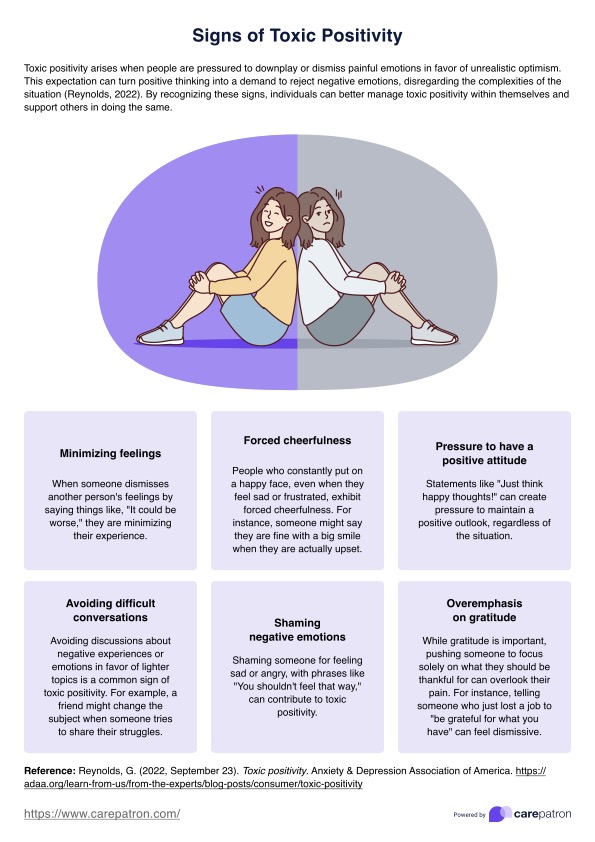
Toxic positivity arises when people are pressured to downplay or dismiss painful emotions in favor of unrealistic optimism. This expectation can turn positive thinking into a demand and can involve rejecting negative emotions and disregarding the complexities of the situation (Reynolds, 2022). It usually stems from societal pressure to always appear happy and optimistic, which can make people feel like they have to hide their own feelings or true emotions. However, this can lead to problems like feeling disconnected from others and struggling to cope with negative feelings, which may make mental health issues worse.









