
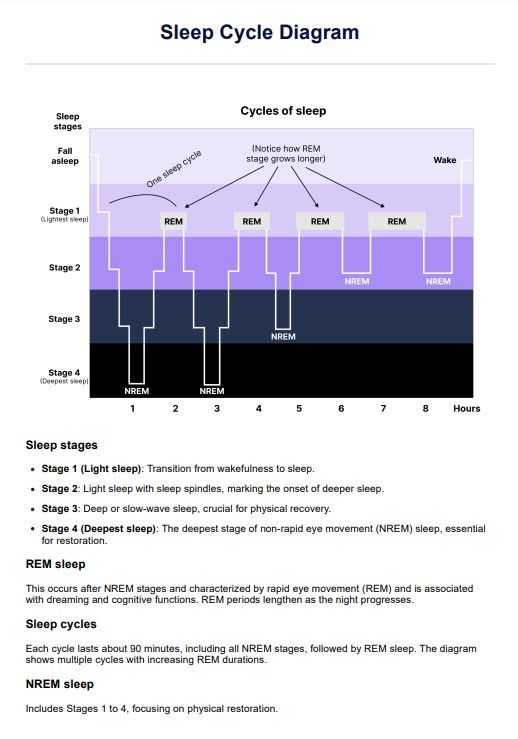




What constitutes a normal sleep cycle?
Good sleep enhances brain performance, mood, and overall health. Consistently inadequate sleep quality can increase the risk of various sleep disorders.
A normal sleep cycle comprises multiple stages of sleep, alternating between non-rapid eye movement (NREM) and rapid eye movement (REM) sleep stages. Each cycle progresses through:
- Stage 1 (Light sleep): This is the initial transition from wakefulness to sleep, characterized by reduced brain wave activity and a sense of drowsiness. It is also referred to as quiet sleep.
- Stage 2: This is a deeper form of light sleep where brain waves continue to slow down. It is marked by the presence of sleep spindles and K-complexes, which help in maintaining sleep and processing information.
- Stage 3 (Deep sleep): Also known as slow-wave sleep, this deep sleep stage is crucial for physical recovery and overall health. During this stage, the brain produces slow brain waves, and the body engages in processes that rejuvenate and repair tissues.
- REM sleep (Active sleep): This stage is associated with rapid eye movements, vivid dreaming, and memory consolidation. As the night progresses, the duration of REM sleep increases, while the duration of deep sleep decreases.
Sleep disorders such as sleep apnea and obstructive sleep apnea, as well as conditions like REM sleep behavior disorder, can disrupt these sleep stages, leading to poor sleep quality. Sleep deprivation and lifestyle choices can further impact the regularity of the sleep cycle, undermining the benefits of each sleep stage.
Maintaining a healthier sleep cycle requires understanding and addressing these factors. Sleep medicine can play a crucial role in diagnosing and treating sleep disorders, thereby improving overall sleep quality and ensuring the efficient progression through all stages of sleep.









