
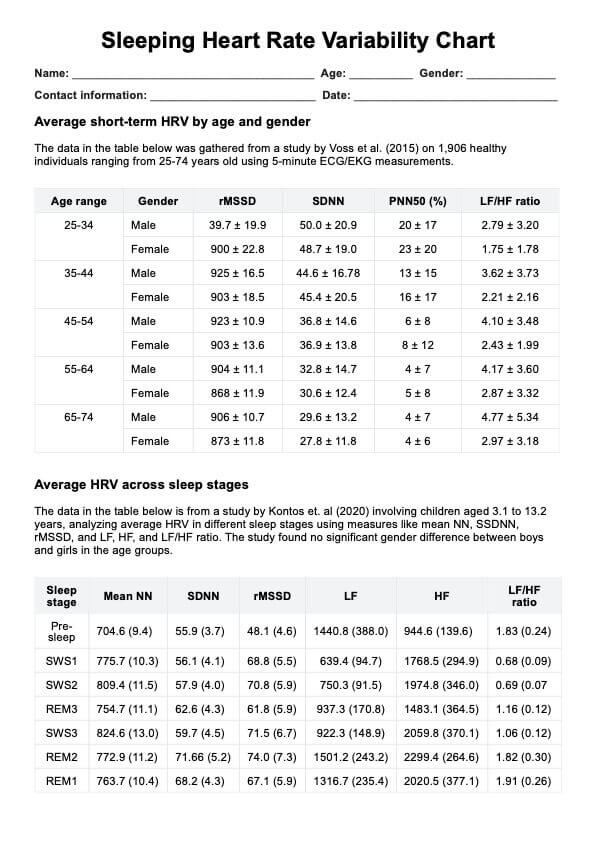




What is a Sleeping Heart Rate Variability Chart?
A Sleeping Heart Rate Variability Chart is valuable for assessing sleep quality and identifying potential health concerns. Heart rate variability (HRV) measures the variation in time between each heartbeat (Campos, 2017). A higher HRV indicates a more relaxed and adaptable heart, which reflects good autonomic nervous system balance. A lower HRV suggests a more stressed and less flexible heart.
During sleep, a person's HRV typically follows a pattern, with lower HRV in lighter sleep and higher HRV in deeper stages of sleep (Vanoli et al., 1995). This pattern reflects the balance between the sympathetic nervous system and other bodily systems, such as the parasympathetic nervous system. Tracking sleeping HRV can provide insights into overall sleep quality and help identify potential health concerns, such as obstructive sleep apnea, insomnia, or other sleep disorders.
There are many factors affecting HRV measurements, including sleep duration, stress levels, and demographic and psychological variables. Other key influencers include sleep efficiency, heart disease, and lifestyle habits like a healthy diet. Consistently low HRV trends may indicate chronic stress or underlying cardiovascular issues, while higher HRV during sleep reflects a healthy and balanced autonomic system.
Comparing a patient's average heart rate variability to the average HRV of their age group can give you a general idea of how their HRV is doing.









