




What is a SMART goal?
Setting goals is a great way to accomplish small and large tasks. Goals can be selected during a mental health intervention to support growth and motivation for treatment. They can be a valuable and practical resource for social workers to include in their practice.
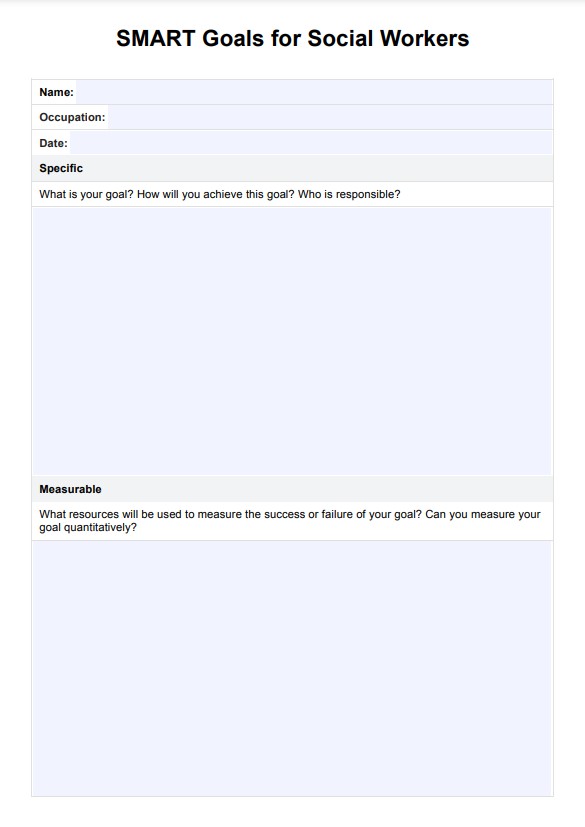
A few significant aspects should be considered when considering how a personal or professional goal might be successful. This is where the SMART goal can play an immense role in creating overall goals. A SMART goal is a way to set achievable goals and objectives that allow them to become successful and not just a distant thought. The acronym SMART stands for:
Specific
Specific relates to the focus on the goal. Having insight into your goal can support communication with external sources and clients. Having vague objectives often leaves individuals feeling like they don't know where to begin. It can also be helpful to note that when a goal is specific, the client and the social worker are on the same page.
Measurable
Having a measurable goal can contribute to a successful outcome. When goals are not measurable, individuals can quickly lose focus and feel like nothing has changed.
Achievable
Setting achievable objectives will make participating in your goal just that much easier. To do this, you may want to start with smaller goals. For example, in social work, you may want to connect with more children, but your client base is not currently child-focused. Choose a smaller goal, like connecting with one child per month, and develop a larger goal.
Choose goals that are relevant to your practice. As a social worker, you can select objectives supporting your core values and professional growth. These goals might keep connecting with more indigenous and children populations and even strengthen your connection to the community you work in.
Time-bound
Time-bound objectives are necessary. Goals with a realistic timeline and deadline are more likely to reach their full potential. Individuals who implement a deadline in their SMART goal can look forward to accountability and motivation. Deadlines support individuals in creating larger goals, make the goal-created process a little bit easier next time, and aid in time management.









