
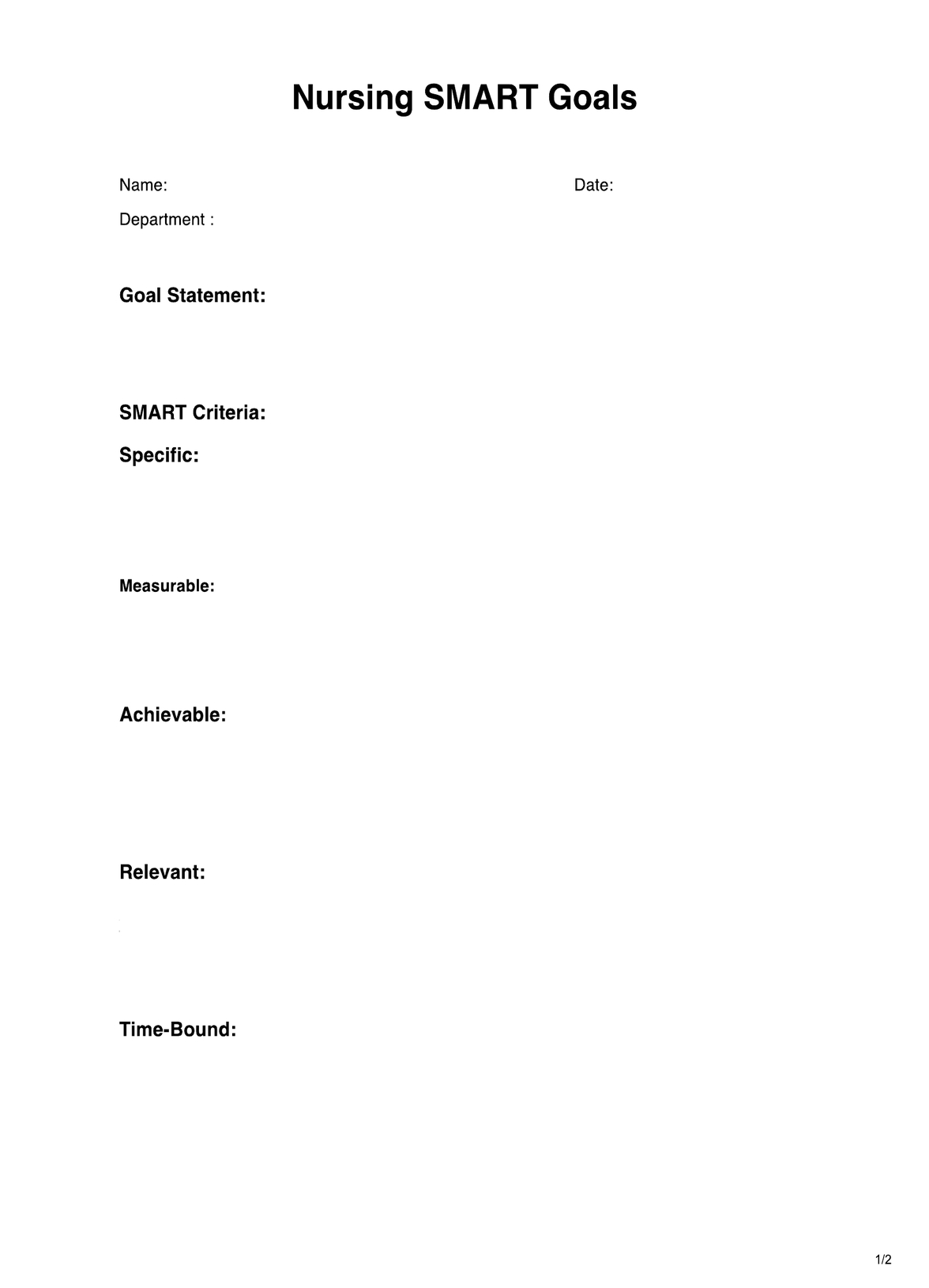




SMART goals and their criteria
Crafting SMART goals is a strategic approach that empowers healthcare practitioners to set objectives with clarity and purpose. SMART, an acronym for Specific, Measurable, Achievable, Relevant, and Time-Bound, provides a framework for goal-setting that enhances effectiveness and success in healthcare practices.
Specific
The specificity of a goal ensures a clear and well-defined target. This might involve defining precise patient outcomes, treatment protocols, or procedural improvements in healthcare. For instance, a specific goal could focus on reducing patient waiting times in a clinic by a certain percentage.
Measurable
Measurability is crucial for tracking progress and determining success. Healthcare goals should involve quantifiable metrics, such as decreased readmission rates, increased vaccination rates, or improved patient satisfaction scores. Measurable goals enable practitioners to assess their impact and adjust strategies as needed.
Achievable
Goals should be challenging yet attainable. This could involve setting realistic targets for improvements in patient care, workflow efficiency, or staff training in the healthcare setting. An achievable goal ensures practitioners are motivated and empowered to work towards meaningful objectives without feeling overwhelmed.
Relevant
Relevance ensures that goals align with broader healthcare objectives and organizational missions. In healthcare, relevant goals might address pressing issues such as improving patient safety, enhancing diagnostic accuracy, or implementing evidence-based practices. This alignment ensures that efforts contribute directly to the overall success of healthcare initiatives.
Time-bound
Setting a timeframe for goal achievement adds a sense of urgency and accountability. In healthcare, time-bound goals may involve implementing new protocols within a specific period, reducing medication errors by a certain deadline, or achieving accreditation milestones. Time-bound goals prevent indefinite delays and encourage proactive, timely actions.
In essence, the SMART criteria provide a structured and systematic approach to goal-setting in healthcare. They guide healthcare practitioners to articulate their intentions clearly, measure progress objectively, and ultimately enhance patient care, operational efficiency, and overall healthcare outcomes. As healthcare evolves, adopting SMART goals becomes increasingly pivotal in driving continuous improvement and innovation.









