
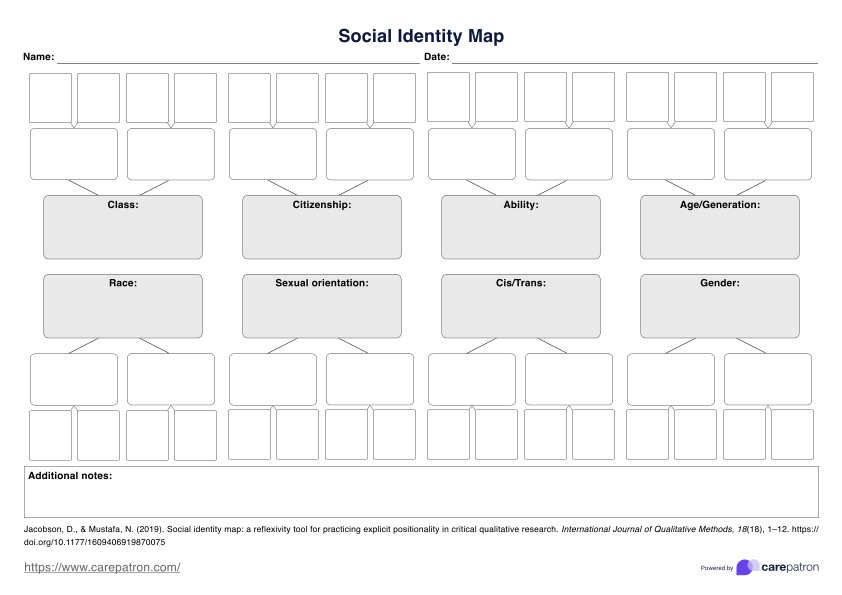




What are the 12 social identities?
Social identities are crucial in healthcare, as they shape both patient interactions and professional dynamics. These identities are based on various factors and influence how individuals perceive themselves and are perceived by others. Understanding social identities is important for creating an inclusive healthcare environment. Here are twelve key social identities:
- Race: Defined by physical characteristics such as skin, hair, or eye color (e.g., White, Black, Asian).
- Ethnicity: Cultural factors like nationality and ancestry (e.g., Hispanic, Irish, Canadian).
- Sex: Assigned at birth based on reproductive organs (e.g., male, female, intersex).
- Gender: How individuals perceive themselves in societal roles (e.g., man, woman, non-binary).
- Sexual orientation: Identity related to gender attraction (e.g., heterosexual, homosexual, bisexual).
- Social class: Societal division based on economic status (e.g., upper class, working class).
- Religious affiliation: Connection to a religion (e.g., Christian, Muslim, atheist).
- Ability/disability: Judged by impairment relative to societal norms (e.g., able-bodied, disabled).
- Age cohort: Grouping based on birth period (e.g., teenager, adult, elderly).
- Level of education: Education progression (e.g., high school diploma, college graduate).
- Immigration status: Legal standing in a country (e.g., U.S. citizen, refugee, undocumented).
- Occupational status: Social esteem based on profession (e.g., doctor, unemployed).
These identities, individually and collectively, shape experiences and impact healthcare delivery. Understanding them enhances patient care by addressing diverse needs.









