What are the signs of sociopathy?
Recognizing the signs of sociopathy is crucial for early intervention and management of the condition. Other symptoms of ASPD manifest through various behavioral patterns that significantly impact an individual's interpersonal relationships and societal functioning.
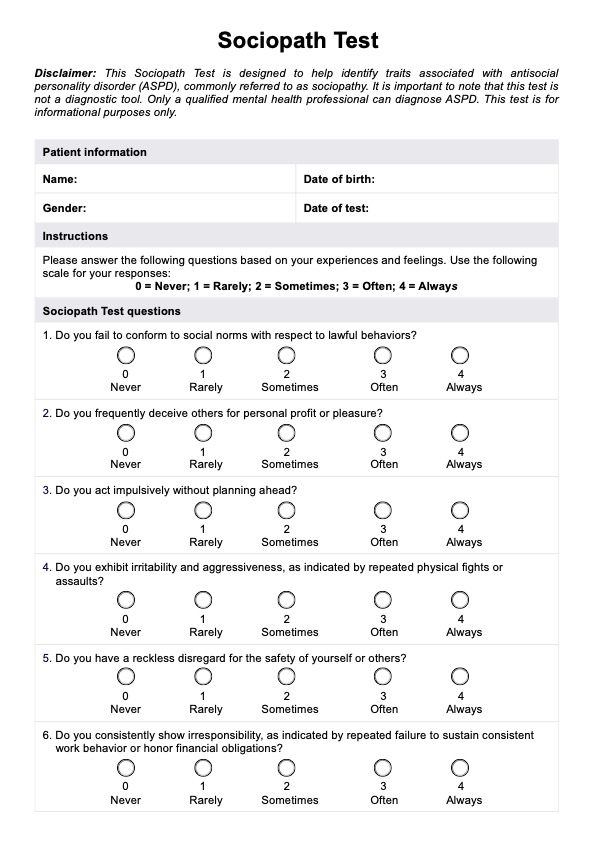
Here's a more detailed look at the core signs of sociopathy:
Lack of empathy
A defining characteristic of people with sociopathy is that they lack empathy, or the inability to understand or share the feelings of others. This detachment often results in callousness, anger, and a disregard for the emotions and rights of those around them.
Manipulative behavior
Individuals with sociopathic tendencies frequently engage in manipulative behaviors. They use deceit or repeatedly lie and manipulate to control or exploit others for personal gain, showing little remorse.
Impulsivity
It is common to act impulsively and make hasty decisions without considering the consequences. This impulsivity can manifest in risky behaviors with tough consequences, sudden changes in life plans, or making large purchases without considering the future.
Disregarding social norms and the law
A blatant disregard for societal rules and norms among human beings, including engaging in behaviors that are grounds for arrest, such as physical fights, is a significant indicator of sociopathy. This disregard may lead to a history of criminal behavior or legal troubles.
Difficulty forming emotional connections
Despite often being charming and engaging on the surface, people diagnosed with ASPD typically struggle to form deep, genuine emotional connections with others, even among family members. Relationships may be superficial and primarily serve the sociopath's interests.
Aggressiveness or irritability
Many people dealing with sociopathy tend to exhibit aggressive behaviors or become easily irritated. This can lead to physical altercations or verbal abuse directed at those around them. These are often observed starting within the teen years.
Lack of responsibility
There is often a failure to sustain consistent work behavior or honor financial obligations. Sociopaths may frequently evade difficult situations, change jobs, default on debts, or rely on others for financial support without reciprocation.
Inability to feel guilty or learn from mistakes
A lack of guilt or remorse for actions that harm others is a core feature of sociopathy. This includes an apparent indifference to having hurt, mistreated, or stolen from another person.
Recognizing these signs is pivotal in addressing sociopathy and mental disorders. It's important to note that these behaviors must be a consistent pattern over time, not isolated incidents, to suggest sociopathy. If you or someone you know exhibits these signs, seeking evaluation from a licensed mental health professional is a critical step toward understanding and managing the condition.