
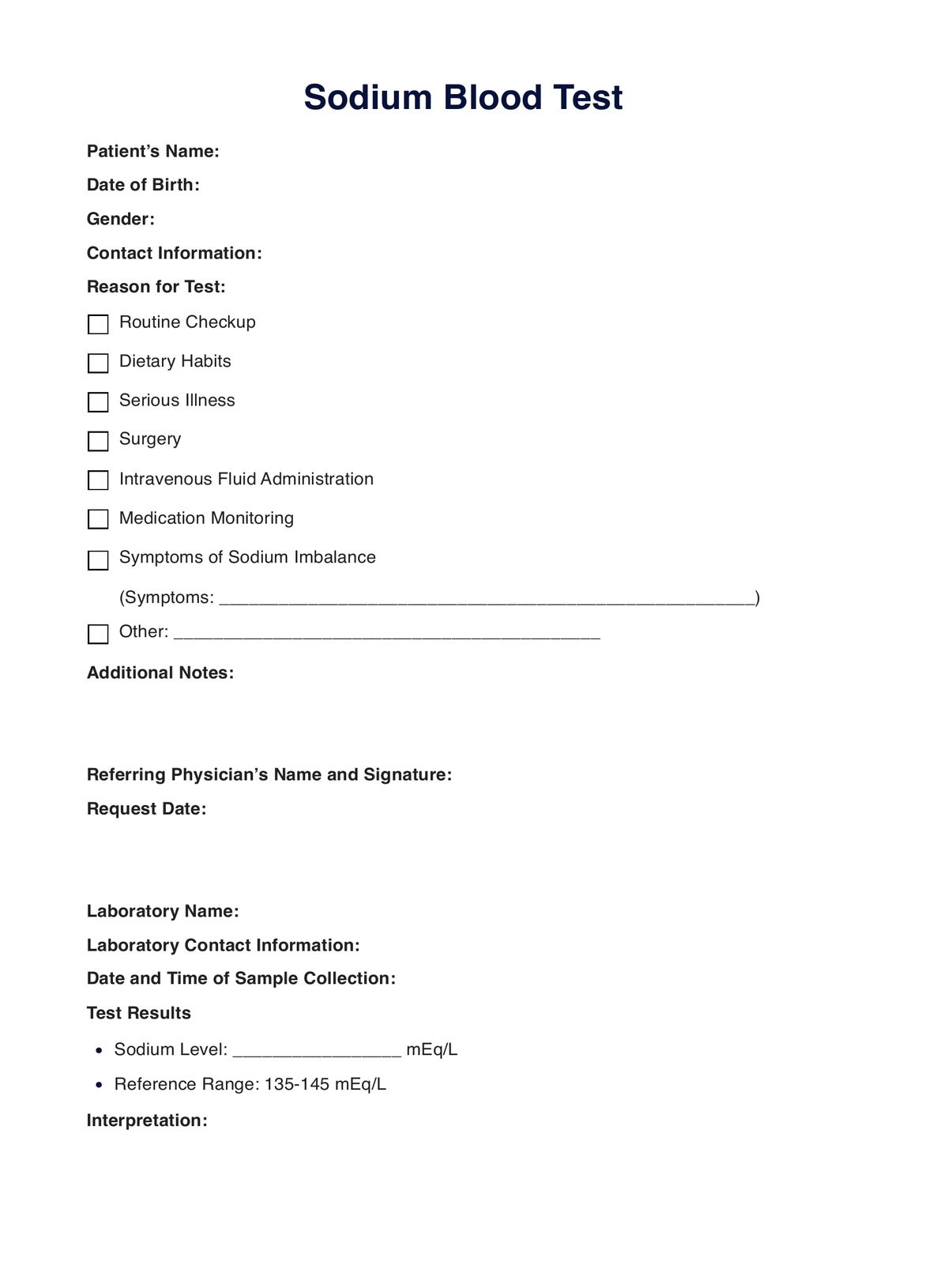




What is a Sodium Blood Test?
A sodium blood test is a routine medical examination done by healthcare practitioners to ascertain sodium concentration in an individual’s bloodstream. There’s a need to check sodium levels in certain circumstances because sodium, also symbolized as Na+, is a fundamental mineral integral for the proper functioning of nerves and muscles, particularly in a person’s body.
There are multiple purposes of the sodium blood test. It can be incorporated into an electrolyte panel, which usually assesses electrolyte imbalances within the body. Additionally, it’s frequently conducted as an integral component of a basic metabolic panel, a medical test that evaluates the levels of substances like calcium, bicarbonate, chloride, creatinine, glucose, potassium, and more in one’s body.
Aside from these blood tests, which can be requested during routine checkups, healthcare providers often request the sodium blood test when the patient has a dietary pattern that impacts their sodium levels, when they have a severe illness, or after a surgical procedure. All of these scenarios are meant to ensure that the body is in equilibrium and the individual is healthy.
The procedure of the sodium blood test is pretty straightforward and similar to other blood tests. After a blood sample collection, the sample will be sent to a subsequent laboratory analysis. Meanwhile, analysis and interpretation are commonly done by , specifically the referring caring for the patient. If the patient’s levels go lower or beyond normal blood sodium levels, the patient may need immediate medical attention.









