




What is speech intelligibility?
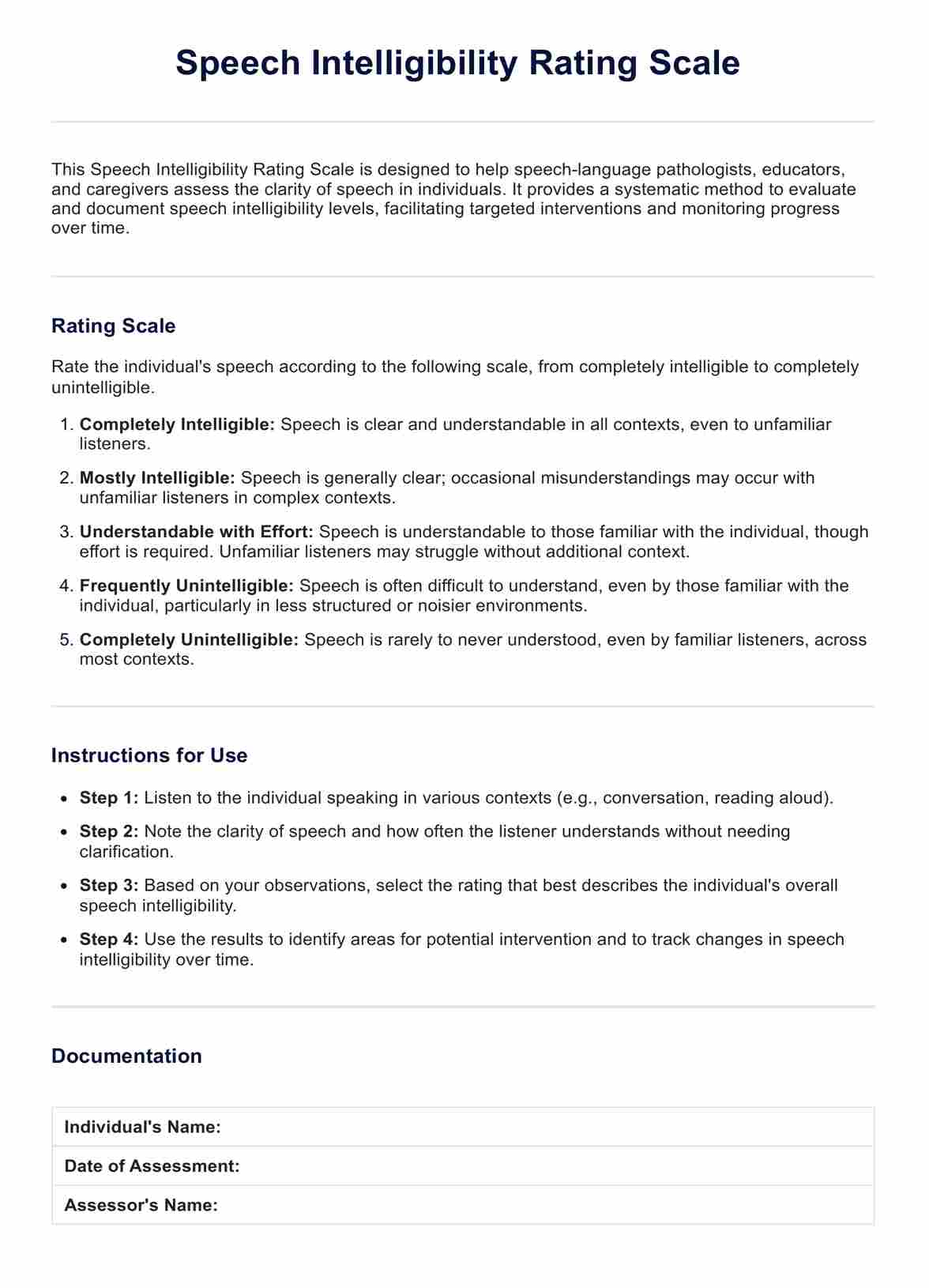
Speech intelligibility refers to how easily a listener can understand speech. It's a crucial aspect of communication, especially in diagnosing and treating speech sound disorders. Intelligibility varies from completely intelligible (easily understood) to completely unintelligible (difficult or impossible).
What is unintelligible speech?
Unintelligible speech is when spoken words are hard to understand or interpret by the listener. This may be due to speech sound disorders, developmental delays, or other communication disorders, often observed in preschool children.
Causes of unintelligible speech
The roots of unintelligible speech are diverse and multifaceted, encompassing a range of conditions that interfere with clear communication. Hearing impairments can obscure the auditory feedback necessary for accurate speech production, while neurological disorders may disrupt the brain's ability to coordinate the muscle movements required for speech. Developmental speech sound disorders impact the formation and articulation of phonemes, the building blocks of speech. These complexities make unintelligible speech a significant area of interest in hearing research and clinical linguistics, aiming to refine therapeutic approaches for improved speech clarity and communication effectiveness.









