




What is speech sound development?
Speech sound development is the process by which children learn to recognize and articulate the phonemes, or speech sounds, that constitute language. This foundational aspect of speech development is crucial for effective communication and literacy.
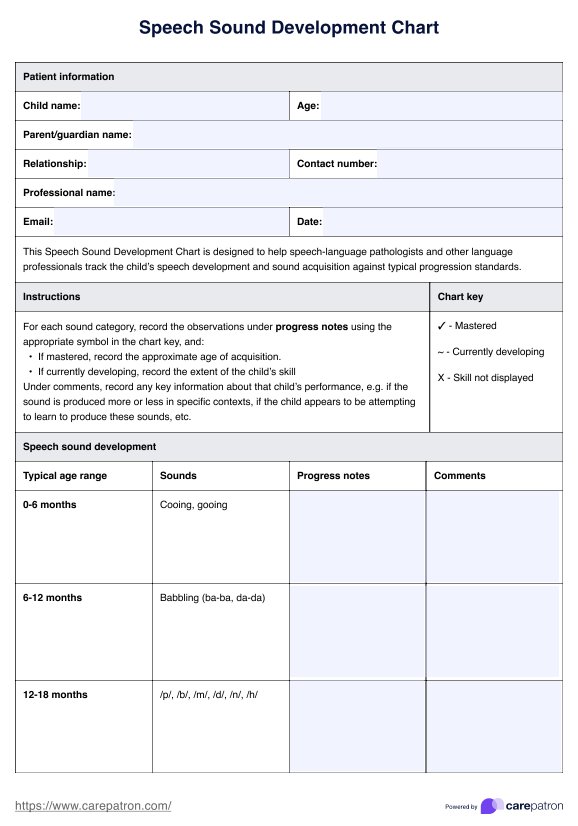
Speech development in children is comprised of a series of distinct and predictable stages, or milestones, that are achieved throughout childhood. This progression occurs with gradual acquisition of speech sounds, honed and refined through continuous practice and rich interaction with caregivers and the surrounding environment as the infant ages.
Although the stages of speech development are not discrete, foundational skills that facilitate the next stage are acquired in each:
- Early vocalizations: Cooing and babbling, where infants learn the basics of vocal production.
- Expansion of sounds: Infants experiment with a wider range of sounds and begin to understand the basics of verbal communication, imitating or following sounds made to them by parents.
- Word formation: Toddlers start to form simple words and short sentences, using their growing vocabulary to express needs, desires, and observations.
- Speech sound refinement: Children refine their speech sounds during preschool, improving clarity and intelligibility. This stage is crucial for developing the ability to be understood by others and for mastering the sounds of their native language.
- Complex language use: With the foundations of speech firmly established, children begin to use more complex sentences, engaging in conversations that involve more sophisticated language structures.
Mastery of consonant and vowel sounds plays a pivotal role throughout these stages, significantly influencing a child's ability to engage in meaningful verbal communication. Language acquisition is a critical aspect of overall child development, influencing academic success, social interactions, and self-esteem.









