
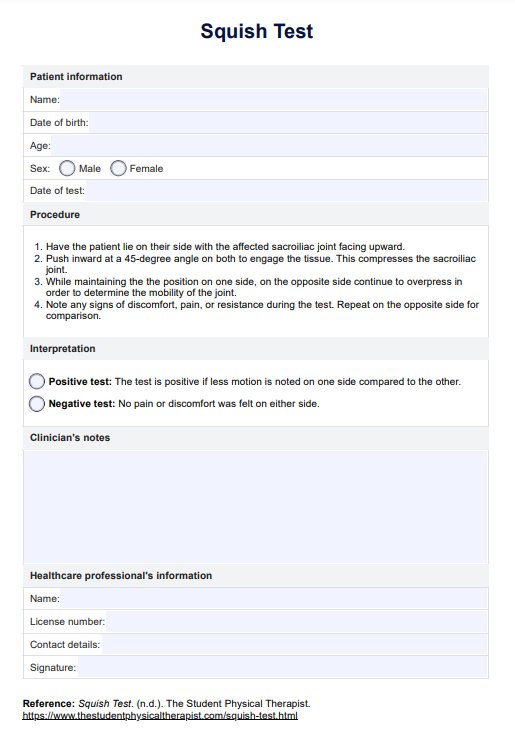




What does it mean for the sacroiliac joint to have impaired mobility?
Impaired mobility in the sacroiliac joint refers to reduced normal movement. This joint, located at the connection between the sacrum (the base of the spine) and the iliac bones (the pelvis), typically has a very limited range of motion. When its mobility is impaired, either through decreased or excessive movement, it can affect the joint's function.
What can impair a sacroiliac joint's mobility?
Several factors can lead to impaired mobility in the sacroiliac joint:
- Inflammation: Conditions such as sacroiliitis can cause inflammation in the sacroiliac joints, leading to pain and reduced mobility.
- Pregnancy: Hormonal changes during pregnancy can cause the ligaments in the sacroiliac joint to relax and stretch, potentially leading to instability and altered mobility.
- Trauma: An injury from impact or sudden force can damage the ligaments and joint surfaces, affecting movement.
- Arthritis: Osteoarthritis or other forms of arthritis can degrade the cartilage in the joint, leading to stiffness and mobility issues.
- Muscular imbalance: Imbalances or weakness in the muscles supporting the pelvis and spine can lead to abnormal stress on the sacroiliac joints, impacting their mobility.
What problems can this cause?
Impaired mobility in the sacroiliac joint can lead to several issues:
- Pain: The most common symptom is pain in the lower back, buttocks, or legs, which can be exacerbated by prolonged standing or sitting.
- Instability: Excessive movement can lead to a feeling of instability in the pelvis, making it difficult to stand or walk comfortably.
- Limited mobility: Stiffness or reduced movement can affect the overall mobility, impacting daily activities and quality of life.
- Radiating symptoms: Pain may radiate to the lower extremities, resembling sciatica, due to irritation of adjacent nerves.
- Postural changes: Chronic issues with the sacroiliac joint can lead to compensatory changes in posture, potentially causing secondary pain in other areas like the hips or lower spine.









