
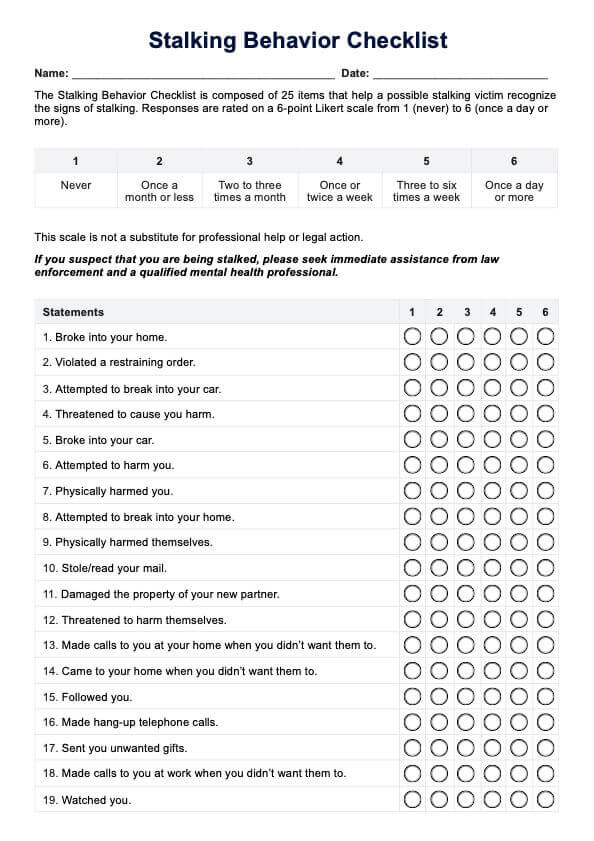




What is a Stalking Behaviour Checklist?
Stalking behavior involves a pattern of unwanted, obsessive attention and actions directed towards a specific person, that would cause a reasonable person to feel fear, distress, or harm. Stalking can manifest in various ways, from intrusive actions (like following or spying on the victim, sending unwanted gifts, and/or repeated pr unwanted phone calls) to more aggressive behaviors (such as physical violence or breaking into the victim's home or car.
Common stalking behaviors include frequent unwanted phone calls, sending unsolicited gifts, and attempting to or successfully breaching a victim's personal space, like their home or vehicle. These actions often escalate over time, becoming increasingly invasive and dangerous.
Various causes, including jealousy, rejection, or an obsessive need for control, can trigger stalking. Stalking victims suffer substantial emotional distress; it can have severe long-term effects, including chronic anxiety, depression, and post-traumatic stress disorder (PTSD). Victims often live in constant fear, significantly impacting their mental health and ability to live a normal life.
While stalking can happen to anyone, women are more likely to be stalking victims, and men are more frequently the perpetrators; in fact, stalking occurs in the context of domestic violence (Harris et al., 2022). However, it's important to remember that stalking is not limited by gender. Men can also be victims, and women can be perpetrators. This issue transcends gender boundaries, and it can affect individuals from all walks of life.
Recognizing the early warning signs of stalking is crucial for the victim's safety and well-being; however, many stalking victims may not notice them, which is where the Stalking Behavior Checklist comes in. This checklist is an essential tool for identifying stalking patterns early, helping to prevent severe long-term effects (Coleman, 1997).









