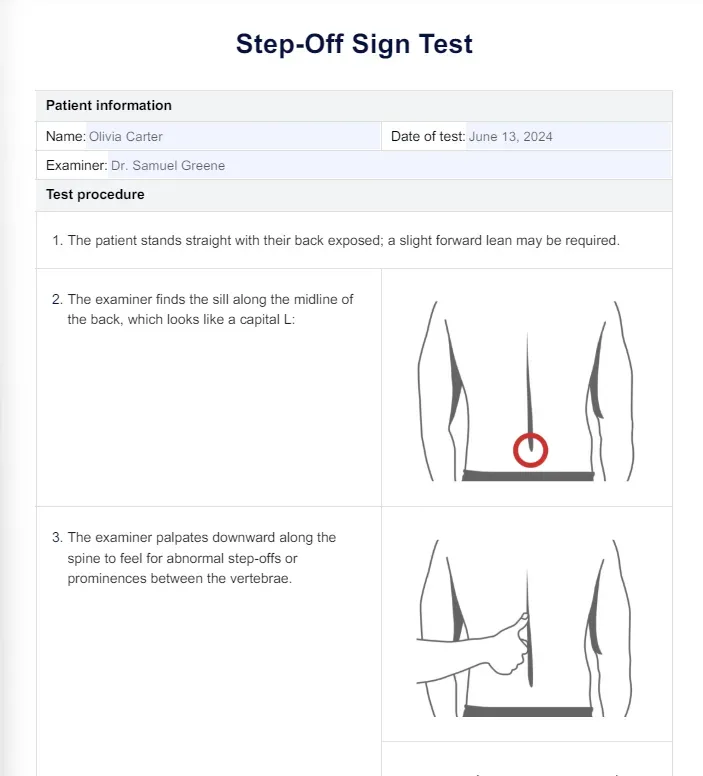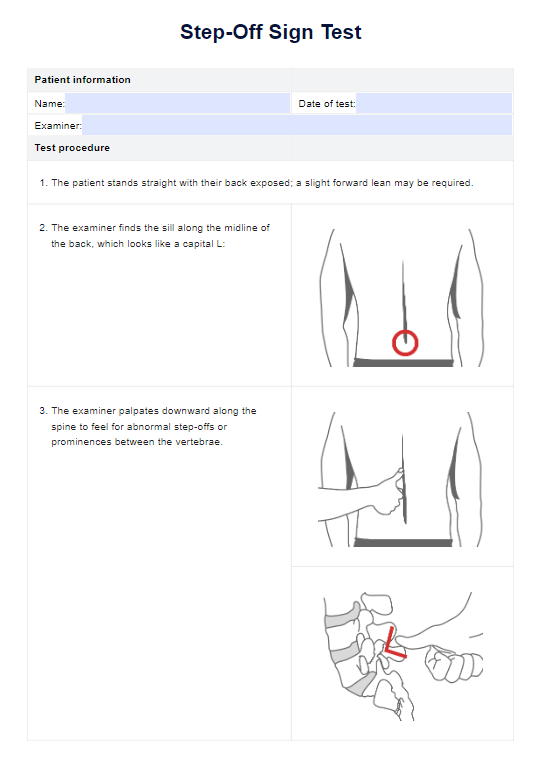




What is spondylolisthesis?
Spondylolisthesis is a spinal condition where one vertebra slips forward over the one below it, often affecting the lumbar region. This displacement can lead to significant discomfort and limit mobility, impacting an individual's daily life. There are several types of lumbar spondylolisthesis, classified based on their origin:
- Congenital spondylolisthesis (dysplastic spondylolisthesis): This type occurs from birth and results from abnormal bone formation in the spine, leading to vertebral slippage at a young age.
- Isthmic spondylolisthesis: This form, often seen in children and adolescents, arises due to a defect or stress fracture in the pars interarticularis, a small segment of the vertebral arch. This can be further classified into three subtypes: A (Pars interarticularis fatigue fracture), B (Pars interarticularis elongation due to multiple healed stress effects), and C (acute Pars fracture)
- Degenerative lumbar spondylolisthesis: This is the most common form, typically affecting adults over 50. It results from the deterioration of spinal discs and joints, such as disk degeneration and facet joint degeneration, without an associated disruption or defect in the vertebral ring.
- Traumatic spondylolisthesis: This type is caused by direct trauma or injury to the vertebrae. It involves a fracture in parts of the vertebra other than the pars interarticularis.
- Pathologic spondylolisthesis: This type occurs when the spine is weakened by a disease, such as a tumor or infection. This compromises the integrity of the vertebrae and leads to slippage.
Understanding the specific type of spondylolisthesis is crucial for effective treatment. Accurate diagnosis is essential to tailor these strategies effectively, ensuring that each patient receives the appropriate care based on the nature and severity of their condition.
Symptoms of spondylolisthesis
The primary symptoms of spondylolisthesis are lower back pain (which can radiate to the buttocks and thighs), stiffness, and sciatica. One key factor influencing these symptoms is pelvic incidence (PI). PI measures the angle between a line perpendicular to the sacral endplate at its midpoint and a line connecting this point to the axis of the femoral head. Increased PI can influence the degree of lumbar lordosis and sacral slope, potentially worsening spondylolisthesis symptoms.
Symptomatic patients may also experience the following:
- Muscle tightness or stiffness in the back and legs.
- Nerve compression leads to tingling, numbness, or weakness in the legs.
- Increased pain when bending backwards or twisting.
- Loss of bladder or bowel control in severe cases, indicating possible cauda equina syndrome.
Causes
Accidents or injuries cause immediate damage to the vertebrae, while overuse can also contribute to degeneration. This is why it is also common in athletes involved in sports that stress the lower back. In addition, degenerative issues like arthritis can lead to instability and slippage. Lastly, family history can increase the likelihood of congenital defects.
Differences between spondylolysis and spondylolisthesis
Spondylolysis refers to a crack or stress fracture in one of the vertebrae, typically without leading to any vertebral displacement. This condition often results from repetitive stress or overuse, particularly in activities that involve twisting or hyperextension of the spine.
In contrast, spondylolisthesis occurs when a vertebra slips, which may sometimes be a progression from spondylolysis if the affected vertebra shifts. This displacement can compress spinal nerves and lead to symptoms such as pain, numbness, and muscle weakness. The condition can be worsened by factors such as degenerative changes in the lumbar spine, particularly in the facet joints and discs, which can reduce spinal stability and lead to vertebral slippage.
Both conditions are treatable, with management strategies including physical therapy treatment to realign and stabilize the vertebrae.