
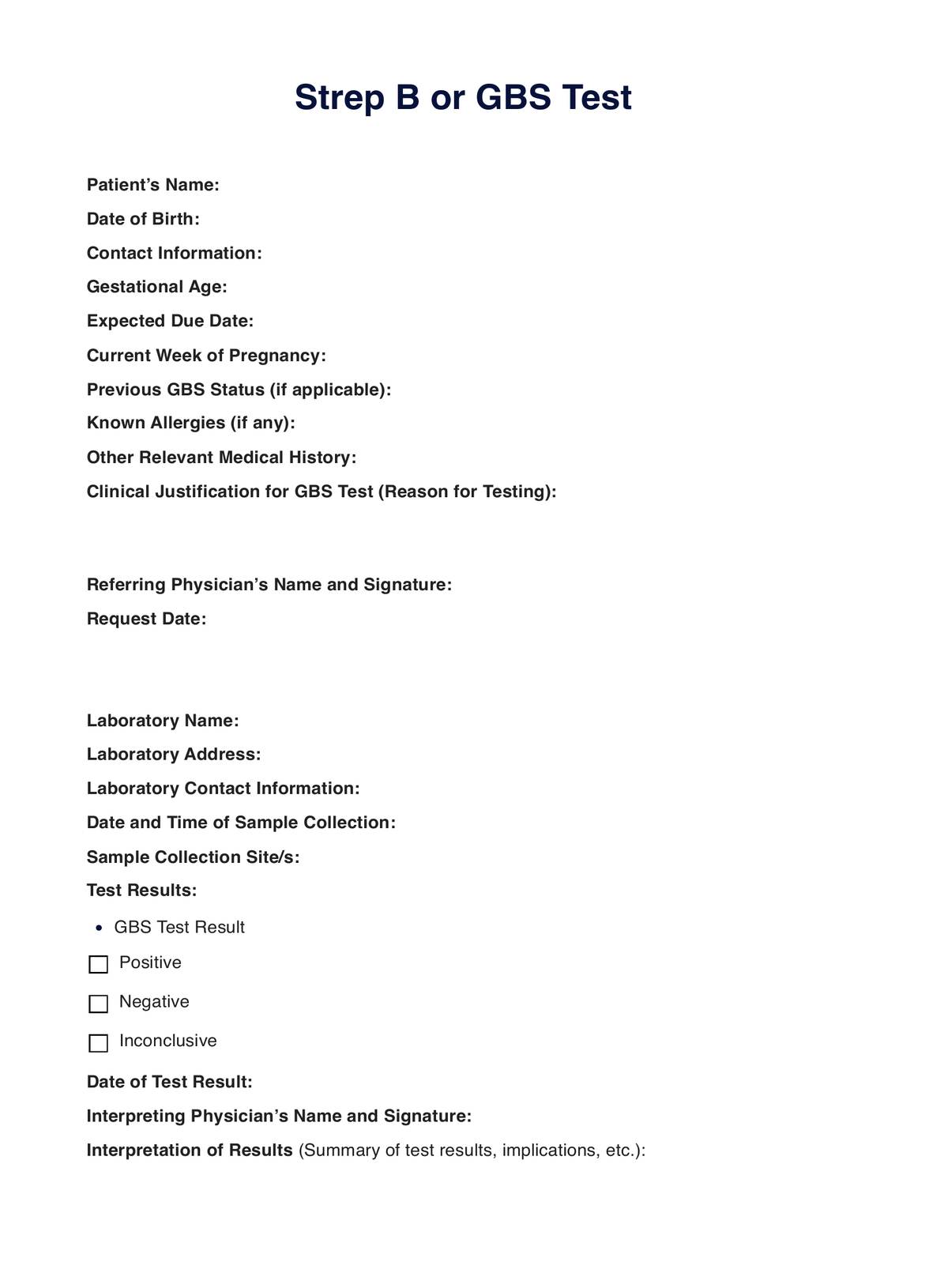




What is a Strep B Test?
A , also known as a Group B Streptococcus (GBS) test, is a medical test that healthcare practitioners conduct to detect the presence of Group B Streptococcus bacteria in pregnant individuals. And although GBS is a type of bacteria that’s commonly found in the digestive or urinary tracts and is generally harmless in adults, it poses a serious, to the point of fatal, threat if transmitted to a newborn during childbirth.
The main purpose of the Strep B test, as mentioned above, is to determine whether a pregnant person carries the GBS bacteria or not to assess if or when to administer antibiotics to the pregnant individual before they give birth. This proactive measure reduces the risk of delivering a baby who has or might develop a GBS infection.
The GBS test’s procedure is relatively simple. It involves swabbing samples from the vagina and rectum during pregnancy. According to the American College of Obstetricians and Gynecologists, it’s recommended that all pregnant women undergo this test and have their trusted referring physician perform it during their 36th or 37th week of pregnancy.
If the patient tests positive, the standard protocol involves antibiotic administration via an intravenous (IV) line during labor at least four hours before delivery to maximize the effectiveness in preventing infection in the newborn.









