How do nurses diagnose stress fractures?
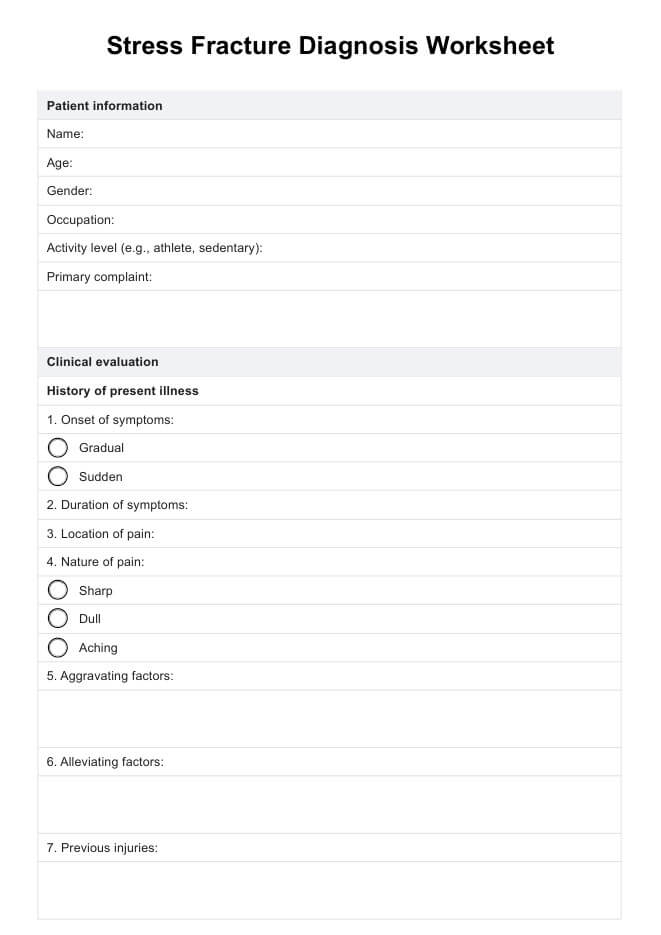
Nurses play a crucial role in the initial diagnosis and management of stress fractures. To diagnose stress fractures, nurses conduct thorough patient assessments and consider risk factors such as eating disorders, recent increases in physical activity, and biomechanical abnormalities that contribute to bone stress injury.
Assessment
Nurses begin by collecting a detailed patient history, focusing on symptoms, physical activity levels, and underlying conditions. They look for signs of a tibial stress fracture or other bone stress injuries, such as localized pain that worsens with activity and improves with rest.
Physical examination
A physical exam helps identify tenderness and swelling at the injury site. Nurses assess for signs of bone stress reactions, indicating the potential for developing stress fractures.
Imaging tests
Nurses often coordinate with physicians to order appropriate imaging tests to confirm a stress fracture diagnosis. Bone scans and magnetic resonance imaging (MRI) are particularly useful. Bone scans detect increased metabolic activity indicative of a stress reaction, while MRI provides detailed images to identify bone stress injuries early.
Treatment and prevention
Once a stress fracture is diagnosed, nurses educate patients on stress fracture treatment, including rest, activity modification, and sometimes protective footwear or braces to ensure the injury heals properly. They emphasize the importance of nutrition and gradual increases in physical activity to prevent stress fractures.
Can you diagnose a stress fracture without magnetic resonance imaging (MRI)?
Diagnosing stress fractures without MRI requires a comprehensive approach. A patient's history and physical examination are crucial in identifying tenderness, swelling, and signs of bone stress reactions. X-rays often identify more developed fractures, while bone scans detect increased metabolic activity.
Computed tomography (CT) can provide detailed images of the bone but is less sensitive to early stress reactions. Ultrasound can detect changes in the bone or surrounding tissues associated with stress fractures. Clinical management focuses on stress fracture treatment, including rest, activity modification, and addressing risk factors to ensure proper healing and prevent recurring fractures.