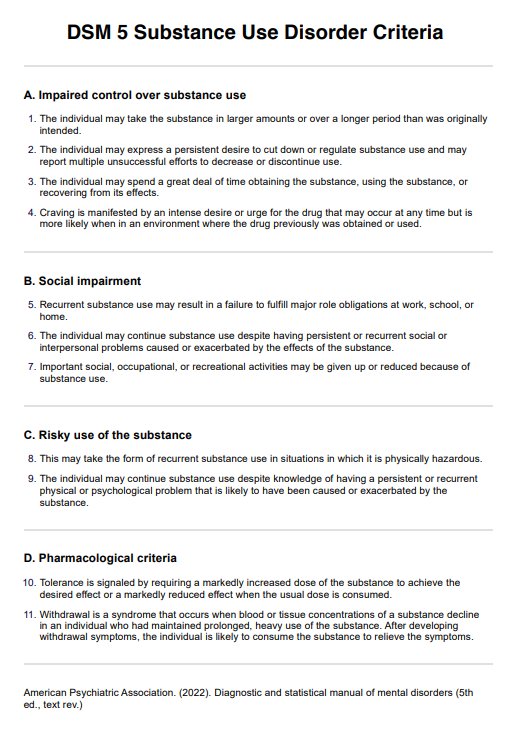
What are the benefits of using the Substance Use Disorder DSM-5 Criteria
The utilization of the Substance Use Disorder DSM-5 Criteria offers several benefits in the assessment, diagnosis, and treatment of substance-related disorders:
Standardized assessment
The DSM-5 provides a standardized framework for assessing substance use disorders, ensuring consistency and reliability in diagnostic practices across healthcare settings. By adhering to established criteria, healthcare professionals can conduct thorough evaluations and accurately identify individuals experiencing substance-related problems.
Comprehensive evaluation
The DSM-5 criteria encompass a wide range of symptoms and behaviors associated with substance use disorders, allowing for a comprehensive evaluation of the disorder's presentation. This holistic approach enables healthcare professionals to consider various aspects of an individual's substance use patterns, severity, and associated impairment, facilitating a thorough understanding of the clinical picture.
Diagnostic clarity
By delineating specific diagnostic criteria, the DSM-5 enhances diagnostic clarity and precision in identifying substance use disorders. Clear and explicit criteria aid healthcare professionals in making accurate diagnoses and distinguishing substance use disorders from other mental disorders or non-clinical patterns of substance use.
Severity specification
The DSM-5 introduced severity specifiers for substance use disorders, enabling clinicians to classify the severity of the disorder based on the number of diagnostic criteria met. This feature allows for nuanced assessment and facilitates individualized treatment planning tailored to the severity of the disorder.
Treatment planning and monitoring
Utilizing the DSM-5 criteria enables healthcare professionals to develop targeted treatment plans based on the specific symptoms and severity of the substance use disorder. Additionally, the standardized criteria facilitate ongoing monitoring of treatment progress and outcomes, allowing for adjustments to optimize therapeutic interventions.
You can adopt this prescription template to boost your practice and client outcomes. This tool enables clients to formulate actionable plans for their progress.