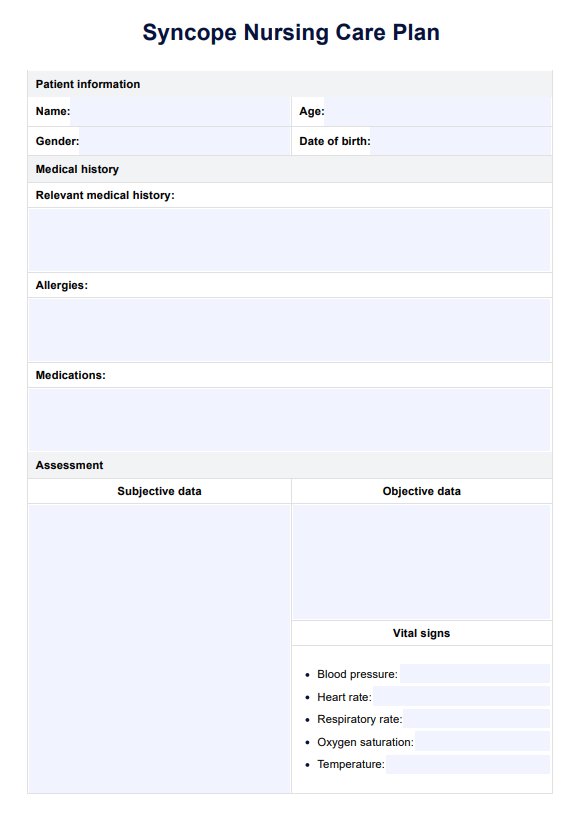
When would you use this template?
A syncope nursing care plan is utilized in various healthcare settings when caring for patients who have experienced or are at risk of experiencing syncope. Some of the key scenarios in which this tool holds value are outlined below:
Acute episodes
After a patient experiences a syncopal episode, a nursing care plan is necessary for immediate assessment, intervention, and ongoing monitoring to ensure their stability, prevent recurrence, and address potential complications.
Chronic conditions
Patients with chronic conditions like cardiac issues, neurological disorders, or recurrent syncope episodes require a tailored care plan. This plan focuses on long-term management, including monitoring, lifestyle modifications, medication adherence, and preventive strategies.
Preventive care
Individuals at risk of syncope due to underlying factors such as dehydration, orthostatic hypotension, or medication side effects benefit from a care plan emphasizing preventive measures. Nurses develop strategies to educate patients on triggers, lifestyle modifications, and warning signs to mitigate the risk of syncopal episodes.
Post-episode follow-up
Following a syncopal episode, a care plan helps follow-up care, including further diagnostic tests, specialist referrals, medication adjustments, and patient education to prevent future occurrences.
Hospital settings
Nursing care plans are crucial in hospital environments, especially in emergency departments or critical care units, for immediate response, stabilization, and ongoing monitoring of patients presenting with syncope.
Rehabilitation and education
For patients recovering from syncope-related injuries or those with conditions predisposing them to syncope, a care plan helps guide rehabilitation efforts. It educates patients and caregivers about necessary precautions and lifestyle changes.