How is Dyscalculia diagnosed?
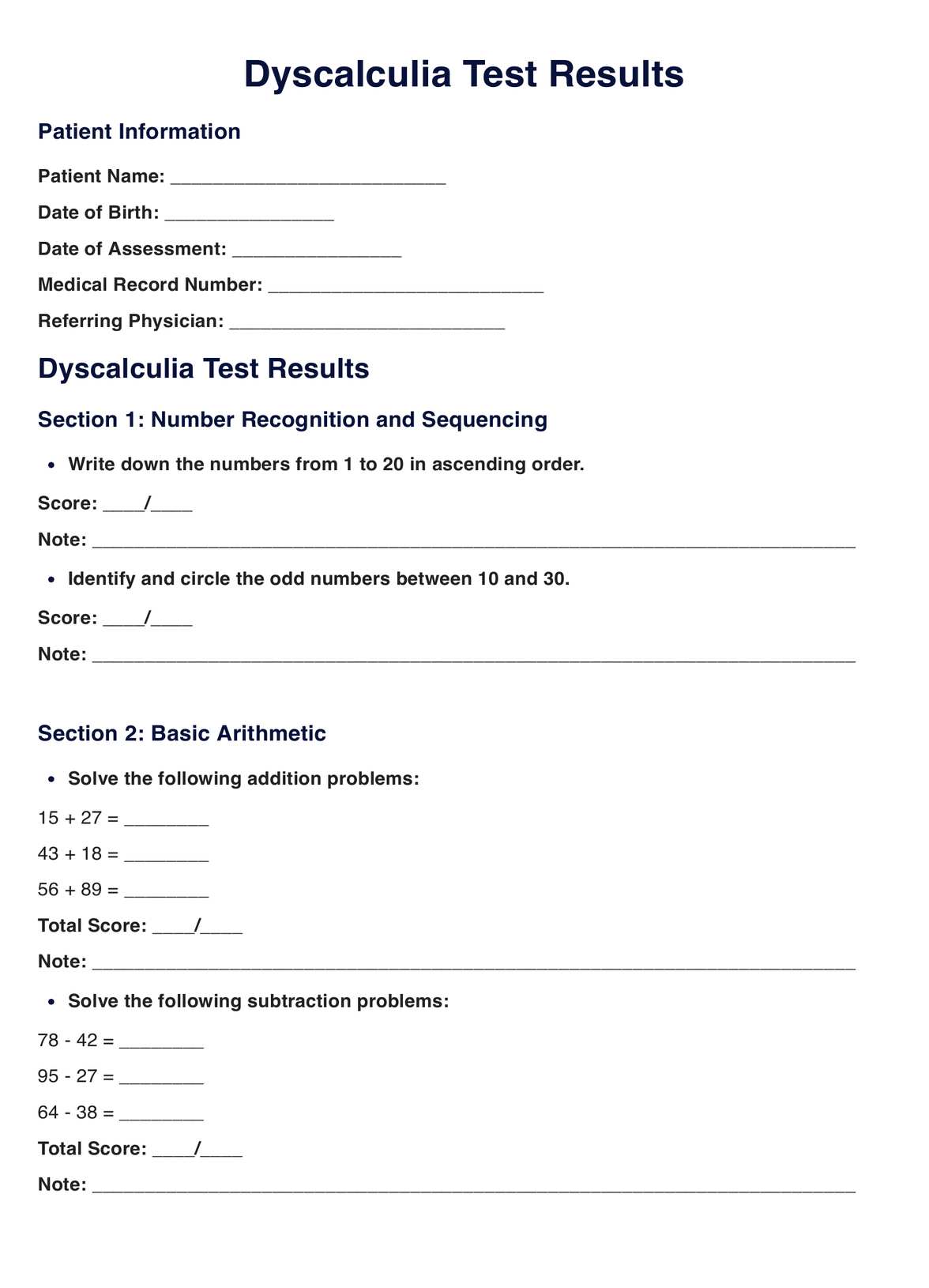
Diagnosing Dyscalculia involves psychometric (arithmetical) testing, clinical examination, thorough history-taking, and further psychosocial assessment. The diagnosis of Dyscalculia requires a notable discrepancy between ability and achievement in math-related skills, and it must persist for at least six months, even with trained, expert help to try and overcome it.
No lab, imaging, or diagnostic tests can confirm Dyscalculia, so the focus is on testing a child's specific math-related skills and ruling out other possible causes, such as vision or hearing problems, different brain- or mental health-related conditions, etc.
Different tests can help with this, and a healthcare provider is the best person to explain what kind of math skills and tests they recommend. The symptoms of Dyscalculia depend on which parts of the math process a person struggles with most, and they can vary depending on the person's age and the situations they encounter most often.
Dyscalculia is treatable in children through one-on-one learning programs that are symptom-specific and focus on what a child struggles with most. Treatment should also start as soon as possible, as the sooner the treatment, the better the outcome.
Professional diagnosis and the role of a learning specialist
A learning specialist is a professional who is trained to evaluate and aid children with learning disabilities, including Dyscalculia. They work with students, parents, and teachers to develop strategies to compensate for any learning deficits and to develop skills that the child may find particularly challenging.
They also educate teachers and parents on learning disabilities, communicate regularly about a student's progress, and keep abreast of current teaching methods. The role of a learning disability specialist may include managing a caseload of students, developing and implementing learning goals and support plans, consulting with teachers, and administering diagnostic measures to assess academic preparedness and evaluate potential learning disabilities.
The diagnosis of Dyscalculia requires psychometric testing, clinical examination, thorough history-taking, and further psychosocial assessment, and a healthcare provider is the best person to explain what kind of skills tests they recommend.
Assessing a child's ability: understanding the signs
Assessing a young child's ability for potential learning disabilities, including Dyscalculia, involves a comprehensive approach with various methods and observations. Some of the critical approaches and signs to consider are:
- Observational assessments: This involves systematically observing a child's behavior in various settings to gain insights into their social and problem-solving abilities and emotional well-being. It includes keeping how the child interacts with peers, engages in activities, and responds to different stimuli, as well as their communication skills, ability to follow instructions, and level of independence in completing tasks.
- Diagnostic assessments: These identify specific areas of a child's strengths and weaknesses, including mathematical skills and understanding through age-appropriate tasks.
- Parental observation: Parents play an essential role in identifying potential learning difficulties in their child. They can observe and document specific examples of their child's struggles with reading, writing, math concepts, or completing assignments and problems focusing or paying attention.
- Standardized tests: While not the sole assessment method, standardized tests can provide valuable information by assessing language development, cognitive abilities, and fine and gross motor skills.
- Professional evaluation: A comprehensive evaluation by a learning specialist or healthcare provider is essential for a formal diagnosis. This may involve psychometric testing, clinical examination, history-taking, and psychosocial assessment.
Recognizing dyscalculia symptoms in children
Dyscalculia symptoms often become apparent when children start school around age 6. The symptoms include trouble with counting, fundamental math problems, and more abstract math concepts.
For very young children, the most common symptoms include trouble with:
- Counting
- Recognizing numbers
- Understanding the relationship between numbers and quantities
- Recognizing patterns
- Memorizing math facts
- Telling time
- Making change
Signs of Dyscalculia in adults
The symptoms of Dyscalculia in adults and kids often look like trouble with:
- Managing finances
- Telling time
- Estimating distances
- Understanding schedules and timetables
- Understanding measurements and cooking measurements
- Understanding math concepts in general
Dyscalculia is not considered treatable in adults unless it is acquired Dyscalculia. At least one of two criteria must exist for at least six months, even with trained, expert help to try and overcome it. No lab, imaging, or diagnostic tests can confirm Dyscalculia.
Instead, the focus will be testing a person's specific math-related skills and ruling out other possible causes, such as vision or hearing problems.