
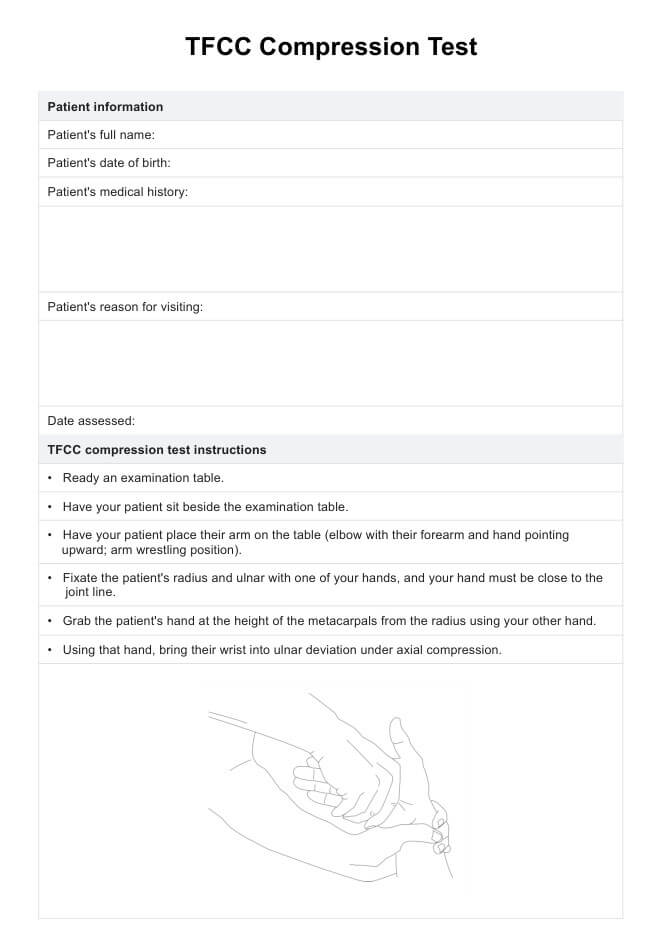




What is a triangular fibrocartilage complex lesion?
The triangular fibrocartilage complex (TFCC) comprises ligaments (such as the volar distal radioulnar ligaments) and cartilage. It ensures that the ulnar and radius bones (e.g., ulnar head) are attached to each other and the wrist bone. Plus, it also stabilizes and cushions the wrist.
If a triangular fibrocartilage complex (TFCC) is injured, healthcare professionals often refer to the injury as a TFCC tear or lesion.
Common symptoms of this lesion
Those with TFCC injuries will likely have the following symptoms:
- Ulnar-sided wrist pain
- Distal radioulnar joint instability
- Decreased range of motion in the wrist
- Difficulty with trying to grasp things
- Swelling in the wrist area
- Clicking sounds during wrist movement
Causes of this lesion
TFCC injuries may occur as a result of the following:
- Forced ulnar deviation
- Ulnar carpal impingement (or ulnar styloid impingement syndrome)
- Dorsal impingement
- Flexor muscle tendonitis
- Chronic degenerative injury
- Gout or arthritis
- Physical traumatic accidents (e.g., falling down, car crashes)
- Excessive and repetitive use of the wrists
- Simply aging
Do note that depending on the cause of the injury, the TFCC lesion will be given either a Type 1 or Type 2 designation.
Physical injuries or accidents cause type 1 TFCC lesions. On the other hand, Type 2 TFCC lesions emerge and worsen over time because of an underlying condition (e.g., gout or arthritis).
Those who are prone to getting TFCC injuries include athletes (especially those who partake in contact or combat sports), people with underlying conditions such as the ones mentioned earlier, and those who are age 50+.









