




What is the Holmes and Rahe Stress Scale?
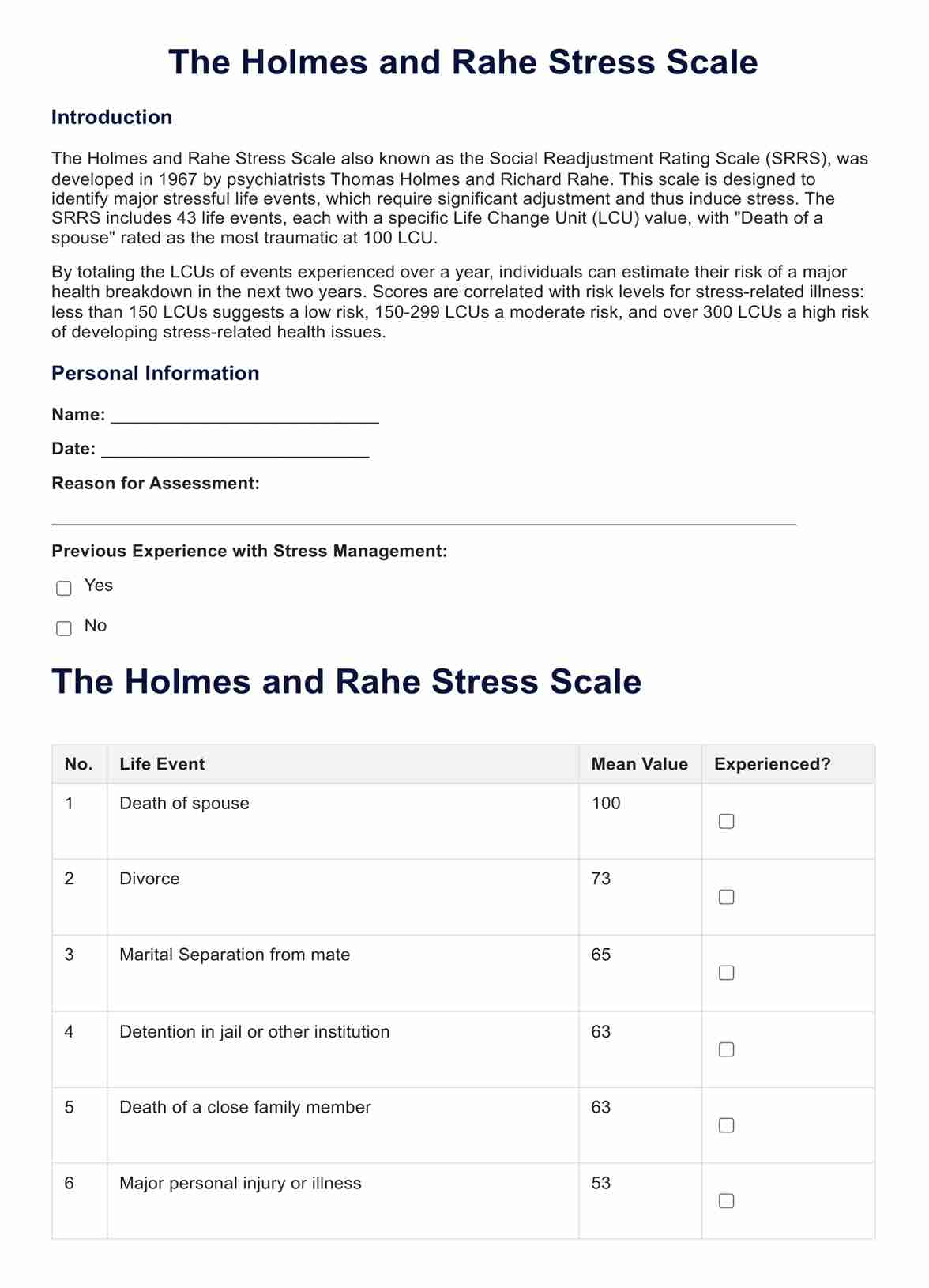
The Holmes and Rahe Stress Scale, also known as the Social Readjustment Rating Scale, is a psychological tool that psychiatrists Thomas Holmes and Richard Rahe developed. This scale is designed to quantify the impact of significant and stressful life events on an individual's health. The scale lists various life events, assigning each a specific number of "life change units" based on how stressful they are perceived to be. The total score, or stress scale score, is calculated by adding the life change units for each event experienced by an individual within a specific time frame, usually the past year.
The Rahe Stress Scale aims to predict the risk of illness following these stressful life events. Higher scores on the scale are correlated with a higher risk of ill health, as the accumulation of stress from these events can lead to a breakdown in health. This concept is grounded in the understanding that both chronic stress and acute life changes can significantly impact physical and mental health.
Holmes and Rahe's research also explored how different populations might react to the same stressful events, considering factors like social environment, living conditions, and personal habits. Their work subsequently validated the scale in various cross-cultural studies, indicating its relevance across different cultural contexts.
In addition to major life events, the scale considers aspects of daily life and social activities, like changes in financial state, living conditions, or relationships with close family members and friends. This comprehensive approach helps understand how various stresses can cumulatively lead to health issues.
Overall, the Holmes and Rahe Stress Scale remains an important tool in psychological research and clinical practice, aiding in assessing stress and its potential to lead to illness and health breakdown. It underscores the significant role of life events in shaping an individual's stress response and overall well-being.









