




What is Dialectical Behavior Therapy?
is a comprehensive and evidence-based therapeutic approach Dr. Marsha M. Linehan developed. It is particularly effective for individuals who struggle with emotional dysregulation, intense mood swings, and difficulty managing distressing emotions. DBT combines cognitive-behavioral techniques with mindfulness practices and incorporates a dialectical perspective that seeks to balance acceptance and change.
One of the critical components of DBT is Distress Tolerance. This skill equips individuals with the ability to manage intense emotions and navigate distressing situations without resorting to destructive behaviors. Within Distress Tolerance, the REST Technique is a valuable tool that healthcare practitioners can introduce to their clients.
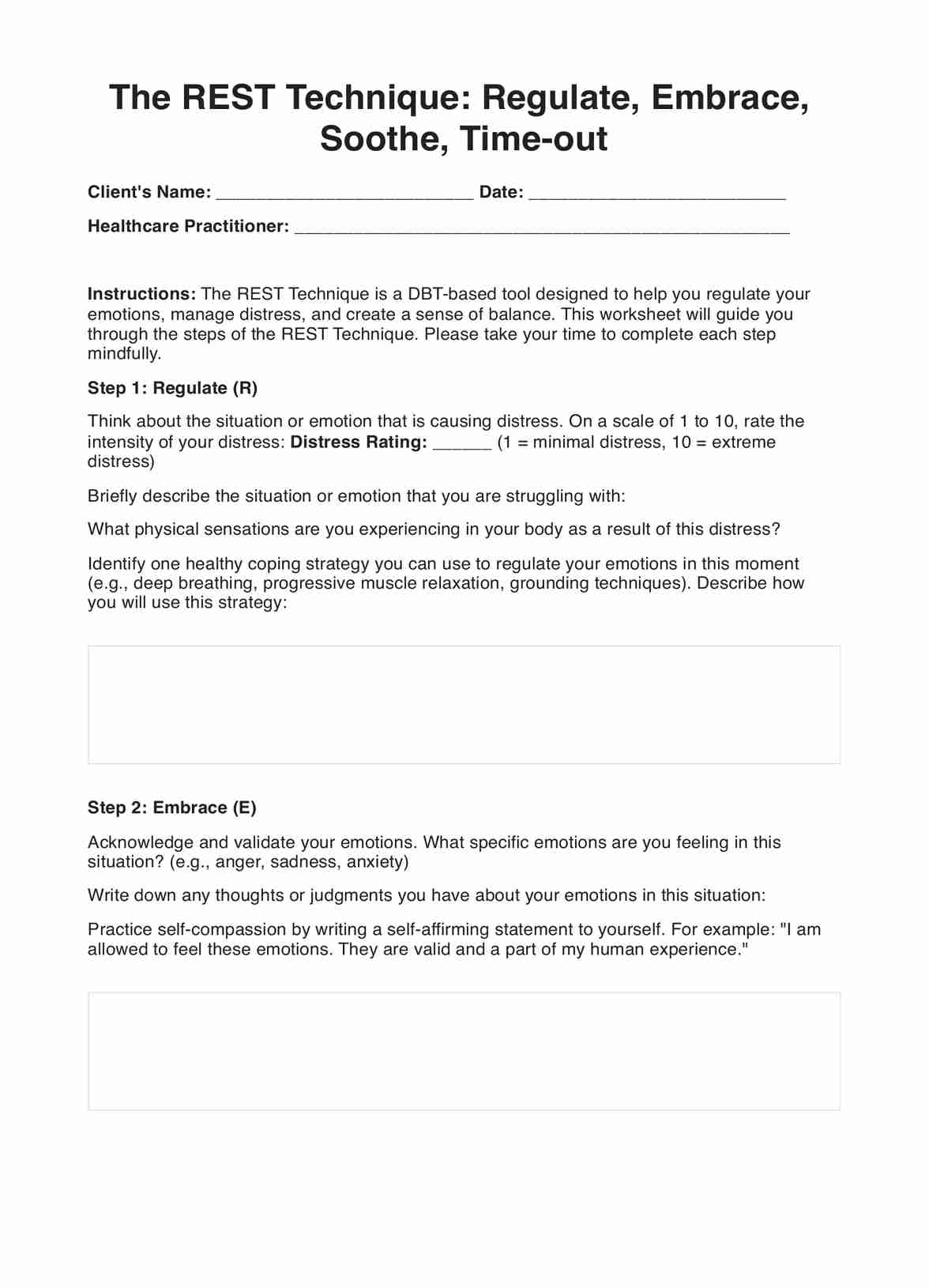
The REST Technique, which stands for Regulate, Embrace, Soothe, and Time-out, is a practical approach to managing distress. It empowers individuals to:
- Regulate (R): Begin by identifying the intensity of distress and using strategies to regulate emotions. This could involve deep breathing exercises, mindfulness, or grounding techniques. Individuals can prevent emotional overwhelm by bringing awareness to the emotional state and utilizing healthy coping mechanisms.
- Embrace (E): Acknowledge and validate emotions without judgment. This step encourages clients to accept their feelings as valid and natural responses to situations. Through self-compassion and understanding, clients learn to reduce self-criticism and embrace their emotional experiences.
- Soothe (S): Engage in comforting activities that help alleviate distress. Encouraging clients to identify soothing strategies tailored to their preferences—such as engaging in hobbies, self-care practices, or seeking social support—empowers them to proactively address emotional discomfort.
- Time-out (T): Recognize when a break is needed to prevent emotional escalation. A temporary time-out allows individuals to create a safe space, regain composure, and return to the situation with a more evident mindset.
Incorporating the REST Technique into DBT therapy enhances distress tolerance skills. Healthcare practitioners can guide clients through each step, fostering emotional regulation and resilience. By utilizing the REST Technique, clients gain a practical framework to effectively manage distress, ultimately leading to improved emotional well-being and the development of healthier coping mechanisms.









