
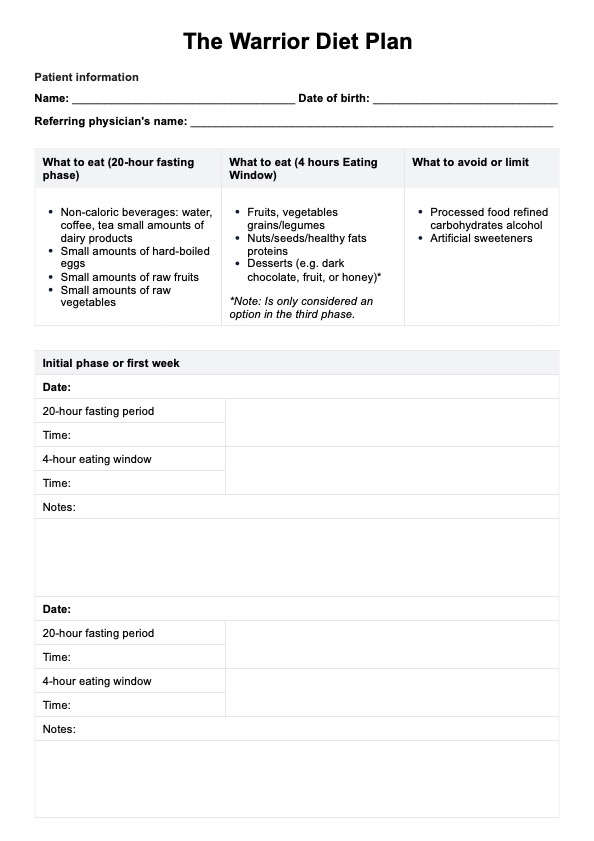




What is the Warrior Diet Plan?
The Warrior Diet Plan is a unique type of intermittent fasting designed by Ori Hofmekler, a former member of the Israeli special forces. This diet focuses on enhancing weight loss, improving body composition, and optimizing brain health by mimicking the survival instincts of ancient warriors. It involves a 20-hour fasting period followed by a four-hour eating window, during which individuals are encouraged to consume nutrient-dense foods.
Despite claims about the potential health benefits of the warrior diet, including better brain health and improved blood sugar control, there is limited scientific evidence supporting these benefits. However, the diet is popular for those looking to lose weight and improve metabolic health.
Phases of the Warrior Diet Plan
Those who follow the warrior diet experience three distinct phases over three weeks. Each phase has specific dietary objectives and guidelines to improve food intake, optimize the body’s use of nutrients, and potentially aid weight loss. Here's a breakdown of each phase:
Initial phase: Detox and fat utilization
Also known as the detox phase, this period focuses on eliminating toxins and preventing body fat accumulation. During fasting, individuals are allowed small portions of dairy products, raw fruits, and raw vegetables, such as hard-boiled eggs and steamed vegetables. In the four-hour eating window, substantial meals, including lean animal protein, high-fat foods, and cooked vegetables, are encouraged.
This phase aims to help the body utilize fat more effectively for energy while avoiding processed and fast food. It also promotes calorie restriction to initiate fat-burning hormones and improve body composition.
Second phase: Fat-burning optimization
The second phase focuses on optimizing the body's ability to use fat for energy. The eating pattern during the 20-hour fasting period remains similar, but fruit intake is limited to one serving. In the four hours, individuals can expand their meals to include whole grains, legumes, and lean animal protein. This phase further encourages the consumption of nutritious and unprocessed foods to maximize the benefits of the warrior diet.
Final phase: Carbohydrate and protein utilization
The final phase focuses on improving the body’s efficiency in using carbohydrates for energy. The fasting period remains at 20 hours with minimal food intake, consistent with earlier phases. During the four-hour eating window, individuals alternate between high-carbohydrate and high-protein days. On high-carbohydrate days, whole grains, legumes, corn, and sweet potatoes are prioritized, while high-protein days emphasize lean proteins with limited carbs.









