




What are therapeutic interventions?
Therapeutic interventions encompass a broad spectrum of techniques, strategies, and approaches employed in clinical settings to address individuals' various mental health, physical, emotional, or developmental challenges. These interventions promote healing, enhance well-being, improve functioning, and facilitate personal growth.
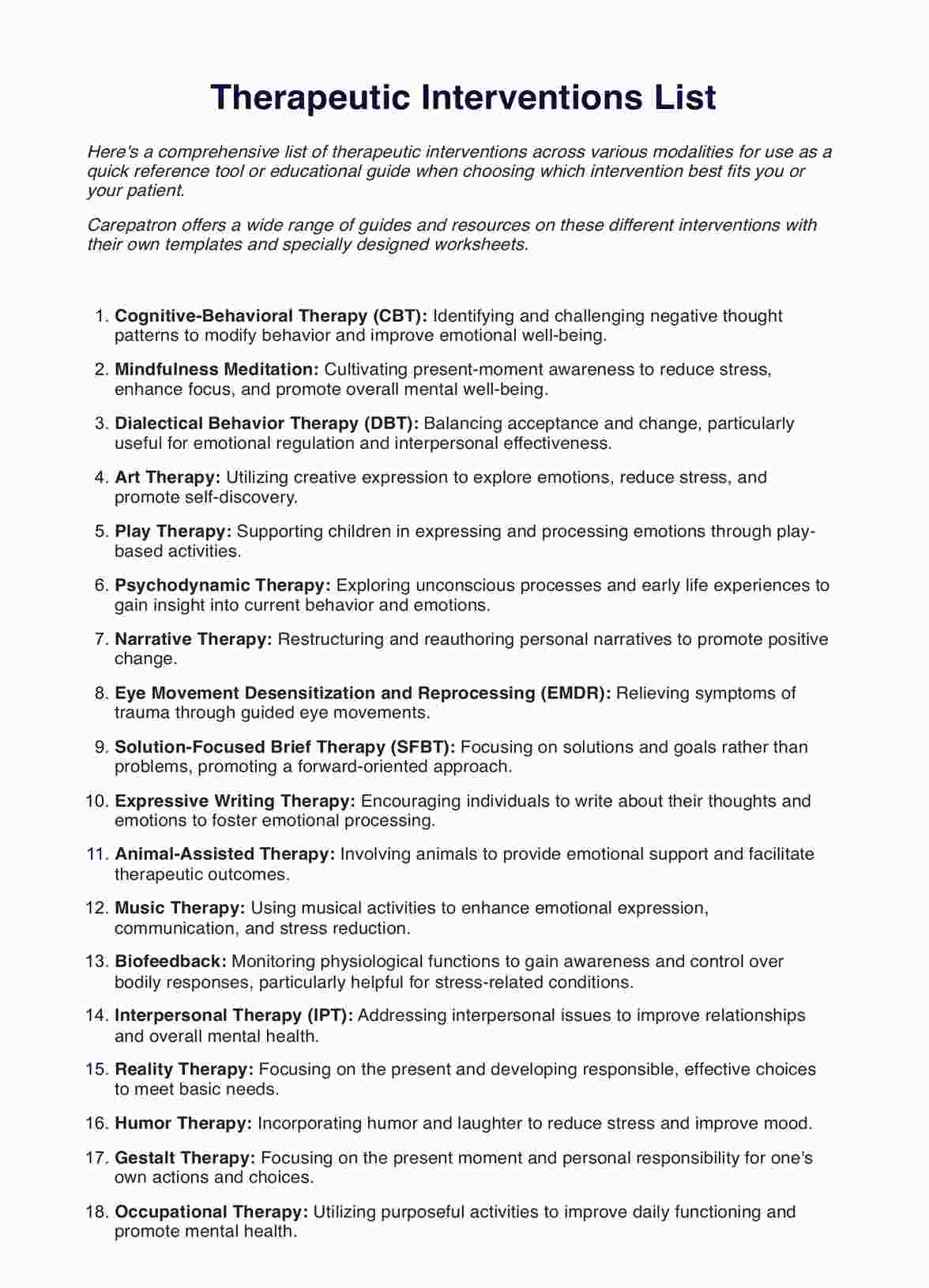
Within the mental health context, therapeutic interventions involve psychotherapeutic techniques delivered by trained professionals such as psychologists, counselors, or therapists. These interventions encompass cognitive-behavioral therapy (CBT), dialectical behavior therapy (DBT), psychodynamic therapy, and mindfulness-based approaches. The therapies involve structured sessions where individuals explore thoughts, emotions, and behaviors to gain insight, develop coping skills, and effect positive life changes. Therapists may use talk therapy, breathing techniques, behavioral interventions, relaxation techniques, and role-playing exercises to address specific concerns like anxiety, depression, trauma, or relationship issues.
Physical rehabilitation interventions focus on improving functional abilities, mobility, and physical health. These may include physiotherapy, occupational therapy, and speech therapy. Physiotherapy emphasizes exercises, stretches, and movements to restore strength and mobility and reduce pain after injuries or surgeries. Occupational therapy aims to improve independence in daily activities through exercises targeting fine motor skills, sensory integration, or adaptive techniques. Speech therapy enhances communication skills, language development, and swallowing abilities in individuals with speech or language disorders.
Child and developmental interventions cater to children's unique needs and may involve play therapy, art therapy, or behavioral interventions. Play therapy utilizes play-based activities to help children express emotions, solve problems, and develop coping skills. Art therapy encourages creative expression to explore feelings, enhance self-awareness, and address emotional challenges. Behavioral interventions employ reinforcement, modeling, and social skills training to support children with developmental or behavioral disorders.
Other interventions include pharmacotherapy, group therapy, family therapy, and holistic approaches such as yoga, meditation, or mindfulness. These interventions can be tailored to individual needs, offering a safe space for exploration, support for self-harm, skill-building, and fostering resilience.
Therapeutic interventions encompass many methods and practices, each designed to address individuals' specific challenges. They provide a structured and supportive environment for healing, growth, and improving the patient's condition and overall well-being across various domains of health and functioning.









