



What is a Thessaly Test?
The is a physical examination procedure used to determine whether there is a meniscus injury in the knee joint. It is a clinical test that healthcare providers may carry out, including orthopedic surgeons, physical therapists, and sports medicine doctors.
Before performing more intrusive diagnostic procedures like an MRI, the Thessaly test is frequently used as an early screening technique. It may be done in a clinic or office environment and is a simple, non-invasive test.
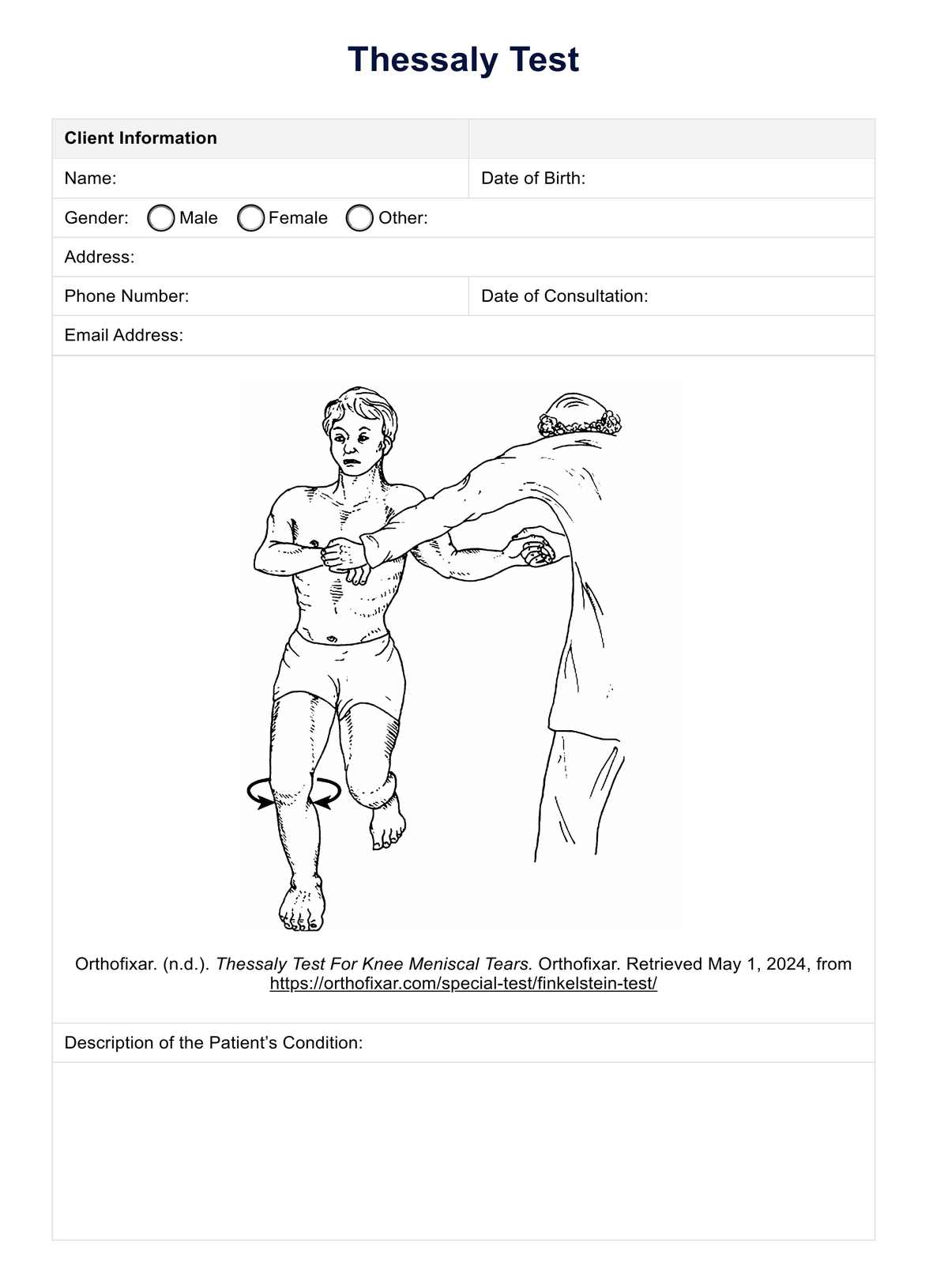
The test involves the patient standing on one leg and slowly rotating their body while bending the knee joint to about 20 to 30 degrees. The test is then repeated with the other leg.
A meniscal injury may be indicated if the patient feels pain or a clicking sound while undergoing the exam. It is crucial to remember that a positive Thessaly test does not always show meniscus injury and further testing is often required to diagnose.
The Thessaly test has both diagnostic and therapeutic applications for individuals who have meniscal injuries. The test helps identify specific movements that exacerbate the patient's symptoms, which can subsequently be avoided or changed to lessen pain and enhance function.
It is crucial to remember that while the Thessaly test help diagnoses meniscal injuries, it is not a conclusive diagnostic technique. Further imaging tests or arthroscopic inspection may be required to confirm the diagnosis and assess the injury's severity.