## **What is the Circle of Control?**
The Circle of Control is a concept created by Stephen R. Covey in his book 7 Habits of Highly Effective People. It's a component that's part of a much larger circle that includes two other layers: the Circle of Concern and the Circle of Influence.
The Circle of Concern is the outer layer of this large circle. What you'll find in this circle are things that people worry about that they have no hope of controlling. These include the weather, natural disasters, being a crime victim, climate change, etc. Since these can't be controlled, this makes anyone feel powerless (Covey, 2020).
The second layer is the Circle of Influence. This circle contains relationships (family, friends, colleagues, etc.). In this circle, you don't necessarily have control over it, but you do have a degree of influence due to your relationships (Covey, 2020). You can influence other people's behavior, perceptions, and decisions.
The third layer is the Circle of Control. This circle contains everything that you are able to control. You control/are responsible for how you speak, how you dress, how you conduct yourself in various environments, setting your priorities, creating plans, adjusting your schedules, deciding what to eat, partaking in activities, etc (Covey, 2020).
Covey posits that people who focus on things in the Circle of Control are reactive. Reactive people tend to waste time and energy on things they can't even control. He also posits that the people who focus on things within their respective Circles of Control are proactive. Proactive people have strong emotional resilience, a growth mindset, and a desire to create change and embark on journeys of personal growth.
### **Why the Circle of Control is a good thing to teach clients**
If you're handling clients who are overwhelmed by stress and worry, those struggling to find a sense of calm amidst life's challenges, busy parents juggling responsibilities, students facing academic pressures, you can introduce the Circle of Control to them to help them begin to learn how to manage their emotions and focus their energy. The Circle of Control is designed to help individuals identify aspects of their lives they can actually control and make decisions for.
## **What is this Things I Can Control Worksheet?**
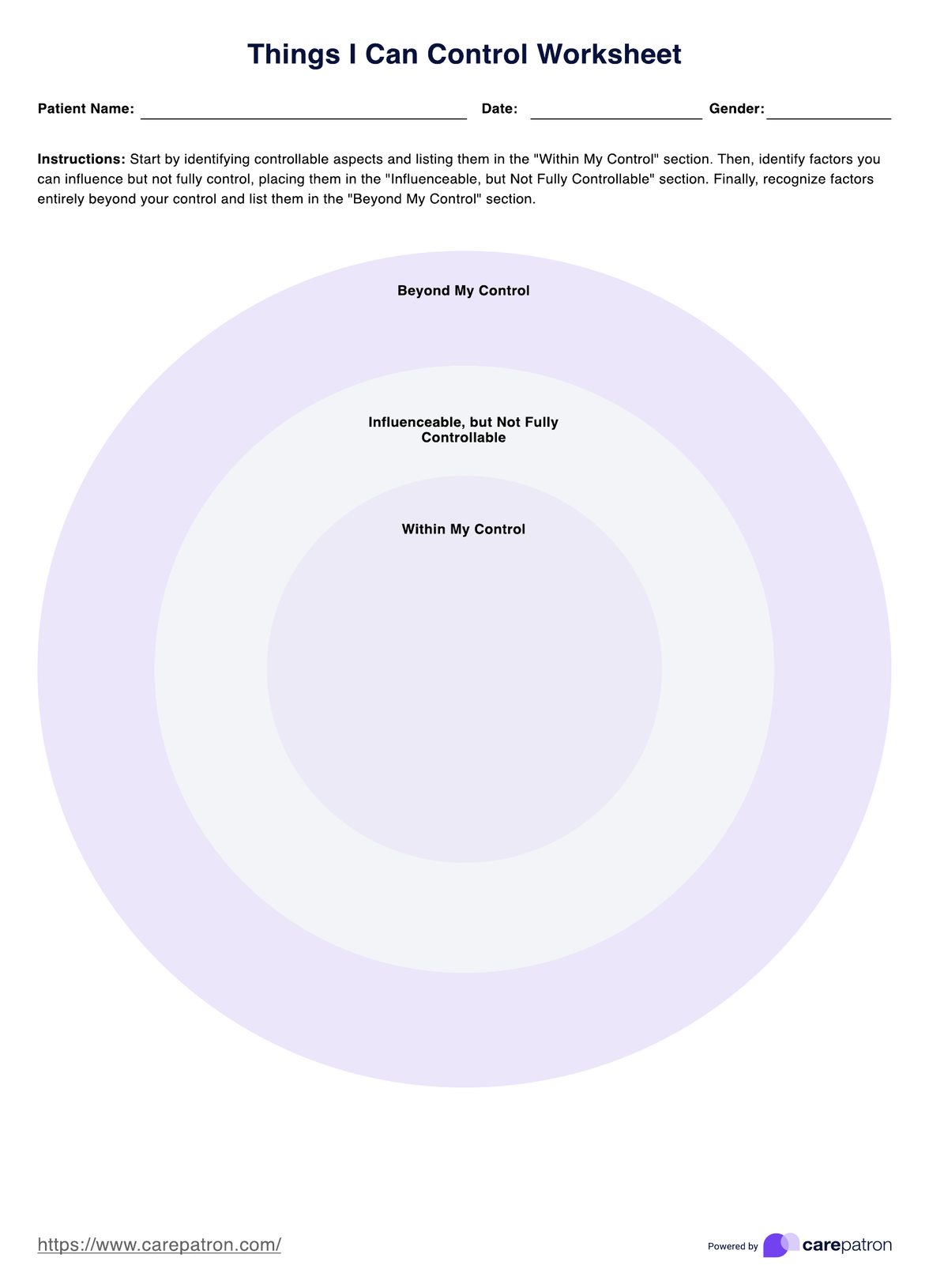
The Things I Can Control Worksheet is a tool that mental health professionals and even life coaches can use for their work. It takes the Circles of Concern, Influence, and Control and asks clients to write the things in their lives that fall under each one.
With this prompt alone, clients can take time to reflect on the various aspects of their lives and fill in the circles accordingly.
### **What should clients expect from this Things I Can Control Worksheet?**
Knowing one's own Circle of Control is vital because it helps one figure out what they can do something about and what they can't. When they see what they can change, they can focus on that concern rather than stressing over things beyond their control.
One can list their abilities, attitudes, and actions in the inner circle. This section empowers individuals to focus on what they can do to effect positive changes in their lives, boosting self-esteem and building resilience. For instance, parents might include activities like exercise or quality time with their children, while students may focus on study habits or managing emotions during exams.
In the middle circle, individuals address factors they can influence to some extent. While only partially controllable, these aspects still offer opportunities for action and problem-solving. Individuals gain a sense of agency over their circumstances by writing down concerns and related strategies.
Finally, the outer circle encompasses elements beyond one's control, such as global events. Here, the focus shifts from trying to change these factors to accepting them and directing energy elsewhere. Parents might recognize their child's behavior as beyond their control, while students acknowledge the limitations of external factors like course difficulty.
Whether drawing on paper or using digital resources, this tool offers a structured approach to managing stress and promoting well-being. By distinguishing between what can and cannot be controlled, individuals can find greater peace of mind and resilience in facing life's challenges.
### **Why should you use our template?**
This worksheet can help your clients learn how to prioritize where to direct their energy and attention. By learning how to identify areas within their control, they can finally stack the important building blocks that can help them foster a sense of agency and empowerment, and improve their problem-solving skills and decision-making.
Since this worksheet also asks clients to acknowledge the factors in their lives or in the world that are beyond their control, you can work with them to develop strategies that can help overcome the worry and stress that these uncontrollable factors have caused or may cause them, and improve their emotional resilience. Reflecting on the factors listed in each worksheet category fosters greater self-awareness and insight into one's strengths, limitations, and coping mechanisms.
## **How to use this worksheet**
The Circle of Control Worksheet is a valuable tool to help individuals take charge of their mental health by identifying aspects of their lives they can influence. By recognizing what lies within their control, individuals can focus on strategies to develop their abilities and exert control over their circumstances, leading to a more positive attitude and improved well-being.
### **Step 1: Download the template**
Download the Circle of Control Worksheet template by clicking "Use Template" or "Download."
### **Step 2: Have your client identify specific aspects of their life**
After handing your patient a copy, have them sit down and think about the various aspects of their lives that they consider to be important/consequential. This can be health in general, work, relationships, and personal habits. They can even identify the factors that directly impact their mental health and well-being.
### **Step 3: Use the existing circles**
The worksheet has three circles labeled "Within My Control" (inner circle), "Influenceable, but Not Fully Controllable" (middle circle), and "Beyond My Control" (outer circle). Have them compartmentalize the various aspects of their life into these three circles.
In the "Within My Control" circle, have them list factors directly under their control, such as their attitude, habits, and self-care strategies. In the "Influenceable, but Not Fully Controllable" circle, list factors they can influence to some extent, such as relationships, work environment, and daily routines. In the "Beyond My Control" circle, let them acknowledge factors beyond their control, such as natural disasters or global events.
### **Step 4: Have your client focus on their inner circle**
Have them reflect on the factors in the "Within My Control" circle and develop strategies to help them improve or maintain them. Remind them to practice self-care, set achievable goals, and seek support when needed.
### **Step 5: Have them manage their circle of influence**
Have them consider the factors listed in their "Influenceable, but Not Fully Controllable" circle and identify ways to influence them positively. Remind them to practice effective communication, set boundaries, and prioritize tasks to manage external stressors.
### **Step 6: Have them accept the circle of concern**
Since whatever they will write in the circle of concern are things they can't really do anything about, have them acknowledge the factors listed there. Remind them to understand and accept that some circumstances cannot be changed, and to focus their energy on areas where they can make a difference.
## **What can a therapist do next after receiving an accomplished copy of the worksheet?**
After receiving an accomplished copy of the worksheet, therapists have several options to support their clients further:
- **Review and discuss**: Review the completed worksheet with your client during your next session. Discuss their responses and provide guidance or feedback as needed.
- **Set goals**: Use the information from the worksheet to set goals with your client collaboratively. This can help them focus on areas within control and track progress over time.
- **Explore strategies**: Brainstorm and explore various strategies together to address the challenges identified in the worksheet. Encourage your client to develop creative solutions and offer your expertise and support.
- **Provide additional resources**: Offer tools such as therapy worksheets, readings, or exercises to complement the worksheet and support ongoing progress.
- **Revisit regularly**: Plan to revisit the worksheet regularly to assess changes and updates in your client's circumstances or goals. This continuous evaluation ensures that therapy remains relevant and effective in addressing their needs.
## **Other tools you can use**
- [Emotion Regulation DBT Worksheet](https://www.carepatron.com/templates/emotion-regulation-dbt-worksheets): This free worksheet is meant to help clients articulate what emotions they felt and showed, plus the corresponding reactions they've had to certain situations based on those emotions. It gives them the chance to look at it at a distance and determine if how they felt and acted was appropriate, and if there could have been a better way to respond.
- [Decatastrophizing Worksheet](https://www.carepatron.com/templates/decatastrophizing-worksheet): In relation to things that are beyond one's control, the decatastrophizing worksheet is a great way to help clients fight against their anxiety, worry, and paranoia over things that could happen, things that haven't happened, or other events that they feel could happen that are beyond their control. It'll serve as an exercise that'll help them learn how to reconfigure their thoughts and reduce stress. This is best given to those who feel anxious. This can help people cultivate critical thinking skills.
- [SMART Goals Worksheet](https://www.carepatron.com/templates/smart-goals-worksheet): After clients have identified everything they can add to their Circle of Control, you can have them answer the SMART Goals Worksheet to help them learn how to set actionable goals based on factors within their Circle of Control. This encourages them to be more proactive and work towards personal growth.
## **Reference**
Covey, S. R. (2020). 7 habits of highly effective people. Simon & Schuster Ltd.