




What is Trauma and PTSD?
Trust plays a pivotal role in the context of Post-Traumatic Stress Disorder (PTSD). Individuals with PTSD often grapple with profound trust issues due to their traumatic experiences. Trauma can shatter one's sense of safety and security, making it challenging to trust others and oneself. The traumatic event, whether a combat experience, sexual assault, or any other trauma, can lead to pervasive feelings of vulnerability and hypervigilance.
PTSD can erode trust in several ways. Individuals may struggle to trust their own judgment and emotions, constantly questioning their reactions to triggers. Trust in others may be profoundly damaged, as the traumatic event might involve betrayal or harm inflicted by someone they trusted. This can lead to social withdrawal and difficulty forming new relationships.
Moreover, trust in the world can be severely compromised, with individuals often seeing the world as unsafe. Recovery from PTSD involves addressing the psychological symptoms and rebuilding trust in oneself and relationships.
Trauma, the root cause of PTSD, results from exposure to life-threatening or deeply distressing events. It overwhelms an individual's ability to cope, leaving lasting emotional scars. PTSD is a specific psychological response to trauma characterized by intrusive thoughts, flashbacks, avoidance behaviors, and hyperarousal symptoms.
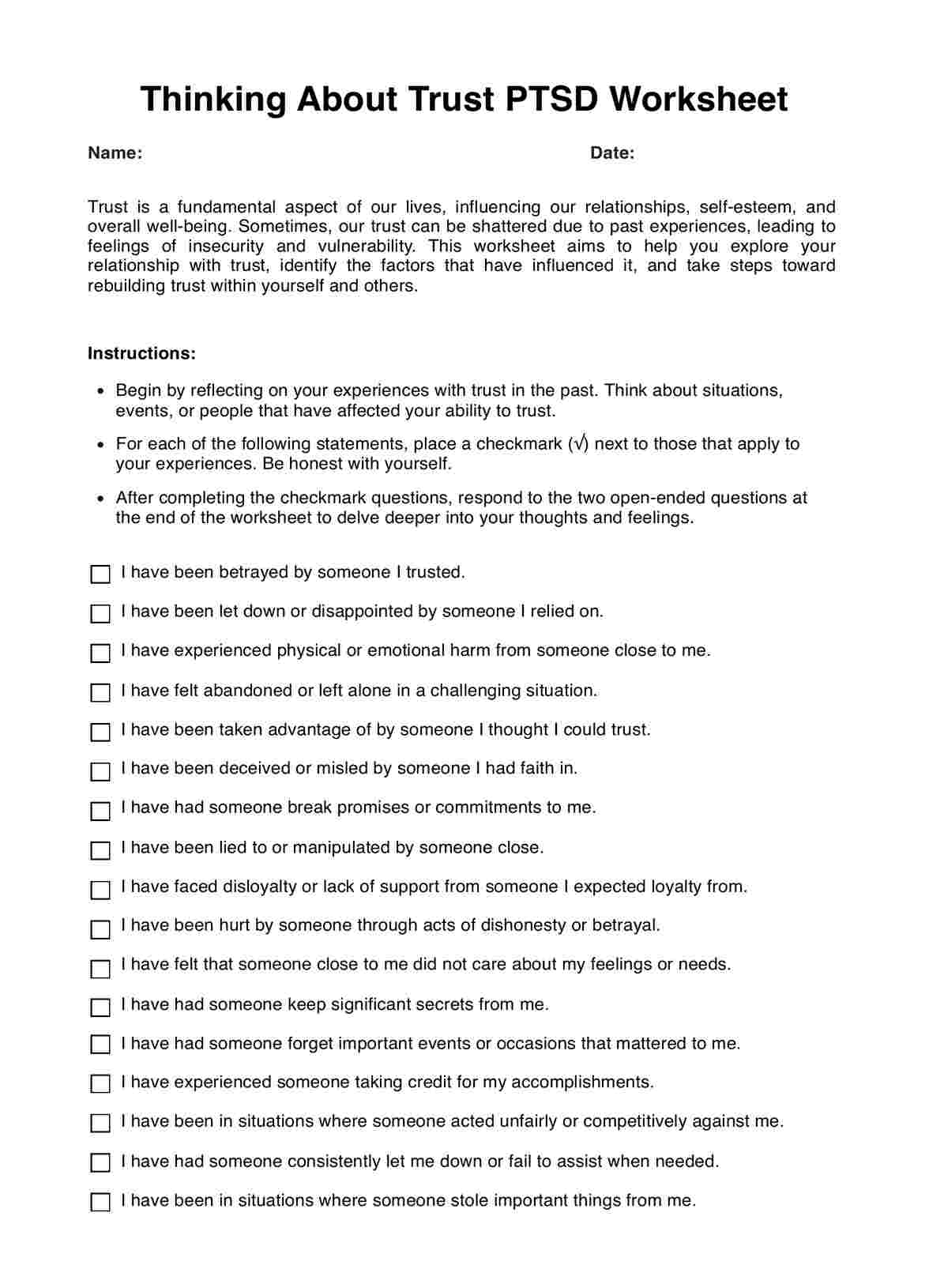
Trauma and PTSD impact mental health, relationships, and overall quality of life. Treatment, often including therapy and medication, aims to alleviate symptoms and help individuals regain trust, safety, and control. This PTSD worksheet template provides valuable support to enhance your practice and client results.









